Tree Care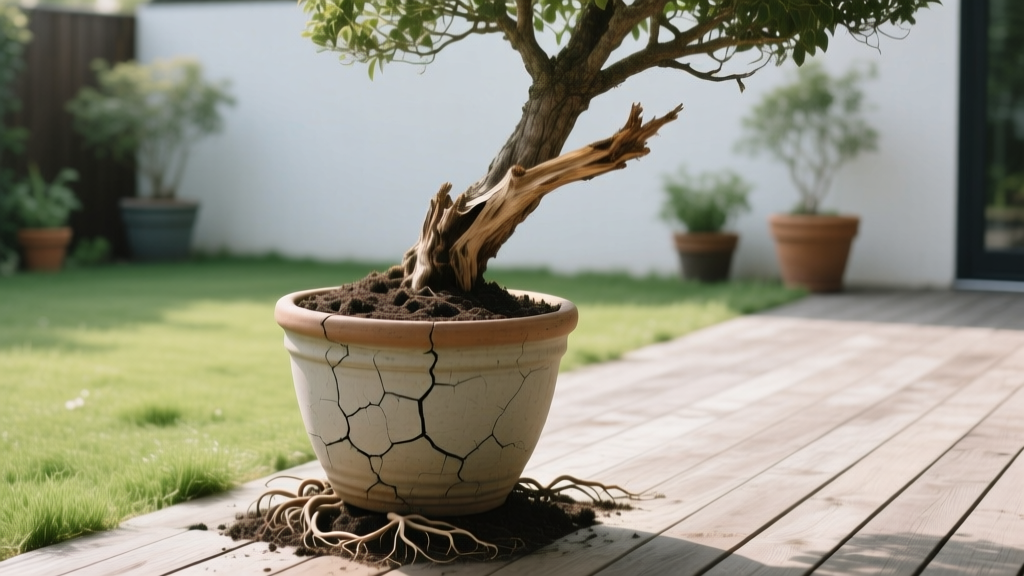
2026 Potted Tree Hazard Guide: Assessing Cracks, Leans, Deadwood
Lisa ThompsonPublished
The Unique Risks of Container-Grown Trees in 2026
Container gardening has transcended small herbs and annual flowers. In 2026, the trend of cultivating semi-mature and large ornamental trees in heavy-duty patio containers—such as dwarf citrus, patio olives, and Japanese maples—has reached new heights. Homeowners and commercial landscapers are frequently placing trees exceeding eight feet in height and weighing over 300 pounds on elevated decks, balconies, and high-traffic patios. However, with the beauty of a potted canopy comes a unique set of structural and environmental risks.
Unlike trees planted in the earth, container-grown trees are entirely dependent on the integrity of their pots and the limited soil volume within. A compromised container, a shifting root ball, or neglected canopy dieback can turn a beautiful patio centerpiece into a severe liability. According to the International Society of Arboriculture (ISA), evaluating tree risk requires a systematic approach to identifying structural defects and environmental stressors. When applied to container and pot gardening, this means assessing not just the biological health of the tree, but the physical integrity of the vessel holding it. This comprehensive guide will walk you through evaluating cracks, leans, and deadwood in your potted trees to ensure your outdoor spaces remain safe and beautiful.
Evaluating Container Cracks and Root-Bound Stress
The most fundamental difference in hazard assessment for potted trees is the container itself. In 2026, modern planters are crafted from advanced poly-resins, fiberglass, and reinforced terracotta. While these materials are durable, they are not immune to the immense physical pressure exerted by a growing tree's root system.
Understanding Root Girdling and Hydrostatic Pressure
As a tree matures in a confined space, its roots naturally seek the edges of the container. When they hit the pot wall, they begin to circle, creating a 'girdling' effect. Over time, these woody roots expand in diameter, exerting tremendous outward physical pressure. Additionally, the soil within a container acts like a sponge; during heavy watering or rainstorms, the trapped water creates hydrostatic pressure against the pot walls. If the container has inadequate drainage or hidden micro-fractures, this combined pressure can cause catastrophic failure, resulting in the pot splitting open and the heavy tree toppling onto the patio.
The Tap Test and Drainage Inspection
To assess the structural integrity of your container, perform the 'Tap Test' using a rubber mallet. Gently tap the sides of the pot from top to bottom. A solid, dull 'thud' indicates healthy contact between the soil and the pot wall. Conversely, a hollow 'clack' or ringing sound suggests delamination, a hidden crack, or that the root ball has shrunk away from the sides due to severe drought stress or root rot.
Next, inspect the drainage holes. According to research from the University of Florida IFAS Environmental Horticulture department, roots protruding aggressively from drainage holes are a primary indicator of a severely root-bound tree that is at high risk of container failure. In 2026, many arborists recommend using a cheap, flexible endoscope camera (readily available for under $30) to snake up into the drainage holes. This allows you to visually assess the density of the root mass and check for internal cracking at the base of the pot without having to tip the heavy container over.
Assessing Lean and Stability in Potted Trees
A leaning tree in the ground is typically a root-plate or soil-subsidence issue. A leaning tree in a pot, however, is usually a center-of-gravity or wind-load issue. Potted trees on balconies and rooftops are subjected to unfiltered wind tunnels, making them highly susceptible to windthrow (being blown over).
Soil Subsidence and Trunk Tilt
Over a few seasons, organic potting mixes break down, decompose, and wash out through the drainage holes. This causes the soil level to drop and the root crown to settle unevenly. If the tree was not perfectly centered, or if the soil compacts more on one side, the trunk will begin to lean. A lean greater than 15 degrees in a top-heavy potted tree drastically shifts the center of gravity, increasing the leverage the wind has on the canopy.
The Push Test and Modern Anchoring Solutions
To evaluate stability, perform the 'Push Test'. With the soil moderately moist, place your hands on the lower third of the trunk and apply firm, steady pressure in four cardinal directions. The trunk should not pivot independently of the root ball, and the pot itself should not wobble or lift on one side. If the pot rocks, the base is uneven or the pot feet have degraded.
Mitigation Strategies:
- Weighted Bases: For trees over six feet tall, ensure the container base is at least 25% wider than the canopy drip line.
- Anchoring Systems: Utilize modern deck-anchoring kits. Products like the 2026 DeckLock Pro Anchor System use heavy-duty steel brackets that bolt directly into wooden deck joists or concrete pads, securing the pot feet and preventing windthrow.
- Soil Top-Dressing: Annually top-dress the container with a heavy, mineral-based soil amendment (like expanded shale or pumice) to add top-weight and counterbalance a leaning canopy.
Deadwood Evaluation in Confined Patio Canopies
Deadwood is a natural part of tree biology, but in a patio or poolside setting, it is an immediate falling hazard. Because container trees are often placed directly over seating areas, dining tables, or walkways, even a small, brittle branch snapping off during a mild breeze can cause injury or property damage.
Biological Deadwood vs. Drought-Stress Dieback
It is crucial to distinguish between true structural deadwood and temporary drought-stress dieback. Container trees dry out much faster than in-ground trees. During a summer heatwave, a potted tree may drop its leaves and let small twigs die back to conserve water. Before aggressively pruning, perform the 'Scratch Test'. Use a sterilized pocket knife to gently scratch the bark of a questionable branch. If the cambium layer underneath is green and moist, the branch is alive but dormant or stressed. If it is brown, dry, and brittle, it is deadwood and must be removed.
For branches larger than half an inch in diameter, use the 'Snap Test'. Bend the tip of the branch gently. Live wood will flex and resist; deadwood will snap cleanly with a sharp crack. The Arbor Day Foundation Tree Health Guide emphasizes that removing dead, diseased, or broken branches is the most critical step in maintaining a safe tree canopy, especially in high-traffic residential zones.
Pruning Protocols for Containerized Canopies
When removing deadwood from a potted tree, always use clean, bypass pruners to make precise cuts just outside the branch collar. Avoid tearing the bark, as container trees have limited energy reserves to heal large wounds. Furthermore, evaluate the canopy for 'sail effect'—a canopy that is too dense will catch wind like a sail, exacerbating the lean and risking container tip-overs. Thinning the interior deadwood and crossing branches reduces wind resistance and keeps the tree safe during seasonal storms.
2026 Potted Tree Hazard Assessment Matrix
Use the following structured checklist to evaluate your container trees at the start of every growing season and immediately following severe weather events.
| Hazard Type | Assessment Tool / Method | Risk Level | Mitigation Strategy |
|---|---|---|---|
| Container Micro-Fractures | Rubber Mallet 'Tap Test' | High (Structural Failure) | Repot tree into heavy-duty composite planter |
| Root Girdling / Binding | Endoscope via Drainage Holes | Medium (Tree Health & Pot Cracking) | Root prune and refresh soil medium |
| Trunk Lean / Soil Subsidence | Visual Plumb Line & Push Test | High (Windthrow Hazard) | Install deck anchors; top-dress with pumice |
| Canopy Deadwood | Scratch Test & Snap Test | Medium (Falling Branch Hazard) | Prune deadwood outside the branch collar |
| Canopy Wind Sail Effect | Visual Density Assessment | Medium (Tip-over Risk) | Thin interior crossing and dead branches |
Remediation: When to Repot, Reinforce, or Remove
Identifying a hazard is only the first step; taking appropriate action is what keeps your patio safe. If your assessment reveals severe container cracking or extreme root binding, the tree must be repotted. In 2026, hiring a professional container landscaping service to safely extract, root-prune, and replant a mature 7-foot patio tree typically costs between $200 and $450, depending on the crane or hoisting equipment required. This is a worthwhile investment compared to the liability of a 400-pound terracotta pot shattering on a glass-topped patio table.
If the tree exhibits a severe, uncorrectable lean and the trunk base is rotting, or if the deadwood extends into the main structural leaders of the tree, removal is the safest option. Container trees do not have the vast root reserves of ground-planted trees to recover from major structural failures. Always prioritize the safety of your family and guests by removing compromised potted trees and replacing them with younger, structurally sound specimens planted in modern, shatter-proof composite containers.
