
Landscaping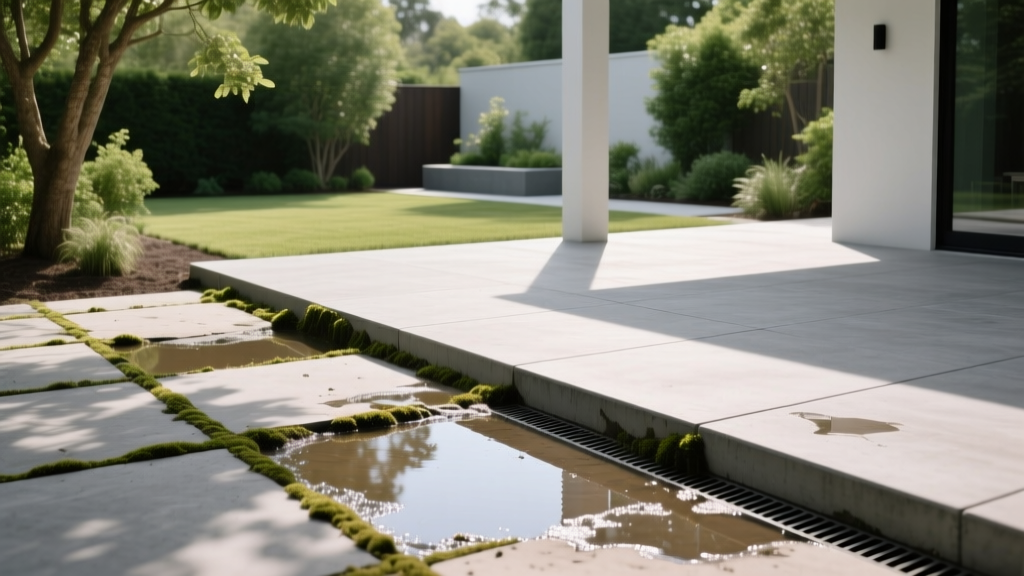
5 Common Patio Drainage Mistakes and How to Fix Them
James MillerPublished
The Hidden Enemy of Hardscaping: Poor Drainage
Investing in a beautiful paver patio, stone walkway, or retaining wall is one of the best ways to elevate your outdoor living space and boost your property value. However, water is the ultimate enemy of hardscaping. When landscape drainage is poorly planned or improperly executed, the results can be catastrophic. Pooled water leads to paver heaving during freeze-thaw cycles, washouts that destroy your base, and hydrostatic pressure that can literally blow apart retaining walls. Worse yet, improper hardscape grading can redirect stormwater toward your home, leading to flooded basements and compromised foundations.
According to the University of Minnesota Extension, managing yard drainage is critical for protecting structural integrity and preventing soil erosion around the home. Yet, many DIY landscapers and even some inexperienced contractors make critical errors during the installation phase. Below, we break down the five most common patio and hardscape drainage mistakes, complete with actionable, step-by-step fixes, cost estimates, and material recommendations to ensure your project stands the test of time.
Mistake 1: Ignoring the Slope (Pitch) Away From the House
The Mistake: The most frequent and damaging error in patio design is building a perfectly flat surface or, even worse, one that slopes toward the home's foundation. Water naturally follows the path of least resistance. If your patio is flat, water will pool in low spots, degrading the jointing sand and seeping into the base. If it slopes toward the house, you are essentially building a funnel that pours thousands of gallons of stormwater directly into your basement or crawlspace.
The Fix: You must establish a positive grade that directs water away from your home. The industry standard for hardscape drainage is a minimum slope of 1/8 inch to 1/4 inch per linear foot.
- How to measure: Tape a 1/4-inch wooden shim to the bottom of a 4-foot carpenter's level. Place the level on the patio surface with the shim-end facing the house. If the bubble is perfectly centered, you have the exact 1/4-inch-per-foot slope required.
- How to fix an existing flat patio: If your pavers are pooling water, you do not necessarily need a full tear-out. Consider polyjacking (injecting high-density polyurethane foam beneath the settled pavers or concrete slabs to lift and re-pitch them).
Mistake 2: Using the Wrong Base Material
The Mistake: Many novices assume that because sand is used in the final bedding layer, it can also be used as the deep structural base. Others use rounded river gravel or, worst of all, native dirt. Rounded stones roll against each other like marbles, failing to lock together, while dirt expands and contracts with moisture, leading to massive settling and puddling on the surface above.
The Fix: The Interlocking Concrete Pavement Institute (ICPI) strictly recommends using crushed, angular aggregate for the base layer. Angular stones have sharp edges that lock tightly together when compacted, creating a semi-rigid slab that sheds water laterally while supporting immense weight.
- Material: Use 3/4-inch crushed stone (often called 57 stone or road base).
- Depth: Excavate to a depth of 8 to 10 inches. Lay a geotextile fabric over the native soil, then add 4 to 6 inches of crushed stone, compacting it in 2-inch lifts using a mechanical plate compactor.
- Cost: Crushed angular gravel costs roughly $40 to $60 per ton, making it an affordable insurance policy against future drainage failures.
Mistake 3: Relying on Regular Sand for Paver Joints
The Mistake: Filling the joints between pavers with standard mason sand or play sand is a recipe for disaster. Regular sand does not bind. Heavy rains will wash it out, and ants will excavate it. Once the sand is gone, the pavers shift, creating depressions where water pools, which accelerates the washout process in a vicious cycle.
The Fix: Upgrade to polymeric sand. Polymeric sand contains special silica additives and polymers that, when activated with a light misting of water, harden into a flexible, impermeable seal. It locks the pavers in place, prevents weed growth, and stops water from undermining the base.
- Application Tip: Sweep the polymeric sand into the joints, ensuring they are filled to within 1/8 inch of the surface. Use a leaf blower on a low setting to remove all excess dust from the paver surface before misting. If you leave dust on top, it will cure into a hazy, unremovable film.
- Cost: A 50-lb bag of high-quality polymeric sand costs between $35 and $50 and covers approximately 80 to 100 square feet, depending on joint width.
Mistake 4: Omitting Weep Holes and Backfill in Retaining Walls
The Mistake: Retaining walls do not just hold back soil; they must also hold back water. When rain saturates the soil behind a wall, it creates hydrostatic pressure. If this water has nowhere to go, the pressure will push the wall outward, causing it to bulge, crack, and eventually collapse.
The Fix: You must install a dedicated drainage system behind every retaining wall. This involves three non-negotiable steps:
- Perforated Pipe: Lay a 4-inch perforated PVC drain pipe wrapped in landscape fabric at the base of the wall, behind the first course of blocks. Ensure the pipe daylight (exits to the surface) at one or both ends of the wall to allow water to escape.
- Gravel Backfill: Backfill the area immediately behind the wall with at least 12 inches of clean, washed, angular drainage gravel. Do not use dirt or sand here.
- Weep Holes: If using solid concrete blocks or stone, install PVC weep holes every 4 to 8 feet along the base course to allow water to drain through the face of the wall.
Mistake 5: Flush Transitions to Lawn and Garden Beds
The Mistake: Installing a patio perfectly flush with the surrounding soil or lawn. When it rains, muddy water from the lawn washes over the edge of the patio, depositing silt and soil onto the pavers. This clogs the joints, ruins the aesthetic, and creates a slipping hazard.
The Fix: Create a deliberate elevation drop or a physical barrier between the hardscape and softscape.
- Elevation Drop: Design the patio so the finished surface is at least 1/2 inch to 1 inch higher than the surrounding lawn grade. This forces surface water to sheet off the patio and onto the grass, rather than the reverse.
- Gravel French Edge: Dig a 6-inch wide, 6-inch deep trench along the perimeter of the patio where it meets the soil. Fill it with 3/4-inch river rock. This acts as a catch basin for mud and runoff, keeping your pavers clean and allowing localized water to percolate into the subsoil.
Hardscape Base Material Comparison Chart
Choosing the right materials is the first line of defense against drainage issues. Refer to the table below to ensure you are using the correct materials for your project's structural and drainage needs.
| Material | Drainage Rate | Compaction Quality | Best Use Case |
|---|---|---|---|
| 3/4" Crushed Angular Stone | Excellent | Superior (Locks together) | Primary structural base for patios and driveways |
| Washed River Gravel (Round) | Excellent | Poor (Rolls and shifts) | Decorative dry creek beds, French drains |
| Concrete Sand | Moderate | Fair | Thin bedding layer directly beneath pavers |
| Native Soil / Dirt | Poor | Terrible (Expands/Shrinks) | Should be entirely removed from hardscape zones |
When to Consider Permeable Pavers
If your property struggles with severe stormwater runoff, or if local municipal codes restrict the amount of impermeable surface area you can have, consider permeable pavers. The Environmental Protection Agency (EPA) highlights permeable pavement as a highly effective green infrastructure tool that reduces runoff volume, filters pollutants, and recharges local groundwater.
Permeable pavers are installed with wider joints filled with small, clean, uniform crushed stone (rather than polymeric sand), allowing water to pass directly through the surface into a specialized, deep aggregate reservoir base. While the installation cost is roughly 20% to 30% higher than a standard paver patio due to the deeper excavation and specialized base requirements, the long-term benefits for yard drainage and environmental impact are substantial.
Final Thoughts on Landscape Drainage
Water always wins if you do not plan for it. By avoiding these five common mistakes—ensuring proper slope, utilizing crushed angular base materials, sealing joints with polymeric sand, engineering retaining wall backfills, and managing edge transitions—you can build a hardscape that remains beautiful, level, and structurally sound for decades. If you are dealing with an existing patio that suffers from severe settling or negative grading toward your home, consult a licensed hardscape professional to evaluate polyjacking or a complete base rebuild before water damage reaches your home's foundation.

