Landscaping
Paver Patio Cost Guide: Budgeting and Price Breakdown
James MillerPublished
Introduction to Paver Patio Budgeting
Adding a paver patio to your landscape is one of the most effective ways to elevate your outdoor living space, boost curb appeal, and increase your property value. However, without a clear understanding of the costs involved, a straightforward hardscaping project can quickly drain your landscaping budget. Whether you are envisioning a modest 10x10 bistro patio or a sprawling 400-square-foot entertainment hub, accurate budgeting is the cornerstone of a successful installation. This comprehensive cost and budgeting guide will walk you through the national averages, material breakdowns, labor expectations, and hidden expenses you need to anticipate when planning your paver patio project.
Understanding the National Averages
According to industry data compiled by the National Association of Landscape Professionals (NALP), the average cost to install a paver patio ranges from $10 to $25 per square foot for a professionally completed project. For a standard 12x12 patio (144 square feet), homeowners typically spend between $1,440 and $3,600. Larger entertainment patios averaging 300 square feet can range from $3,000 to $7,500 or more.
These wide variances are driven by three primary factors: the type of paver material selected, the complexity of the site preparation required, and the regional cost of labor. Urban areas with a higher cost of living will naturally skew toward the upper end of this spectrum, while rural areas may offer more competitive labor rates. Furthermore, the condition of your existing soil and the slope of your yard will heavily influence the excavation and grading costs, which we will explore in the labor section below.
Material Cost Breakdown
The pavers themselves usually account for 30% to 50% of the total project budget. The market offers a vast array of choices, from budget-friendly poured concrete to high-end natural stone. When selecting materials, it is crucial to factor in not just the aesthetic appeal, but also the durability, freeze-thaw resistance, and long-term maintenance requirements of the stone.
| Material Type | Average Cost Per Sq. Ft. (Materials Only) | Durability & Maintenance | Best Use Case |
|---|---|---|---|
| Concrete Pavers | $2.50 - $6.00 | High durability; may fade over time; easy to replace individual stones. | Budget-conscious projects, driveways, large patios. |
| Clay Brick Pavers | $4.00 - $8.00 | Excellent color retention; prone to chipping in extreme freeze-thaw cycles. | Traditional landscapes, walkways, historic home accents. |
| Bluestone (Natural) | $7.00 - $12.00 | Extremely durable; natural cleft texture provides slip resistance; requires sealing. | High-end patios, pool decks, modern landscape designs. |
| Travertine | $9.00 - $15.00 | Stays cool in the sun; porous nature requires high-quality sealing. | Pool surrounds, warm-climate outdoor living spaces. |
Beyond the surface pavers, you must also budget for jointing sand (polymeric sand costs approximately $0.50 to $1.00 per square foot) and edge restraints, which typically cost $2 to $4 per linear foot. Edge restraints are non-negotiable; without them, the perimeter pavers will slowly migrate outward, causing the entire patio structure to fail.
The Critical Cost of Base Preparation
The most common mistake novice landscapers and budget-conscious homeowners make is underestimating the cost and importance of base preparation. The Interlocking Concrete Pavement Institute (ICPI) mandates that a proper paver installation requires a stable, well-draining aggregate base to prevent settling, heaving, and water pooling.
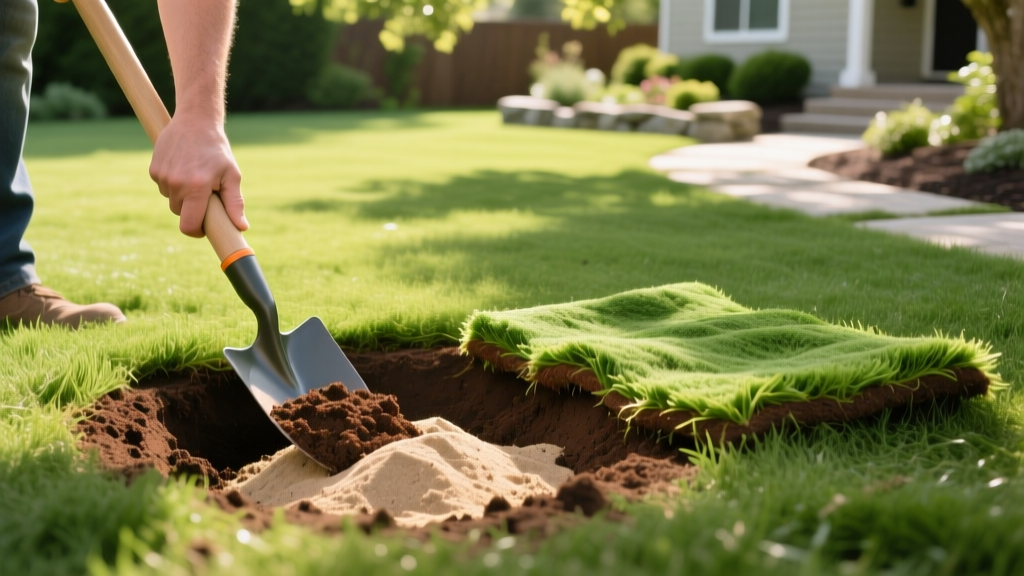
For a standard pedestrian patio, the ICPI recommends excavating 7 to 9 inches below the final desired elevation. This space is filled with a 4 to 6-inch layer of compacted crushed stone (typically 3/4-inch minus gravel), followed by a 1-inch layer of coarse, sharp bedding sand. The aggregate base alone can cost $0.50 to $1.50 per square foot, but the labor to excavate, haul away the debris, and mechanically compact the base in 2-inch lifts is where the true expense lies.
If your soil is highly expansive (such as heavy clay) or if the patio will support heavy loads like a hot tub or an outdoor kitchen, the ICPI advises increasing the crushed stone base to 8 to 10 inches and potentially incorporating a geotextile fabric separator. Geotextile fabric costs roughly $0.25 to $0.50 per square foot and prevents the base aggregate from mixing with the native subgrade soil, significantly extending the lifespan of your hardscape.
Labor and Site Preparation Costs
Labor typically accounts for 40% to 60% of the total patio installation cost. Professional hardscape contractors generally charge between $6 and $12 per square foot for labor, depending on the complexity of the design. A simple square or rectangular patio with a straightforward running bond pattern will be at the lower end of the labor scale. Conversely, intricate patterns like herringbone, circular designs, or patios requiring extensive cutting around existing landscape features will drive labor costs higher due to the increased time and precision required.
Site preparation is another major labor variable. If your yard has a significant slope, the contractor may need to build a retaining wall or install a stepped patio design to manage the grade. Terracing a sloped yard can add $2,000 to $5,000 to the overall project cost. Additionally, if existing structures like an old concrete slab or a decaying wooden deck need to be demolished and hauled away, expect to pay an additional $2 to $5 per square foot for demolition and disposal fees.
Hidden Costs and Budgeting Traps
When drafting your landscaping budget, it is vital to account for hidden costs that rarely appear in initial online estimates. Failing to plan for these can result in severe budget overruns.
- Permits and HOA Fees: Depending on your municipality, a patio over a certain square footage or one that alters the yard's drainage profile may require a grading or hardscape permit. Permit fees typically range from $50 to $250. Homeowners Association (HOA) approvals may also require specific architectural review fees.
- Drainage Solutions: A patio must slope away from the home's foundation at a minimum grade of 1/8 inch per foot. If your yard lacks natural drainage, you may need to budget for French drains, dry wells, or trench drains, which can add $500 to $2,000 to the project.
- Sealing and Maintenance: While concrete and stone pavers are low maintenance, applying a high-quality penetrating sealer every 3 to 5 years protects against stains and UV fading. Professional sealing costs $1.50 to $3.00 per square foot.
- Utility Rerouting: If your desired patio location sits over existing sprinkler lines, gas lines, or electrical conduits, rerouting these utilities can add hundreds or even thousands of dollars to the preliminary site work.
DIY vs. Professional Installation
Many homeowners consider a DIY paver patio to save on the steep labor costs. A DIY installation reduces the total cost to roughly $4 to $8 per square foot, covering only materials, tool rentals, and dump fees. However, hardscaping is incredibly labor-intensive. Renting a mechanical plate compactor ($75 to $100 per day), a masonry saw ($100 per day), and purchasing bulk gravel by the ton requires significant physical exertion and logistical planning.
Furthermore, improper base compaction or inadequate slope planning will lead to a failed patio that pools water or heaves in the winter. If you choose the DIY route, limit your scope to small, ground-level projects on flat, well-draining soil. For large patios, complex designs, or projects requiring retaining walls and significant grading, hiring a certified landscape professional is a necessary investment to ensure structural integrity and long-term durability.
Expert Tips for Maximizing Your Budget
If you are working with a strict landscaping budget, there are several strategic ways to reduce costs without sacrificing the structural quality of your patio:
- Choose Standard Shapes and Sizes: Custom-cut pavers, tumbled edges, and intricate laying patterns increase both material waste and labor time. Opting for standard rectangular concrete pavers laid in a simple running bond or stack bond pattern is the most cost-effective approach.
- Optimize the Patio Size: Instead of paving a massive 400-square-foot area, consider building a focused 200-square-foot patio and surrounding it with budget-friendly landscaping elements like gravel paths, mulch beds, or drought-tolerant groundcovers.
- Source Locally: Natural stone and heavy concrete pavers incur massive freight shipping charges. Sourcing materials from local quarries or regional manufacturers will drastically cut down on delivery fees.
- Time Your Project Wisely: Landscape contractors are busiest in the late spring and early summer. Scheduling your patio installation for late autumn or early winter (in climates where the ground does not freeze solid) can sometimes yield a 10% to 15% discount on labor rates as contractors look to keep their crews busy during the off-season.
Conclusion
Budgeting for a paver patio requires looking beyond the surface aesthetics and understanding the critical, unseen infrastructure that supports your outdoor space. By carefully weighing material choices, respecting the necessity of proper base preparation, and planning for hidden site costs, you can create a realistic budget that ensures your new patio remains a beautiful, functional cornerstone of your landscape for decades to come.