
Landscaping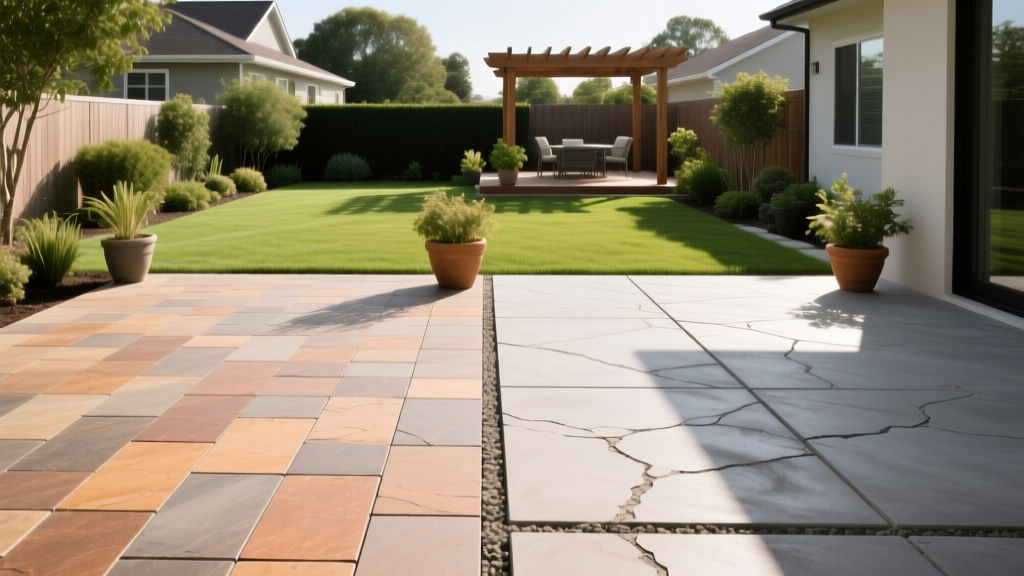
Paver Patio vs Stamped Concrete: Cost & Budget Guide
Lisa ThompsonPublished
Choosing the Right Hardscape for Your Landscaping Budget
When planning a comprehensive backyard landscaping overhaul, hardscaping elements often consume the largest portion of your overall budget. Transforming a simple grassy area into a functional outdoor living space requires careful financial planning, especially when choosing between the two most popular patio materials: interlocking concrete pavers and stamped concrete. Both options offer stunning curb appeal and durable surfaces for outdoor furniture, fire pits, and entertainment areas, but their cost structures, installation requirements, and long-term maintenance budgets differ significantly.
For homeowners and landscape designers alike, understanding the true cost of these materials goes far beyond the price per square foot at the local home improvement store. A successful landscaping budget must account for site preparation, base materials, labor, drainage solutions, and long-term upkeep. In this comprehensive cost and budgeting guide, we will break down the expenses associated with paver patios and stamped concrete, helping you make an informed decision that aligns with your financial goals and landscape design vision.
The True Cost of a Paver Patio
Interlocking concrete pavers are a premium landscaping choice known for their versatility, permeability, and classic aesthetic. However, achieving a flawless paver patio requires meticulous base preparation, which heavily influences the final budget.
Material Costs
The pavers themselves typically range from $2 to $5 per square foot for standard concrete options, while high-end natural stone or porcelain pavers can push this cost to $10 or more per square foot. However, the surface material is only a fraction of the material budget. You must also budget for the base aggregate (crushed stone or gravel), bedding sand, polymeric jointing sand, and geotextile fabric. For a standard 400-square-foot patio, base materials will add an additional $1.50 to $2.50 per square foot to your total material costs.
Labor and Installation
Paver installation is highly labor-intensive. Contractors must excavate the site to a depth of 7 to 9 inches, lay and compact the geotextile fabric, install and compact the crushed stone base in 2-inch lifts, screed the bedding sand, lay the pavers by hand, cut the borders with a wet saw, and finally sweep in and activate the polymeric sand. Due to this intensive process, professional labor costs generally range from $6 to $12 per square foot, depending on regional labor rates and the complexity of the pattern (such as a herringbone or circular design).
The True Cost of Stamped Concrete
Stamped concrete provides the high-end look of natural stone, slate, or brick at a generally lower initial installation cost. It involves pouring a continuous concrete slab and pressing textured mats into the surface before it cures, followed by the application of color hardeners and sealers.
Material Costs
The raw materials for stamped concrete are relatively inexpensive. The concrete mix itself costs roughly $5 to $7 per square foot. The aesthetic elements—including integral colors, surface color hardeners, antiquing release agents, and high-quality acrylic sealers—add another $2 to $4 per square foot. While the material costs are lower than premium pavers, the specialized tools and stamping mats required are factored into the contractor's overhead.
Labor and Installation
While stamped concrete requires less manual laying than pavers, it demands a highly skilled crew and perfect timing. The concrete must be poured, colored, stamped, and finished within a narrow window before the slab begins to cure. Labor costs typically range from $5 to $10 per square foot. The total installed cost for stamped concrete usually falls between $12 and $25 per square foot, making it slightly more expensive than basic pavers but often cheaper than high-end natural stone paver systems.
Side-by-Side Cost Comparison Table
To help you visualize the budgeting differences, the table below outlines the average costs and financial considerations for a standard 400-square-foot patio project.
| Budget Category | Concrete Paver Patio | Stamped Concrete Patio |
|---|---|---|
| Surface Material Cost (per sq. ft.) | $2.00 - $5.00 | $5.00 - $7.00 (includes color) |
| Base & Prep Materials (per sq. ft.) | $1.50 - $2.50 | $0.50 - $1.00 |
| Professional Labor (per sq. ft.) | $6.00 - $12.00 | $5.00 - $10.00 |
| Total Installed Cost (per sq. ft.) | $9.50 - $19.50 | $10.50 - $18.00 |
| Estimated Total (400 sq. ft.) | $3,800 - $7,800 | $4,200 - $7,200 |
| Long-Term Repairability | High (replace individual units) | Low (requires slab patching) |
| Resealing / Maintenance Cost | $0.50 / sq. ft. (every 3-5 years) | $1.50 / sq. ft. (every 2-3 years) |
Hidden Landscaping Costs to Budget For
One of the most common budgeting mistakes homeowners make is assuming the per-square-foot quote is the final price. Both paver and concrete projects are subject to hidden landscaping costs that can quickly derail your budget if not anticipated.
- Demolition and Haul-Away: If you are replacing an existing wooden deck or old concrete slab, budget an additional $500 to $1,500 for demolition, heavy machinery rental, and dump fees.
- Excavation and Grading: Poorly draining soil or steep slopes require extensive excavation. If your yard requires retaining walls or significant regrading to achieve a 2% slope away from your home's foundation, expect to add $1,000 to $3,000 to your budget.
- Drainage Solutions: Hardscaping creates large impermeable surfaces (unless using permeable pavers). You may need to budget $800 to $2,000 for the installation of French drains, catch basins, or dry creek beds to manage stormwater runoff and protect your home's foundation.
- Permits and HOA Fees: Many municipalities require grading and hardscaping permits, which can cost between $100 and $500. Additionally, some Homeowners Associations require architectural review fees.
Long-Term ROI and Maintenance Budgeting
When evaluating landscaping costs, it is vital to consider the long-term return on investment (ROI) and ongoing maintenance. According to the National Association of Realtors (NAR) 2023 Remodeling Impact Report, landscape upgrades and functional outdoor living spaces can recover up to 100% of their cost at resale, with some premium hardscaping projects yielding an even higher return by drastically improving curb appeal and buyer desirability.
However, the maintenance budgets for these two materials diverge significantly over time. The Interlocking Concrete Pavement Institute (ICPI) notes that properly installed concrete pavers have a structural lifespan exceeding 50 years. Because they are a flexible system, they shift slightly with freeze-thaw cycles without cracking. If a paver stains or cracks, it can be individually replaced for less than $20. Furthermore, pavers can be completely removed to access underground utility lines and reinstalled without a trace.
Stamped concrete, conversely, is a rigid slab. Despite the installation of control joints, it is highly susceptible to cracking due to soil settlement, tree root intrusion, and freeze-thaw cycles. Repairing cracked stamped concrete is notoriously difficult and expensive, often requiring full-depth slab replacement that ruins the visual continuity of the pattern. Additionally, stamped concrete requires strict resealing every 2 to 3 years to prevent UV fading and moisture intrusion, adding a recurring maintenance cost of roughly $600 to $1,000 per cycle for an average-sized patio.
Step-by-Step Budgeting Strategy for Hardscaping
To ensure your landscaping project stays on track financially, follow this actionable budgeting strategy:
- Define the Footprint: Use landscaping paint to mark the exact dimensions of your desired patio. Calculate the total square footage and add 10% to account for material waste and cuts.
- Allocate for Site Prep: Set aside 20% of your total budget specifically for excavation, base materials, and drainage. Never compromise on the base; a poor base will ruin both pavers and concrete.
- Gather Multiple Quotes: Obtain at least three detailed, itemized quotes from licensed and insured hardscape contractors. Ensure each quote specifies the exact depth of the base aggregate and the brand of materials being used.
- Establish a Contingency Fund: Landscaping projects frequently uncover hidden issues, such as buried debris, massive tree roots, or unexpected bedrock. Always maintain a 15% to 20% cash contingency fund to handle these surprises without halting construction.
Expert Landscaping Tip: When comparing contractor bids, do not automatically choose the lowest price. A bid that is significantly lower than the others often indicates that the contractor plans to cut corners on base preparation, such as using less crushed stone or skipping the geotextile fabric. In hardscaping, the strength of the surface is entirely dependent on the quality of the unseen base beneath it.
Conclusion: Which Option Fits Your Budget?
Ultimately, the choice between a paver patio and stamped concrete depends on your immediate budget constraints and your long-term landscaping goals. If you are looking for a slightly lower upfront cost and prefer a seamless, continuous surface, stamped concrete is an excellent choice, provided you budget for rigorous resealing and accept the risk of unrepairable cracking. On the other hand, if you view your landscape as a long-term investment and want a highly customizable, easily repairable surface that handles freeze-thaw cycles gracefully, interlocking concrete pavers offer superior lifetime value. By accurately forecasting material, labor, and hidden site-preparation costs, you can confidently design an outdoor living space that enhances your property's value without breaking the bank.

