
Landscaping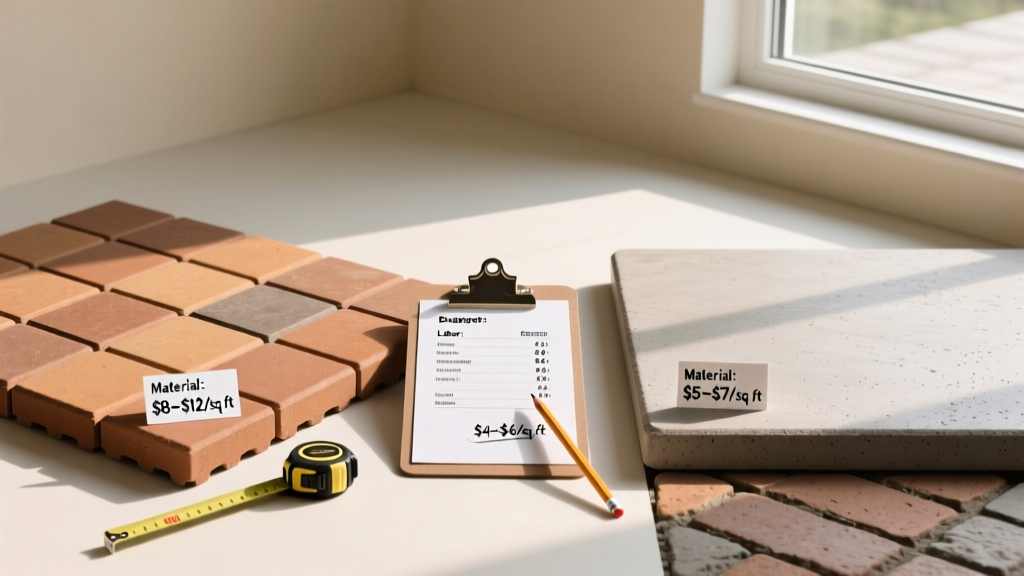
Paver vs Stamped Concrete Patio Costs: Budget Guide
Robert HayesPublished
When planning an outdoor living space, homeowners frequently debate between two of the most popular hardscaping materials: stamped concrete and interlocking concrete pavers. Both options offer stunning aesthetic appeal, mimicking natural stone, brick, or slate, but their installation processes, material requirements, and long-term maintenance budgets differ significantly. According to the National Association of Landscape Professionals (NALP), a well-executed patio or outdoor living space can yield an investment return of up to 80 percent or more. However, to achieve that return, you must accurately forecast your hardscaping budget. This comprehensive cost and budgeting guide breaks down the exact expenses associated with stamped concrete versus paver patios, helping you allocate your landscaping funds wisely.
Stamped Concrete Patio Costs: Material and Labor Breakdown
Stamped concrete is poured as a single, continuous slab and then imprinted with textured mats while the concrete is still pliable. The average cost for a stamped concrete patio ranges from $12 to $18 per square foot, though intricate designs with multiple colors and borders can push this price past $22 per square foot.Material Costs
The base material is ready-mix concrete, typically costing between $120 and $150 per cubic yard delivered. For a standard 4-inch thick patio, one cubic yard covers approximately 81 square feet. Beyond the raw concrete, the stamping process requires specific chemical treatments. Integral colors or broadcast color hardeners add $0.40 to $0.80 per square foot. An antiquing release agent, which prevents the stamping mats from sticking and adds a secondary color dimension, costs about $0.20 per square foot. Finally, a high-quality acrylic sealer, essential for protecting the surface from UV degradation and moisture intrusion, adds $0.15 to $0.30 per square foot.Labor and Preparation
Labor accounts for roughly 50 to 60 percent of the total stamped concrete budget. The crew must excavate the site, install a compacted gravel base (usually 4 inches of crushed stone), build wooden forms, and lay a wire mesh or rebar grid for structural reinforcement. The pouring and stamping process is highly time-sensitive; concrete begins to set rapidly, meaning the crew must work with precision and speed. Because of this urgency and the specialized skill required to operate stamping mats seamlessly, stamped concrete labor rates are generally higher than standard flatwork, averaging $6 to $10 per square foot.Paver Patio Costs: Material and Labor Breakdown
Interlocking concrete pavers are individual units laid over a flexible base system. While they offer unmatched durability and ease of repair, they are generally more expensive upfront. The national average for a professionally installed paver patio ranges from $16 to $25 per square foot, with premium natural stone or high-end porcelain pavers exceeding $35 per square foot.Material Costs and Base Specifications
The pavers themselves range from $2.50 to $8.00 per square foot depending on the brand (such as Belgard or Techo-Bloc), thickness, and manufacturing process (tumbled vs. smooth). However, the true cost of a paver patio lies beneath the surface. The Interlocking Concrete Pavement Institute (ICPI) strictly recommends a flexible base system to prevent settling and frost heave. This requires a geotextile fabric separator ($0.10 per square foot), a 4-to-6-inch layer of ASTM D2940 crushed angular aggregate base ($0.40 to $0.75 per square foot), and a 1-inch layer of ASTM C33 concrete bedding sand ($0.15 per square foot). After laying, the joints are filled with polymeric sand ($0.25 to $0.40 per square foot), which hardens upon watering to lock the pavers in place and deter weed growth.Labor Intensity
Paver installation is incredibly labor-intensive. Unlike concrete, which is poured and finished in a single day, pavers require meticulous site grading, manual screeding of the sand bed, cutting of individual units with a gas-powered masonry saw to fit borders and curves, and mechanical plate compaction. Labor costs for paver installation typically range from $8 to $14 per square foot. The precision required to maintain proper drainage slopes (a minimum 1 percent grade away from the home's foundation) demands experienced hardscape masons.Cost Comparison Table: Stamped Concrete vs. Pavers
| Feature | Stamped Concrete | Concrete Pavers |
|---|---|---|
| Average Installed Cost | $12 - $18 per sq. ft. | $16 - $25 per sq. ft. |
| Material Cost | $4 - $7 per sq. ft. | $6 - $12 per sq. ft. |
| Labor Cost | $6 - $10 per sq. ft. | $8 - $14 per sq. ft. |
| Expected Lifespan | 25 - 30 years | 50+ years |
| Crack Repair Difficulty | High (requires patching/resurfacing) | Low (remove and replace individual units) |
| DIY Feasibility | Very Low (requires concrete finishing skills) | Moderate (labor-intensive but forgiving) |
Hidden Hardscaping Costs to Include in Your Budget
When drafting your landscaping budget, novice planners often overlook site-specific variables that can inflate the final invoice. Always allocate a 10 to 15 percent contingency fund for the following hidden costs:Excavation and Soil Disposal
Removing existing sod, topsoil, or an old patio generates a massive amount of debris. Soil is heavy, and local landfills charge by the ton for clean fill and mixed construction debris. Expect to pay $40 to $70 per ton for dump fees, plus the cost of a dumpster rental or hauling truck. If your site requires extensive grading or the removal of large tree roots, excavation costs can easily add $500 to $1,500 to your project.Drainage Solutions and Permits
Proper water management is non-negotiable in hardscaping. If your patio design intercepts natural yard drainage, you may need to install a French drain, a catch basin, or a permeable paver system. The Penn State Extension notes that integrating permeable hardscapes can significantly reduce stormwater runoff, but the specialized base materials (clean-washed open-graded aggregates) and deeper excavation required for permeable pavers can increase base preparation costs by 20 to 30 percent. Additionally, check with your local municipality regarding building permits; hardscape permits typically range from $50 to $200 depending on the square footage and whether the patio is attached to the home's foundation.Long-Term Maintenance Budgeting
A true budgeting guide must account for the total cost of ownership over a decade. Stamped concrete requires resealing every two to three years to maintain its color and protect against water penetration and freeze-thaw damage. Professional resealing costs $1.50 to $2.50 per square foot. Over ten years, this maintenance can add thousands of dollars to your initial investment. Furthermore, if the ground shifts and the concrete slab cracks, repairs are highly visible and often require costly decorative resurfacing overlays. Conversely, paver patios require less frequent, albeit specific, maintenance. The polymeric sand in the joints may degrade after five to seven years, requiring a power wash and re-sanding (approximately $1.00 to $1.50 per square foot). However, if a paver cracks or the base settles unevenly, you can simply pry up the affected stones, add more bedding sand, and replace them—a repair that costs almost nothing in materials and can be completed as a weekend DIY project.Expert Tips for Saving Money on Your Patio Project
To maximize your landscaping budget without sacrificing quality, consider these actionable strategies:- Stick to Standard Shapes and Sizes: Custom curves, tight radii, and complex borders require extensive cutting, which increases both material waste and labor hours. Opting for a simple rectangular or square design with a soldier course border can reduce labor costs by up to 15 percent.
- Choose Local Materials: Hardscape materials are incredibly heavy. Shipping concrete pavers across the country incurs massive freight surcharges. Visit local stone yards and choose products manufactured within a 200-mile radius to eliminate exorbitant delivery fees.
- Perform Your Own Demolition: If you are replacing an existing wooden deck or old concrete slab, offer to tear it down and haul the debris away yourself. Contractors charge a premium for demolition and disposal; handling this phase yourself can shave $1,000 or more off your total estimate.
- Phase Your Outdoor Living Space: If your dream design exceeds your current budget, work with a landscape architect to create a master plan that can be executed in phases. Install the primary patio and base prep now, and add features like retaining walls, fire pits, or outdoor kitchens in subsequent years.

