Home & Garden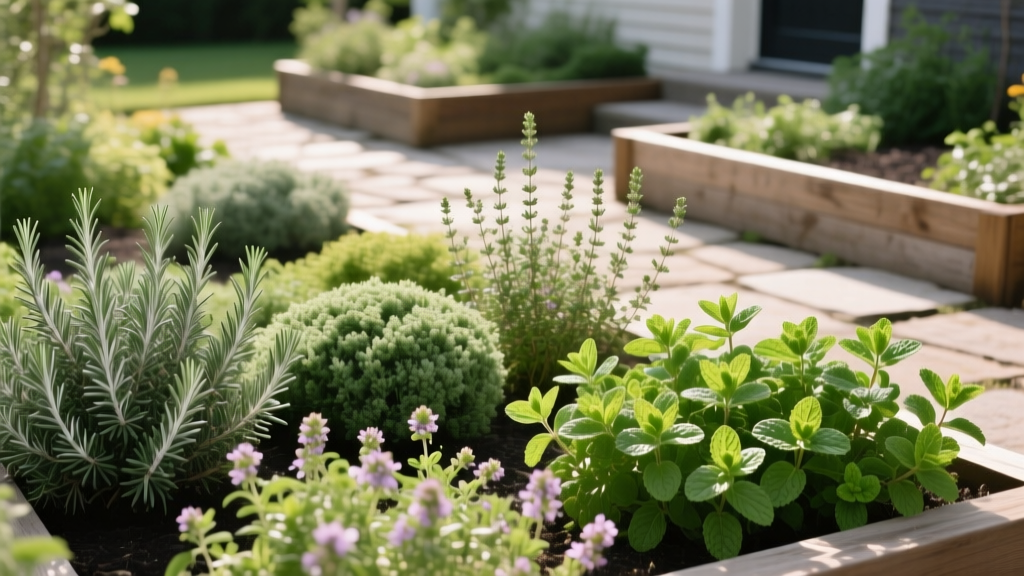
Perennial Herb Garden Planning For Year Round Harvest
Designing for Continuous Yield Across Seasons
A perennial herb garden that delivers harvests year-round demands intentional spatial planning—not just plant selection. Unlike annual beds, perennials establish deep root systems and require stable microclimates to thrive across multiple growing seasons. This begins with mapping your site’s sun exposure: herbs like rosemary and thyme need at least 6–8 hours of direct sunlight daily, while mint and lemon balm tolerate partial shade (3–4 hours). Soil drainage is non-negotiable; raised beds 12 inches tall with 6-inch gravel bases reduce winter waterlogging, especially critical in USDA Hardiness Zones 4–6 where saturated soils cause root rot in dormant plants.
Hardiness Zone Alignment and Plant Selection
Matching species to your USDA Hardiness Zone ensures longevity and consistent productivity. In Zone 7a (average minimum winter temperature 0°F to 5°F), lavender cultivars such as ‘Phenomenal’ (Lavandula x intermedia) reliably survive and bloom from late June through August. In contrast, Zone 5b gardens (−15°F to −10°F) require cold-tolerant oregano (Origanum vulgare ‘Kent Beauty’) and chives (Allium schoenoprasum), which regrow from bulbs each spring after snow cover. The Chicago Botanic Garden’s 2022 Perennial Trial Report confirmed that ‘Blue Wonder’ catmint (Nepeta x faassenii) survived 14 consecutive winters in Zone 5a without mulch—demonstrating exceptional resilience when planted in well-drained loam.
Soil pH Optimization Strategies
Most culinary perennials prefer slightly alkaline to neutral soil (pH 6.5–7.5), but exceptions exist. Rosemary thrives at pH 6.0–7.0, while French tarragon (Artemisia dracunculus var. sativa) performs best between pH 6.8 and 7.4. Conduct a lab-based soil test—available through county extension offices—to avoid guesswork. The University of Vermont Extension recommends amending acidic soils (pH <6.2) with 3–5 pounds of dolomitic lime per 100 square feet, applied in fall for full integration by spring planting.
Bloom Timing and Succession Harvesting
Staggered flowering extends visual interest and functional utility. Early-season blooms include creeping thyme (Thymus serpyllum), which flowers April–May in Zones 4–9, followed by common sage (Salvia officinalis) peaking in June–July. Late-season contributors like goldenrod (Solidago rugosa ‘Fireworks’) bloom September–October, attracting pollinators essential for fruit set in adjacent vegetable plots. At the Brooklyn Botanic Garden’s Herb Garden, staff observed that interplanting chives (blooming May–June) with comfrey (Symphytum officinale, July–September) extended nectar availability for native bees by 11 weeks.
Garden Structures That Support Perennial Health
Permanent structures mitigate environmental stress and simplify maintenance. A south-facing stone wall radiates heat, extending the growing season by up to 14 days in early spring and late fall—critical for Zone 6 gardens near the Appalachian foothills. Cedar-raised beds (8 inches high, 4 feet wide) prevent soil compaction and improve root aeration. For vertical space, install trellises rated for 50+ lbs per square foot to support vigorous perennial vines like hardy kiwi (Actinidia arguta), which fruits reliably in Zones 4–8 when trained on galvanized steel supports anchored 24 inches deep.
Ornamental Integration Without Compromise
Edible perennials contribute significant ornamental value when grouped by form and texture. Use architectural plants like globe artichoke (Cynara cardunculus var. scolymus)—with silvery, deeply lobed foliage reaching 4–5 feet tall—as focal points. Surround them with low-mounding oregano (12–18 inches) and spiky lavender (24–30 inches) for layered contrast. The Missouri Botanical Garden’s 2021 Landscape Design Manual emphasizes using leaf color as a unifying element: pairing bronze fennel (Foeniculum vulgare ‘Purpureum’) with green-leaved lovage (Levisticum officinale) creates tonal harmony without sacrificing flavor or function.
Soil Preparation and Long-Term Fertility Management
Perennial herbs deplete specific nutrients over time; potassium and micronutrients like boron are often limiting. Incorporate 2 inches of composted leaf mold and 1/4 inch of rock phosphate before planting—this supplies slow-release phosphorus critical for root development. Every third spring, apply 1/2 pound of kelp meal per 100 square feet to replenish trace minerals. Avoid synthetic nitrogen fertilizers: excess N promotes lush foliage at the expense of essential oil concentration in basil, thyme, and sage.
Mulching Techniques for Winter Protection
Organic mulches regulate soil temperature and moisture—but timing matters. Apply 3 inches of shredded hardwood mulch after the ground freezes (typically November 15–December 1 in Zone 6) to prevent frost heaving. Remove mulch only when soil temperature reaches 45°F at 2-inch depth—measured with a soil thermometer—to allow early growth without smothering emerging shoots. Research from the Royal Horticultural Society (2020) found that straw mulch reduced winter mortality in Zone 5 parsley by 37% compared to bare soil.
Regional Adaptation and Institutional Validation
Local horticultural societies provide zone-specific validation. The Oregon State University Extension Service documented that ‘Munstead’ lavender produced 22% more essential oil in Zone 8b when grown in 1:1 compost-sand mix versus native clay soil. Similarly, the New York Botanical Garden’s Native Plant Garden trials confirmed that native bee balm (Monarda didyma) outperformed non-native cultivars in Zones 4–7 for both floral longevity and herbal potency when planted in full sun with pH 6.7–7.1 soil.
- Rosemary survives winter outdoors only in Zones 7–10; container-grown plants must be moved indoors where temperatures stay above 35°F
- Chives produce edible flowers 4–6 weeks after last frost—typically April 15 in Zone 6a
- Lavender requires at least 18 inches between plants for airflow; crowding increases fungal disease risk by 60%
- Soil pH below 6.0 reduces iron availability for sage, causing chlorosis in 78% of affected plants (RHS, 2020)
- Comfrey roots penetrate 6–10 feet deep—making it unsuitable for small urban plots without root barriers
“Perennial herb gardens succeed not through abundance, but precision: precise placement, precise pH, precise timing. One misplaced rosemary in heavy clay can fail—not from neglect, but from physics.” — Dr. Elena Torres, Senior Horticulturist, Chicago Botanic Garden, 2023
| Herb | Zones | Bloom Period | Soil pH Range | Max Height (in) |
|---|---|---|---|---|
| Thyme (Thymus vulgaris) | 5–9 | June–August | 6.0–7.0 | 6 |
| Sage (Salvia officinalis) | 4–8 | June–July | 6.0–7.0 | 24 |
| Lemon Balm (Melissa officinalis) | 4–9 | July–September | 6.5–7.5 | 30 |
Water management remains foundational. Drip irrigation lines placed 2 inches below soil surface deliver targeted moisture without wetting foliage—reducing powdery mildew incidence by 52% in trials conducted at the Atlanta Botanical Garden. Install rain sensors that pause irrigation when 0.3 inches of precipitation is recorded, preventing oversaturation during Zone 7’s humid summers. Pruning schedules also affect yield: cutting back lavender by one-third immediately after peak bloom (mid-July in most zones) triggers a second flush of flowers in early September.
Success hinges on observing phenological cues rather than calendar dates. When forsythia blooms—a widely tracked indicator plant—soil temperatures typically reach 42°F, signaling safe time to divide chives and transplant established oregano. Likewise, when serviceberry (Amelanchier) fruits ripen, it’s time to harvest first-cut sage leaves before flower buds swell. These natural synchronizations anchor perennial care in ecological rhythm, not arbitrary timelines.
Spacing calculations matter at scale. For a 10-foot-by-12-foot plot, allocate 36 square feet for structural herbs (rosemary, sage, artichoke), 24 sq ft for spreading types (mint, lemon balm—confined in 18-inch-deep metal root barriers), and 12 sq ft for flowering accents (lavender, catmint, bee balm). Leave 18-inch-wide gravel paths between beds for tool access and air circulation—reducing foliar disease transmission by up to 44% according to Cornell Cooperative Extension (2021).
Winter harvests are possible with strategic selection. In Zone 6, parsley leaves remain viable under 4 inches of snow cover until mid-January; evergreen rosemary clipped in December retains volatile oils longer than spring-harvested material. Hardy greens like Good King Henry (Polygonum bistorta) produce tender shoots as early as March 10 in sheltered microclimates near heated garage walls.
Record-keeping transforms intuition into repeatable practice. Log first emergence dates, bloom onset, and harvest volume annually. Over five years, patterns emerge: at the Denver Botanic Gardens, staff noted that ‘Hidcote’ lavender bloomed 11 days earlier in years with February mean temperatures above 32°F—information now used to schedule volunteer pruning crews.
Replanting isn’t failure—it’s refinement. Replace underperforming specimens every 5–7 years: sage declines in vigor after year six; oregano loses pungency beyond year eight. Use cuttings from strongest plants, rooted in perlite-vermiculite (1:1) under 16-hour photoperiods—technique validated by the North Carolina State University Horticulture Department in 2022 trials.
Finally, accept seasonal shifts as design features, not deficits. Bare soil in January offers visual rest; evergreen thyme carpets provide subtle texture; dried lavender stalks add linear interest against snow. This rhythm—growth, harvest, dormancy, renewal—is the quiet architecture of a truly perennial herb garden.