
Landscaping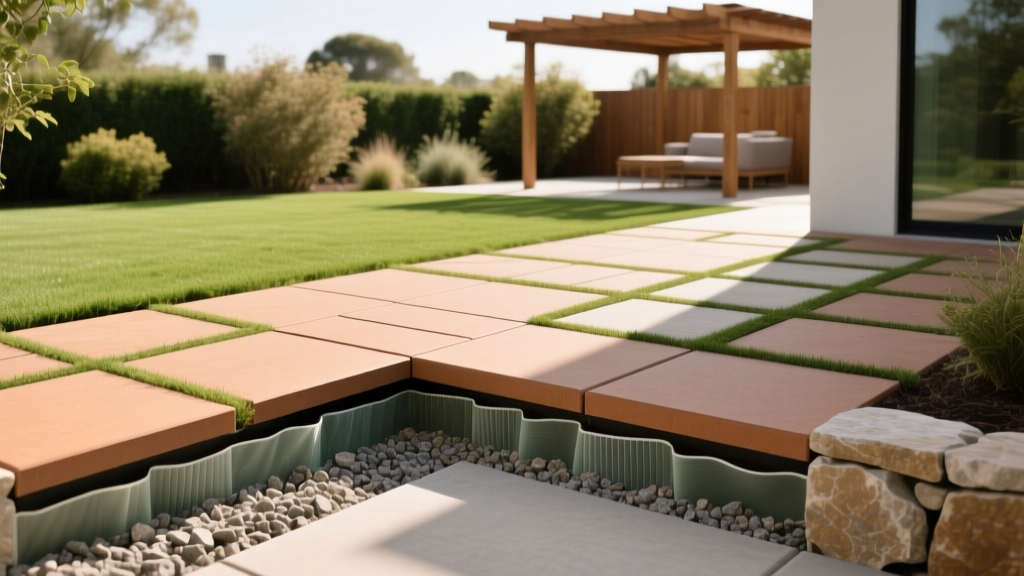
Planning a Permeable Paver Patio: Design Ideas & Costs
Sarah ChenPublished
Transforming Your Yard with Permeable Interlocking Concrete Pavers
When planning an outdoor living space, drainage is often an afterthought. Homeowners frequently install traditional concrete slabs or standard paver patios, only to discover that heavy rains create massive puddles, erode nearby garden beds, or flood their basements. Enter Permeable Interlocking Concrete Pavers (PICP). This innovative hardscaping solution allows rainwater to pass through the surface and infiltrate the soil below, mimicking the natural hydrological cycle while providing a stunning, durable surface for your outdoor furniture and entertainment areas.
Designing a permeable paver patio requires a shift in mindset. Unlike traditional hardscapes that rely on surface slope to shed water into storm drains, a permeable patio acts as a massive, hidden reservoir. Planning this type of project involves careful consideration of soil types, base material depths, joint spacing, and integration with your existing softscape. In this comprehensive guide, we will explore the design possibilities, structural requirements, and financial investments needed to build a permeable paver patio that solves drainage issues and elevates your curb appeal.
Why Choose Permeable Pavers? The Environmental and Practical Benefits
The primary advantage of PICP is stormwater management. According to the Environmental Protection Agency (EPA), permeable pavements are a premier green infrastructure tool that significantly reduces stormwater runoff, filters out pollutants like heavy metals and oils, and helps recharge local groundwater aquifers. By capturing the first flush of rainfall, you prevent the overwhelming of municipal sewer systems and protect local waterways from erosion and contamination.
From a practical homeowner perspective, the benefits are equally compelling. Permeable patios eliminate standing water, which means fewer breeding grounds for mosquitoes and less ice formation during freezing winter months. Because the water drains through the joints rather than pooling on the surface, the patio remains usable almost immediately after a heavy downpour. Furthermore, many municipalities offer stormwater fee reductions or rebates for homeowners who install permeable hardscapes, potentially offsetting a portion of your installation costs.
Design Ideas: Patterns, Colors, and Joint Spacing
A common misconception is that permeable pavers look industrial or lack aesthetic appeal. Modern manufacturing has completely debunked this myth. Leading brands like Belgard and Pavestone offer permeable lines that mimic natural cobblestone, aged brick, and sleek modern slate. When planning your design, consider the following aesthetic and structural elements:
- Pattern Selection: A herringbone pattern at a 45-degree or 90-degree angle is highly recommended for permeable installations. This pattern provides the best structural interlock, distributing vehicular or heavy foot traffic loads evenly across the surface while maintaining consistent joint widths.
- Color Blending: Choose multi-tonal pavers to camouflage any potential sediment or organic debris that might accumulate near the joints over time. Earth tones like sandstone, slate grey, and terracotta blend beautifully with surrounding garden beds.
- Joint Widths: Unlike standard pavers that sit tightly together, permeable pavers require wider joints—typically 3/8 inch to 1/2 inch. These joints are not filled with polymeric sand, but rather with small, angular crushed stone that allows water to pass through while locking the pavers in place.
Planning the Base: The Architecture of Permeability
The secret to a successful permeable patio lies entirely beneath the surface. The base of a PICP system is an engineered, open-graded aggregate reservoir. If you use traditional dense-graded base materials (like crushed gravel with stone dust), the system will fail, as the fine particles will clog the voids and block water infiltration. You must use clean, washed, open-graded aggregates that meet specific ASTM (American Society for Testing and Materials) standards.
Below is the standard architectural profile for a residential permeable paver patio base. Note that depths may need to increase if your native soil has a high clay content or poor percolation rates.
| Layer | Material Specification | Depth | Primary Function |
|---|---|---|---|
| Subgrade | Compacted Native Soil | Varies | Structural foundation and slope grading |
| Base / Reservoir | ASTM No. 2 Crushed Stone | 10 to 14 inches | Water storage, structural support, frost heave prevention |
| Bedding Course | ASTM No. 8 Crushed Stone | 2 inches | Leveling bed and secondary filtration |
| Paver Joints | ASTM No. 8 or No. 9 Stone | Full Paver Depth | Surface water infiltration and paver interlock |
It is also critical to line the excavation trench with a non-woven geotextile separation fabric if your native soil is silty or clay-heavy. This fabric prevents the fine soil particles from migrating up into the clean stone reservoir and clogging the system over time.
Cost Breakdown and Material Estimates
Installing a permeable paver patio is generally more expensive than a traditional paver patio due to the increased depth of excavation and the volume of specialized aggregate required. However, the long-term benefits and potential municipal rebates often justify the initial investment. For a standard 200-square-foot residential patio, here is a realistic cost breakdown:
- Permeable Pavers: $4.00 to $8.00 per square foot, depending on the brand, thickness (60mm vs 80mm), and aesthetic finish.
- Open-Graded Aggregates (ASTM No. 2 and No. 8): $2.50 to $4.50 per square foot. You will need approximately 1.5 tons of No. 2 stone and 0.5 tons of No. 8 stone per 100 square feet of patio.
- Geotextile Fabric and Edge Restraints: $1.50 to $2.50 per square foot. Permeable edge restraints are specially designed with weep holes to allow water to escape the sides of the patio.
- Labor and Equipment Rental: $8.00 to $14.00 per square foot. Excavating 14 to 18 inches of soil requires heavy machinery or intense manual labor, plus the rental of a 5,000 lb vibratory plate compactor.
Total Estimated Cost: $16.00 to $29.00 per square foot installed. For a 200-square-foot patio, expect to budget between $3,200 and $5,800.
Step-by-Step Installation Timeline
Proper planning requires understanding the project timeline. For a professional crew working on a 200-square-foot patio, the installation typically follows a four-day schedule:
Day 1: Excavation and Subgrade Prep. The area is excavated to a depth of 16-18 inches. The native subgrade is sloped slightly (about 1% grade) to encourage slow movement of water toward an overflow outlet, and then compacted. Geotextile fabric is rolled out and pinned to the edges.
Day 2: Building the Reservoir. The ASTM No. 2 crushed stone is delivered and spread in 4-inch lifts (layers). Each lift is thoroughly compacted with a heavy vibratory plate compactor to ensure a rock-solid foundation that will not settle over time.
Day 3: Bedding and Laying. The 2-inch ASTM No. 8 bedding layer is screeded perfectly level. The pavers are then laid in the chosen pattern, maintaining strict joint spacing using spacer bars. Permeable edge restraints are secured with galvanized spikes.
Day 4: Jointing and Final Compaction. ASTM No. 8 or No. 9 jointing stone is swept across the surface and into the joints. The patio is compacted one final time to vibrate the jointing stone deep into the voids, locking the entire system together.
Integrating Softscapes and Rain Gardens
A well-planned landscape seamlessly connects hardscapes with softscapes. While a permeable patio handles the vast majority of rainfall, extreme weather events may exceed the infiltration capacity of the base reservoir. To manage this overflow, design your patio with a subtle 1% slope directing excess water toward a planned rain garden or a dry creek bed.
Bordering your permeable patio with deep-rooted, native moisture-loving plants—such as Swamp Milkweed, Blue Flag Iris, or Joe-Pye Weed—creates a functional and beautiful transition zone. These plants will absorb any lateral water that weeps out of the permeable edge restraints, turning a potential drainage issue into a thriving pollinator habitat.
Long-Term Maintenance for Maximum Infiltration
To ensure your patio continues to drain effectively for decades, maintenance is required. The primary enemy of permeable pavers is fine sediment, falling leaves, and organic matter that can clog the jointing stones. Never use polymeric sand or standard masonry sand on a PICP system, as this will instantly destroy its permeability.
The University of Minnesota Extension advises homeowners to perform routine maintenance to preserve the infiltration rate of permeable surfaces. This includes sweeping the patio regularly with a stiff bristle broom and using a specialized vacuum sweeper or leaf blower to remove organic debris from the joints before it decomposes into fine silt.
"Routine vacuum sweeping of permeable pavements is essential to prevent the clogging of void spaces by sediment and organic matter. If infiltration rates drop significantly, the top inch of jointing stone can be vacuumed out and replaced with fresh, clean aggregate to restore full functionality." — University of Minnesota Extension, Stormwater Management Guidelines.
By planning carefully, selecting the right ASTM-rated materials, and committing to simple annual maintenance, your permeable paver patio will serve as a stunning, eco-friendly centerpiece for your landscape design, effectively solving yard drainage issues while boosting your property value.

