
Landscaping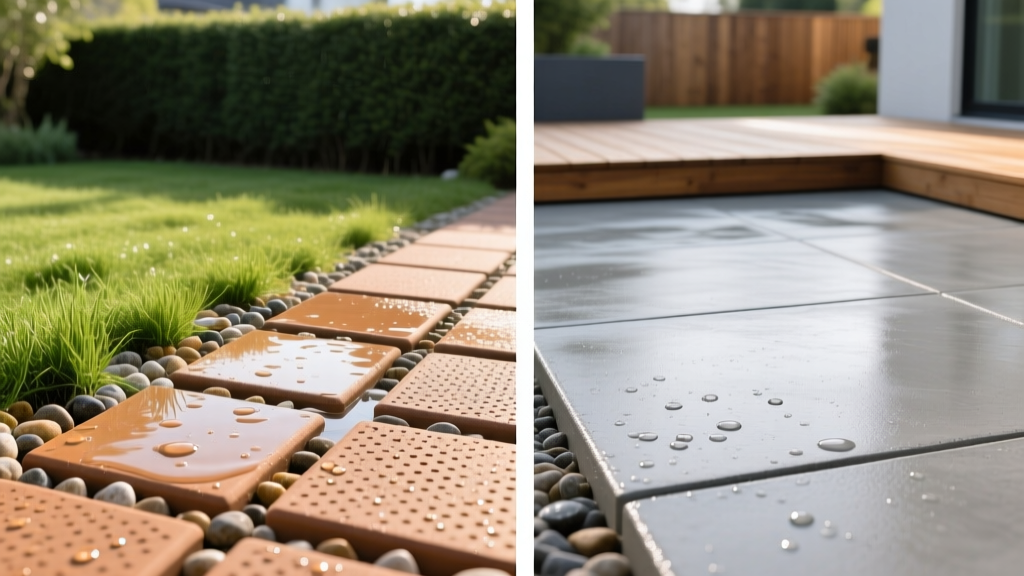
Permeable Pavers vs Poured Concrete: Hardscape Guide
David ParkPublished
Introduction to Hardscaping Choices
When designing an outdoor living space, patio, or driveway, the hardscaping materials you choose dictate not only the aesthetic of your landscape but also its functionality, drainage, and long-term maintenance. Two of the most popular choices for modern landscaping projects are permeable pavers and traditional poured concrete. While both offer a solid surface for foot traffic and outdoor furniture, they perform vastly differently when it comes to water management, installation, and environmental impact. In this comprehensive product comparison, we will break down permeable pavers versus poured concrete to help you decide which material is the ultimate winner for your specific landscaping needs.
Understanding Permeable Pavers
Permeable pavers are an innovative green infrastructure solution designed to mimic the natural absorption of land. Unlike traditional impervious surfaces, permeable paving systems consist of individual interlocking concrete or stone units separated by joints. These joints are filled with small, uniformly graded aggregate (like crushed stone or coarse sand) rather than mortar or polymeric sand. Beneath the pavers lies a deep, open-graded aggregate base that acts as a reservoir, temporarily storing rainwater and allowing it to slowly infiltrate into the underlying soil. According to the Environmental Protection Agency (EPA), permeable pavements are highly effective at reducing stormwater runoff, filtering out pollutants, and recharging local groundwater tables. They are an ideal choice for eco-conscious homeowners looking to improve their property's drainage solutions while maintaining a high-end, customized look.
Understanding Poured Concrete
Poured concrete is the traditional workhorse of hardscaping. It involves mixing cement, water, and aggregates (sand and gravel) into a slurry, pouring it over a compacted sub-base, and smoothing it into a continuous, monolithic slab. Control joints are often cut or troweled into the surface to manage inevitable cracking as the concrete cures and shifts with temperature changes. Poured concrete is renowned for its initial cost-effectiveness, rapid installation, and clean, uniform appearance. However, because it is an impervious surface, water cannot pass through it. Instead, it relies entirely on surface grading and slope to direct rainwater away from structures and toward storm drains or garden beds. The United States Geological Survey (USGS) notes that impervious surfaces like traditional concrete significantly increase stormwater runoff, which can lead to localized flooding, soil erosion, and the transport of pollutants into local waterways.
Head-to-Head Comparison Chart
To visualize the core differences between these two hardscaping giants, review the comparison table below:
| Feature | Permeable Pavers | Poured Concrete |
|---|---|---|
| Average Cost (per sq. ft.) | $10 - $25 | $6 - $15 |
| Installation Time | 3 - 7 Days | 2 - 4 Days (plus 28-day cure) |
| Expected Lifespan | 30 - 50+ Years | 20 - 30 Years |
| Water Drainage | Excellent (Infiltrates soil) | Poor (Requires surface runoff) |
| Maintenance Level | Moderate (Joint cleaning/refilling) | Low to Moderate (Sealing, crack repair) |
| Winter Durability | High (Resists freeze-thaw heaving) | Moderate (Prone to cracking) |
| Aesthetic Versatility | High (Patterns, colors, textures) | Moderate (Stamping/staining adds cost) |
Cost and Installation Breakdown
The True Cost of Installation
When budgeting your landscape design project, poured concrete almost always wins on upfront material costs. A basic broom-finished concrete slab can cost between $6 and $10 per square foot. Permeable pavers, on the other hand, generally range from $10 to $25 per square foot installed. However, the cost disparity lies primarily in the labor and base preparation. Permeable systems require a much deeper excavation and a thicker, meticulously graded aggregate base to ensure proper water storage and infiltration. While the materials for pavers are more expensive, the modular nature of the product means that if a section settles or a utility line needs repairing beneath the patio, you can simply unzip the pavers, fix the base, and relay them. Repairing a cracked concrete slab often requires saw-cutting, demolishing, and repouring, which can be costly and visually mismatched.
Installation Timelines
Poured concrete is incredibly fast to install. A professional crew can form, pour, and finish a standard patio in a single day. However, concrete requires a significant curing period—typically 28 days to reach its full structural strength—during which heavy loads must be avoided. Permeable pavers take longer to lay by hand and require precise screeding of the bedding layer, but the surface is immediately ready for foot traffic and furniture the moment the joint aggregate is compacted.
Drainage and Environmental Impact
If your property suffers from poor drainage, standing water, or strict municipal stormwater regulations, permeable pavers are the undisputed champion. By allowing rainwater to percolate through the joints and into the sub-base, permeable systems drastically reduce the burden on municipal sewer systems and prevent the pooling of water on your patio. The EPA highlights that permeable pavements can also improve water quality by filtering out heavy metals, oils, and nutrients before they reach the groundwater.
Conversely, poured concrete creates a massive impermeable umbrella over your soil. To prevent water from pooling against your home's foundation, concrete patios and driveways must be sloped at a minimum grade of 1/4 inch per foot. In heavy downpours, this concentrated runoff can overwhelm adjacent garden beds, cause topsoil erosion, and flood lower-lying areas of your landscape. If you opt for concrete, you will likely need to invest in supplementary drainage solutions, such as French drains or channel drains, to manage the displaced water.
Durability and Long-Term Maintenance
Freeze-Thaw Cycles and Cracking
One of the most significant vulnerabilities of poured concrete is its reaction to freeze-thaw cycles. When water penetrates microscopic pores in the concrete and freezes, it expands, leading to surface spalling, scaling, and deep structural cracks. Tree roots shifting beneath the slab can also cause massive, irreparable fractures. The American Concrete Institute provides extensive guidelines on air-entrainment and mix designs to mitigate freeze-thaw damage, but the risk remains a reality in colder climates.
Permeable pavers excel in harsh winters. Because the joints are flexible and filled with loose aggregate, the system can expand and contract without cracking. Furthermore, the open joints allow melting snow and ice to drain away rather than pooling and refreezing on the surface, making pavers significantly safer and less prone to winter damage.
Routine Maintenance Requirements
Poured concrete is relatively low-maintenance. It requires periodic sweeping, occasional power washing, and a fresh coat of penetrating sealer every two to three years to protect against stains and moisture intrusion.
Permeable pavers require a different maintenance regimen. The primary concern is the clogging of joints with fine sediments, dirt, and organic debris, which can render the system impermeable over time. Homeowners must vacuum or sweep the surface regularly and avoid using fine sands or soil near the paved area. Every few years, the joint aggregate may need to be topped up to maintain structural interlock and permeability.
Aesthetics and Curb Appeal
From a design perspective, permeable pavers offer unparalleled versatility. They come in a vast array of shapes, sizes, colors, and textures, allowing you to create intricate borders, herringbone patterns, or natural stone looks that perfectly complement your home's architecture and garden bed layouts.
Poured concrete, in its basic form, is a flat, gray canvas. While it can be enhanced with stamped patterns, integral colors, or acid stains, these decorative finishes significantly increase the price tag, often pushing the cost of decorative concrete above that of standard pavers. Additionally, as stamped concrete ages and cracks, the decorative pattern is disrupted, making repairs highly noticeable.
Final Verdict: Which Hardscape Should You Choose?
The choice between permeable pavers and poured concrete ultimately depends on your budget, site conditions, and environmental priorities.
Choose Permeable Pavers if:
- Your yard has poor natural drainage or clay-heavy soil.
- You want an eco-friendly, sustainable landscaping solution.
- You live in a region with severe freeze-thaw cycles.
- You desire a highly customizable, premium aesthetic.
- You want a surface that is easily repairable if utility work or root growth occurs.
Choose Poured Concrete if:
- You are working with a strict, limited budget for upfront costs.
- Your site already has excellent natural grading and drainage.
- You prefer a smooth, continuous surface for activities like roller skating or wheelchair access.
- You want a low-maintenance surface and do not mind applying sealants.
By carefully weighing the drainage benefits, lifespan, and aesthetic possibilities, you can select the perfect hardscaping material to elevate your outdoor living space for decades to come.

