
Landscaping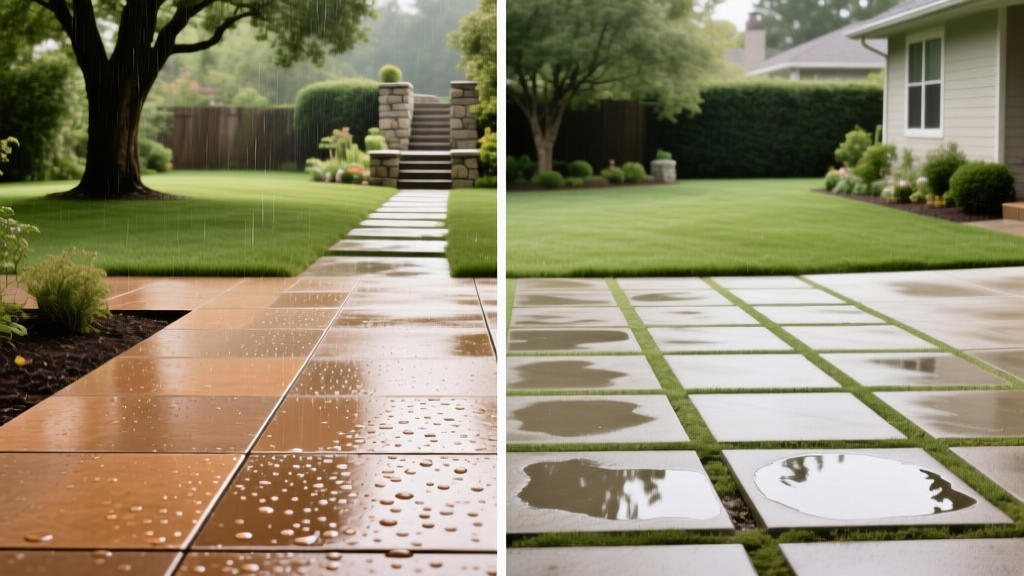
Permeable Pavers vs Traditional Pavers: Hardscape Guide
Sarah ChenPublished
The Hardscape Dilemma: Choosing the Right Paver System
When planning a new patio, walkway, or driveway, homeowners and landscape architects face a critical decision that impacts both the aesthetics and the ecology of the outdoor space. Hardscaping materials dictate how water moves across your property, how much maintenance your outdoor living area will require, and how your landscape weathers the elements over time. In modern landscaping, the debate frequently narrows down to a specific product comparison: Permeable Interlocking Concrete Pavers (PICP) versus Traditional Concrete Pavers. While they may look nearly identical on the surface, their engineering, installation methods, and environmental footprints are vastly different. This comprehensive guide breaks down the costs, benefits, and structural requirements of both systems to help you make an informed decision for your next hardscaping project.
Traditional Concrete Pavers: The Industry Standard
Traditional interlocking concrete pavers have been a staple in landscape design for decades. Manufactured to meet strict durability standards like ASTM C936, these pavers are designed to be laid tightly together over a compacted, impermeable base. The joints between the pavers are typically filled with masonry sand or polymeric sand, which hardens when wet to create a rigid, unified surface that resists weed growth and insect infiltration.
Pros and Cons of Traditional Pavers
- Pros: Highly cost-effective, widely available in countless colors and textures, easier to install on standard residential projects, and provides a completely smooth, uniform surface for patio furniture.
- Cons: Creates an impermeable surface that contributes to stormwater runoff, requires careful grading to prevent puddling, and can suffer from base erosion if water is not properly diverted away from the edges.
Permeable Interlocking Concrete Pavers (PICP)
Permeable pavers are engineered specifically to manage stormwater at the source. While the concrete units themselves are not porous, they are designed with built-in spacer bars that create wider, uniform joints. These joints are filled with clean, crushed aggregate rather than sand. More importantly, they are installed over a deep, open-graded stone reservoir base that temporarily stores rainwater and allows it to slowly infiltrate back into the underlying soil. This system mimics the natural hydrological cycle, reducing the burden on municipal storm drains and preventing localized flooding.
Pros and Cons of Permeable Pavers
- Pros: Exceptional stormwater management, eliminates surface puddling, reduces the heat island effect, prevents runoff from carrying pollutants into local waterways, and may qualify homeowners for local stormwater utility fee rebates.
- Cons: Higher upfront material and installation costs, requires specialized engineering for the base layers, and joints can clog with sediment over time if not properly maintained.
Feature-by-Feature Comparison Chart
| Feature | Traditional Pavers | Permeable Pavers |
|---|---|---|
| Material Cost | $3 - $8 per sq. ft. | $5 - $12 per sq. ft. |
| Installation Cost | $10 - $20 per sq. ft. | $15 - $30+ per sq. ft. |
| Base Material | Dense-graded compacted gravel | Open-graded crushed stone reservoir |
| Joint Filler | Polymeric sand or masonry sand | Clean, crushed aggregate chips (ASTM No. 89) |
| Drainage Method | Surface runoff to edges/drains | Vertical infiltration through joints |
| Weed Resistance | High (with polymeric sand) | Very High (crushed stone inhibits growth) |
| Lifespan | 25 - 50+ years | 25 - 50+ years |
Cost Analysis: Upfront Investment vs. Long-Term Value
When budgeting for a hardscape project, it is vital to look beyond the price of the pavers themselves. Traditional pavers are generally the more budget-friendly option upfront. The materials are cheaper, and the base preparation requires less excavation and less expensive aggregate. A standard traditional paver patio typically costs between $10 and $20 per square foot fully installed.
Permeable pavers, conversely, require a significant upfront investment. The cost of the open-graded aggregate, the depth of the excavation required to create the water reservoir, and the specialized labor needed to ensure the base layers are perfectly level without the use of fine sands can push installation costs to $15 to $30 or more per square foot. However, this investment can be offset by long-term savings. Many municipalities offer financial incentives, rebates, or reductions in monthly stormwater utility fees for properties that implement green infrastructure. Furthermore, permeable systems can eliminate the need for expensive underground drainage pipes, catch basins, and French drains, potentially saving thousands of dollars on ancillary landscaping infrastructure.
Environmental Impact and Stormwater Management
The most significant differentiator between these two products is their environmental footprint. As urban and suburban areas expand, the increase in impermeable surfaces leads to severe water quality and quantity issues. According to the Environmental Protection Agency (EPA), permeable pavements are a highly effective green infrastructure tool that reduces stormwater runoff, decreases the volume of pollutants entering streams and lakes, and helps recharge local groundwater aquifers. By allowing water to percolate through the crushed stone joints and base, the system naturally filters out heavy metals, oils, and nutrients before they reach the water table.
In contrast, traditional pavers act much like concrete or asphalt. Rainwater hits the surface, picks up fertilizers, pesticides, and automotive fluids, and rushes directly into storm drains. The United States Geological Survey (USGS) highlights that urban stormwater runoff is a leading cause of water quality degradation in local watersheds. For eco-conscious homeowners or those dealing with strict local stormwater management regulations, permeable pavers offer a compliant, sustainable solution that traditional pavers simply cannot provide without extensive supplementary drainage systems.
Installation Deep Dive: Base Preparation
Proper base preparation is the single most important factor in paver longevity. A beautifully laid surface will inevitably fail if the underlying aggregate and soil drainage are not engineered correctly.
The success of any paver installation lies beneath the surface. For traditional pavers, the base typically consists of a compacted subgrade topped with 4 to 6 inches of dense-graded aggregate (often crushed stone with fine particles that lock together when compacted). This creates an impermeable, solid foundation. A 1-inch layer of coarse, sharp bedding sand is then screeded over the base before laying the pavers. Finally, polymeric sand is swept into the tight joints and activated with water to create a rigid, weed-resistant bond.
Permeable pavers require a completely different engineering approach. The base is an open-graded aggregate reservoir designed to hold and slowly infiltrate water. This usually involves a deep sub-base of large, clean crushed stone (such as ASTM No. 2 or No. 57 stone, which lacks fine particles), followed by a base layer of smaller clean stone (ASTM No. 57 or No. 8), and a bedding layer of very small chips (ASTM No. 89). Because there are no 'fines' or sand to clog the system, water flows freely through the joints and down into the reservoir base. In areas with heavy clay soils that do not percolate well, a geotextile fabric separator must be used between the subgrade and the aggregate, and an underdrain pipe may be required to slowly release excess stored water to a safe discharge point.
Maintenance Requirements
Both systems require maintenance, but the nature of the upkeep differs significantly. Traditional pavers require occasional reapplication of jointing sand, sealing every 2 to 3 years to protect against UV fading and stains, and routine weed control. If the base shifts due to water pooling and freeze-thaw cycles, individual pavers can be lifted, the base re-leveled, and the pavers replaced.
Permeable pavers do not require sealing—in fact, applying a surface sealer would ruin their permeability and defeat their primary purpose. Weed growth is rare because the joints are filled with inorganic crushed stone rather than sand. However, the primary maintenance concern is surface clogging. Over time, windblown dirt, autumn leaves, and sediment can accumulate in the stone joints. Homeowners must regularly sweep or use a leaf blower to keep the surface clear. Every few years, a specialized vacuum sweeper may be needed to extract deeply embedded sediment from the joints, which is then topped off with fresh, clean crushed stone to maintain optimal infiltration rates.
Final Verdict: Which Paver is Right for Your Project?
Choosing between permeable and traditional pavers ultimately depends on your site conditions, budget, and environmental goals. If you are building a small, covered patio on well-draining soil, or if you are working with a strict budget, traditional concrete pavers remain an excellent, durable, and beautiful choice. They offer endless design versatility and a lower barrier to entry for DIY landscapers.
However, if you are paving a large driveway, dealing with a yard that suffers from chronic pooling and poor drainage, or living in a municipality with strict impervious surface limits, permeable pavers are the superior investment. They transform a landscaping challenge into an ecological asset, protecting your property from water damage while contributing to the health of your local watershed. By weighing the upfront costs against the long-term drainage benefits, you can select the hardscape system that best serves your landscape for decades to come.

