Tree Care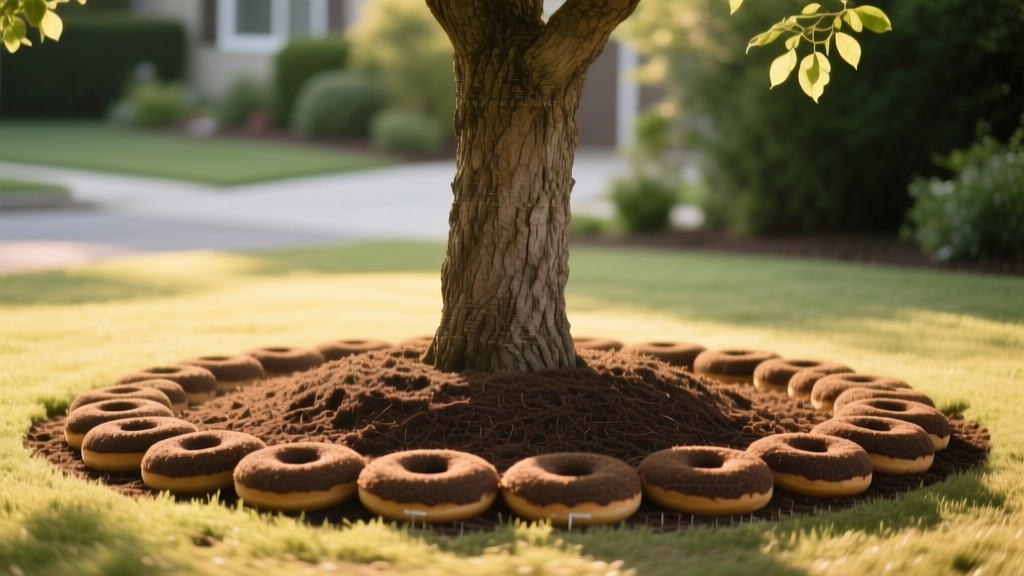
Documenting Tree Mulch Rings: The 3-Inch Donut Rule 2026
Robert HayesPublished
The Intersection of Tree Health and Visual Documentation
In the modern era of landscape management, garden photography has evolved far beyond capturing aesthetic blooms for social media. Today, meticulous visual documentation is a cornerstone of proactive tree care. As we move through 2026, landscape architects, arborists, and dedicated home gardeners are increasingly relying on photographic auditing to track the health, growth, and maintenance of their arboreal investments. One of the most critical, yet frequently misunderstood, aspects of tree health that requires rigorous documentation is proper mulching. The days of piling mulch high against the trunk—a disastrous practice known as 'volcano mulching'—are behind us. Instead, the scientifically backed 'donut' shape and the strict 3-inch depth rule have become the gold standard. But how do you ensure this standard is maintained over time across a sprawling property? The answer lies in establishing a systematic photographic documentation workflow.
The Science of the Donut: Why the 3-Inch Rule Matters
Before you can document a mulch ring, you must understand the precise parameters of what you are photographing. According to The Morton Arboretum, proper mulching mimics the natural forest floor, retaining soil moisture, regulating temperature, and suppressing competitive weeds. However, when mulch is piled against the tree trunk, it traps moisture against the bark, leading to rot, inviting rodent damage, and encouraging the growth of secondary roots that can eventually girdle and strangle the tree.
The 'donut' technique requires keeping mulch entirely away from the root flare—the area where the trunk expands and meets the soil. The mulch should form a flat, even ring around the tree, resembling a donut rather than a volcano. Furthermore, Penn State Extension emphasizes that this layer should never exceed a depth of 3 inches. A 3-inch depth allows for adequate water penetration and gas exchange for the roots. Anything thicker creates an anaerobic environment, suffocating the root system and promoting toxic 'sour' mulch conditions. Documenting these specific measurements visually ensures that your landscape crew or your own seasonal maintenance routines never deviate from these vital biological requirements.
Essential Photography Gear for 2026 Landscape Auditing
Capturing the nuances of a mulch ring requires more than just snapping a quick photo with your phone. To build a reliable visual dataset, you need the right tools and techniques.
- Smartphone LiDAR Scanners: In 2026, flagship devices like the iPhone 17 Pro and Samsung Galaxy S25 Ultra feature advanced LiDAR sensors capable of generating millimeter-accurate 3D depth maps. Using landscape auditing apps, you can scan the mulch ring to verify that the 3-inch depth rule is strictly adhered to across the entire circumference.
- Macro Clip-On Lenses: For inspecting the root flare and the inner edge of the donut, a 100mm equivalent macro lens is essential. This allows you to document early signs of fungal pathogens or bark decay that the naked eye might miss.
- Scale Reference Markers: Never photograph a mulch ring without a scale reference. In 2026, color-coded aluminum depth pins (marked at 1-inch, 2-inch, and 3-inch intervals) are widely used. Placing a pin in the mulch before taking your photo provides undeniable proof of depth for your records.
- Golden Hour Lighting: The low, directional light during the first hour after sunrise or the last hour before sunset casts long shadows across the mulch texture. This raking light is ideal for highlighting the topography of the donut shape, making it easy to spot uneven mounding or accidental volcano formations.
Step-by-Step Mulch Ring Documentation Workflow
To create a comprehensive visual journal, follow this standardized workflow every time you apply or inspect mulch.
Step 1: Expose and Photograph the Root Flare
Before any mulch is laid, use an air spade or gentle hand tools to expose the root flare. Take a top-down, 90-degree photograph. This baseline image proves that the trunk flare is healthy, free of girdling roots, and completely clear of soil and old mulch buildup.
Step 2: The Inner Gap Verification
As you begin laying the mulch, maintain a 3-to-5-inch gap between the trunk and the start of the mulch. Photograph this gap from a low angle, placing your scale marker on the bare soil to document the exact distance. This is your visual proof that the 'donut hole' is properly sized to prevent bark rot.
Step 3: Depth and Topography Capture
Insert your 3-inch scale pins at the north, south, east, and west quadrants of the ring. Photograph each quadrant during golden hour to capture the texture and depth. Ensure the outer edge of the mulch tapers down to the soil line, creating a gentle slope that prevents water runoff.
Step 4: Metadata and Geotagging
Ensure your camera or smartphone is embedding GPS coordinates, exact timestamps, and even local weather data into the image EXIF metadata. Upload these images to a cloud-based landscape management database, tagging them with the specific tree species and accession number.
Mulch Type Visual Degradation Chart (2026 Data)
Different organic mulches decompose at varying rates, which directly impacts how often you need to re-document and replenish them. Use the following table to schedule your photographic audits and maintenance intervals.
| Mulch Material | Initial Visual Texture | 6-Month Photo Change | 12-Month Action Required |
|---|---|---|---|
| Shredded Hardwood | Fibrous, interlocking, rich brown | Flattening, slight gray weathering on surface | Rake to aerate; top-dress with 1 inch of fresh mulch |
| Pine Bark Nuggets | Chunky, deep reddish-brown | Minimal degradation, slight fading | Visual audit for displacement; rarely needs topping |
| Pine Needles (Straw) | Needle-like, loose, golden-brown | Significant settling, darkening in color | Replenish to maintain 3-inch depth; check for matting |
| Leaf Mold / Compost | Fine, dark, soil-like structure | Rapid integration into topsoil | Full replenishment required; highly beneficial for soil |
Analyzing Your Photo Journal for Red Flags
The true power of garden photography in tree care is realized when you compare current images with your historical baseline. When reviewing your mulch ring photos on a high-resolution monitor, look for these critical red flags:
Artillery Fungus and Sour Mulch
If your photos reveal tiny, black, tar-like spots on the lighter inner bark of the trunk or on nearby hardscaping, you are likely dealing with artillery fungus (Sphaerobolus stellatus). This thrives in mulch that has been piled too thick, creating an anaerobic, sour environment. Furthermore, if the mulch in your photos looks matted, hydrophobic, or has a distinct grayish-blue tint, it has gone 'sour' due to lack of oxygen. Your photographic record will help you pinpoint exactly when the depth exceeded the 3-inch rule, allowing you to correct the practice.
Root Flare Obscuration
Compare your current photos with your baseline 'Step 1' root flare images. If the root flare is no longer visible, or if secondary roots are beginning to bridge the gap between the mulch and the trunk, your donut has failed. Wind, rain, and careless string-trimmer operators often push mulch back against the trunk over time. Bi-annual photographic audits catch this subtle encroachment before it causes irreversible vascular damage to the tree.
Hydrophobic Crusting
Take a photo immediately after a heavy irrigation cycle or rainstorm. If the water is pooling on top of the mulch or running off the edges rather than penetrating, the mulch has formed a hydrophobic crust. This is common in finely shredded mulches that have been allowed to dry out completely. Your photo journal will remind you to schedule a physical raking to break up the crust and restore water infiltration.
Conclusion: Building a Time-Lapse of Tree Health
Proper mulching is not a 'set it and forget it' task; it is a dynamic, ongoing relationship between the tree, the soil, and the organic matter surrounding it. By embracing the donut shape and strictly enforcing the 3-inch depth rule, you protect your trees from a myriad of preventable stresses. When you combine these arboricultural best practices with the rigorous documentation strategies of modern garden photography, you transform routine maintenance into a precise, data-driven science. In 2026, your camera is just as vital to your tree's longevity as your shovel. Start building your visual mulch audit today, and watch your landscape thrive with documented, undeniable health for decades to come.