Tree Care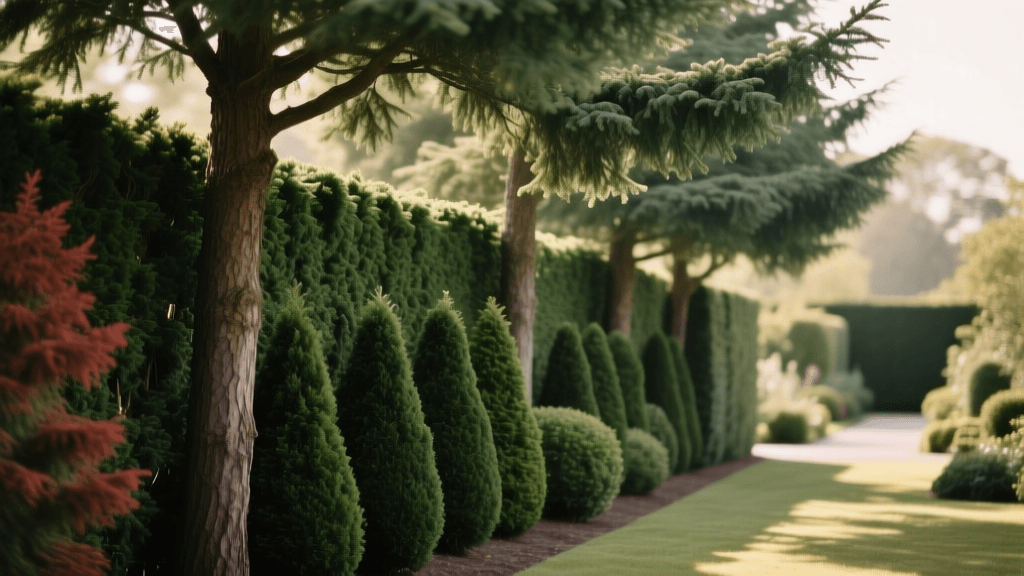
Planning an Evergreen Privacy Screen: Tree Spacing & Design
Designing the Perfect Evergreen Privacy Screen
When it comes to landscape design, few features offer the immediate and lasting impact of a well-planned evergreen privacy screen. Unlike wooden or vinyl fences that require ongoing maintenance, painting, and eventual replacement, a living fence grows more beautiful and robust with time. Beyond simply blocking the view of nosy neighbors or busy streets, evergreen screens serve as vital microclimate modifiers. They act as windbreaks that can reduce winter heating costs by up to 15 percent, serve as natural sound barriers to dampen traffic noise, and provide essential year-round habitat for local bird populations. However, the difference between a lush, impenetrable green wall and a patchy, struggling row of trees lies entirely in the planning phase. In this comprehensive guide, we will explore the critical design considerations, species selection, precise spacing mathematics, and planting techniques required to establish a thriving evergreen privacy screen.
Assessing Your Site: Sun, Soil, and Space
Before purchasing a single tree, you must thoroughly evaluate your planting site. Evergreens are generally long-lived and difficult to relocate once established, making initial site assessment paramount.
Sunlight Mapping
Most evergreen species require full sun to partial shade, meaning they need at least six hours of direct sunlight daily to maintain dense foliage. If planted in heavy shade, evergreens will often shed their inner needles and develop sparse, leggy growth, entirely defeating the purpose of a privacy screen. Track the sun exposure across your property line throughout the day to identify the optimal planting corridor.
Soil Drainage and Composition
Evergreens are highly susceptible to root rot in poorly draining soils. Conduct a simple percolation test by digging a hole 12 inches deep and 12 inches wide, filling it with water, and letting it drain. Refill it and measure how long it takes to drain a second time. If the water level drops less than one inch per hour, you have heavy clay soil and poor drainage. According to the University of Minnesota Extension, amending heavy clay soils with organic compost or selecting moisture-tolerant species like Eastern Redcedar is crucial for long-term survival.
Top Evergreen Trees for Privacy Screens
Selecting the right species depends on your USDA Hardiness Zone, soil conditions, and desired mature height. Below is a comparison chart of the most reliable evergreen trees used in residential landscape design.
| Species | Mature Height | Mature Width | Growth Rate | Best USDA Zones |
|---|---|---|---|---|
| 'Green Giant' Arborvitae | 40-60 ft | 12-18 ft | Fast (3-5 ft/yr) | 5-8 |
| Leyland Cypress | 60-70 ft | 15-25 ft | Very Fast (4-6 ft/yr) | 6-10 |
| Eastern Redcedar | 40-50 ft | 15-20 ft | Moderate (1-2 ft/yr) | 2-9 |
| American Holly | 40-50 ft | 20-40 ft | Slow to Moderate | 5-9 |
| Colorado Blue Spruce | 30-60 ft | 15-20 ft | Slow (1 ft/yr) | 2-7 |
Design Tip: Avoid planting a monoculture (a single species) for your entire screen. If a specific pest or disease targets that species, your entire privacy fence could be wiped out. Alternating two compatible species, or planting in clustered groupings, provides ecological resilience.
Navigating Property Lines and Underground Utilities
Before breaking ground, it is absolutely critical to identify your exact property boundaries and locate underground utilities. Planting large evergreen trees directly on a property line can lead to legal disputes with neighbors regarding overhanging branches, root encroachment, and shared maintenance costs. A best practice in landscape design is to plant your privacy screen at least 3 to 5 feet inside your property line. This buffer zone allows for the natural mature spread of the trees without crossing into neighboring airspace. Furthermore, you must contact your local utility notification center (such as calling 811 in the United States) at least a few days before digging. This free service will mark underground gas, water, and electrical lines, preventing catastrophic damage and severe safety hazards. Avoid planting large-rooted trees like Spruce or Cypress directly over shallow water lines or septic drain fields.
Spacing and Layout Strategies
One of the most common mistakes in landscape planning is planting trees too closely together. While tight spacing creates an instant screen, it ultimately leads to fierce competition for water, nutrients, and sunlight. As the trees mature, the inner branches will die off, leaving you with a screen that is only green on the outer edges.
Single Row vs. Staggered Double Row
If you have the space, a staggered double row is vastly superior to a single straight line. A double row creates a denser, more impenetrable barrier and allows you to space the trees further apart within each row while still achieving immediate visual blockage.
- Single Row Spacing: Plant trees at a distance equal to 50% to 75% of their mature width. For example, if a Green Giant Arborvitae matures to 15 feet wide, plant them 8 to 11 feet apart, center-to-center.
- Staggered Row Spacing: Create two parallel rows spaced 6 to 8 feet apart. Plant the trees in a zig-zag pattern (equilateral triangles). This ensures that the gap between two trees in the front row is covered by a tree in the back row.
Proper spacing also ensures adequate air circulation, which is vital for preventing fungal diseases that thrive in damp, stagnant environments. The Arbor Day Foundation emphasizes that giving trees adequate room to reach their natural mature spread is essential for structural integrity and long-term health.
Planting and Early Care Guidelines
The ideal time to plant evergreen privacy screens is in early fall or early spring. Fall planting allows the root system to establish in warm soil while the top growth remains dormant, reducing transplant shock.
The Planting Process
- Digging the Hole: Dig a hole that is two to three times wider than the root ball, but no deeper. The root flare (where the trunk widens at the base) must sit slightly above the surrounding soil grade.
- Handling the Root Ball: If the tree is balled and burlapped, place it in the hole, then cut away the wire basket and peel back the burlap. Never lift the tree by its trunk.
- Backfilling: Use the native soil you just dug out to backfill the hole. Avoid amending the backfill heavily with potting soil, as this creates a bathtub effect where water pools in the loose soil and drowns the roots.
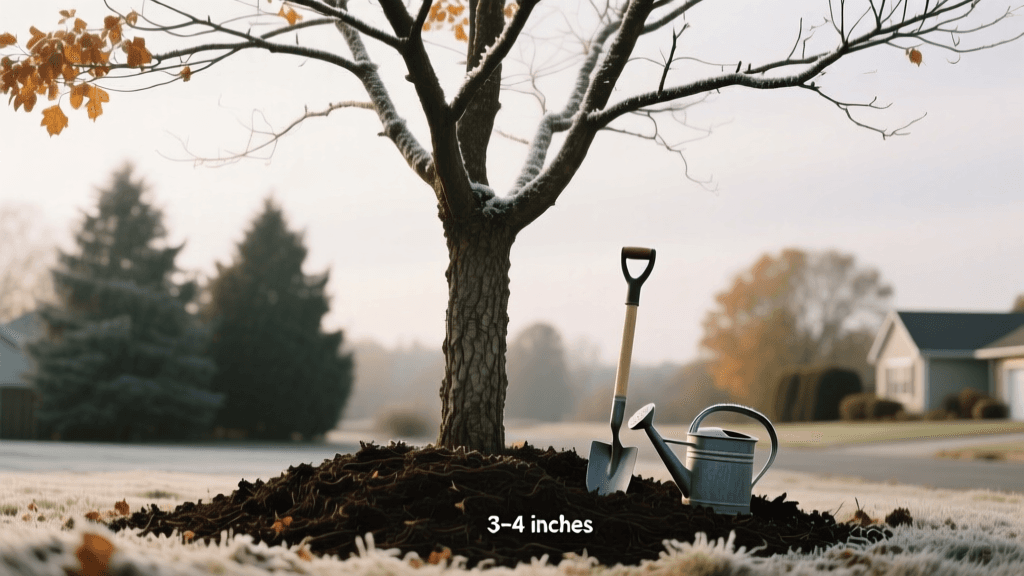
- Mulching: Apply a 2 to 3-inch layer of organic hardwood mulch in a wide donut shape around the base. Keep the mulch at least 3 inches away from the trunk to prevent bark rot and rodent damage.
Watering and Winter Protection
Newly planted evergreens require consistent moisture. Plan to provide 1 inch of water per week during the first two growing seasons. Because evergreens retain their foliage year-round, they continue to lose water through transpiration during winter. Deep watering in late autumn before the ground freezes is critical to prevent winter desiccation (winter burn).
Pruning and Maintenance for Maximum Density
Many homeowners mistakenly believe that evergreens should be left entirely to their own devices. While they require less structural pruning than deciduous trees, strategic pruning is essential for maintaining a dense, formal privacy screen. When trees are young, use clean, sharp bypass pruners to lightly shear the outermost new growth (candles) in late spring or early summer. This practice, known as tip pruning, forces the tree to push out lateral buds, resulting in a thicker, more impenetrable canopy. Never prune back into the dead zone, which is the older, inner wood that no longer produces needles. Unlike some deciduous species, most evergreens, particularly Arborvitae and Cypress, will not regenerate foliage from old, bare wood. Additionally, monitor the leader (the main central trunk). If a tree develops multiple competing leaders, select the strongest, most upright one and prune the others away to prevent splitting during heavy snow or ice storms. For expert guidance on ongoing maintenance, pruning, and health assessments, resources like The Morton Arboretum offer extensive databases on diagnosing environmental stress and pest issues specific to evergreen species.
Budgeting for Your Privacy Screen
Planning a privacy screen requires a realistic budget that accounts for materials, tools, and potential labor. Below is a general cost breakdown for a 50-foot linear screen using 6-foot tall Green Giant Arborvitae (balled and burlapped).
| Item | Estimated Cost | Notes |
|---|---|---|
| Trees (6-7 ft tall) | $80 - $150 each | Need approx. 5-6 trees for 50 linear ft. |
| Delivery Fee | $100 - $250 | Varies by distance and tree weight. |
| Organic Mulch (3 yards) | $90 - $120 | Bulk delivery is cheaper than bags. |
| Mycorrhizal Root Inoculant | $25 - $40 | Highly recommended for transplant success. |
| Professional Planting Labor | $150 - $300 per tree | Optional, but saves severe physical strain. |
By investing in high-quality, appropriately sized trees and taking the time to prepare the soil correctly, your evergreen privacy screen will become a permanent, valuable asset to your property. Proper planning today guarantees a lush, green sanctuary for decades to come.