Tree Care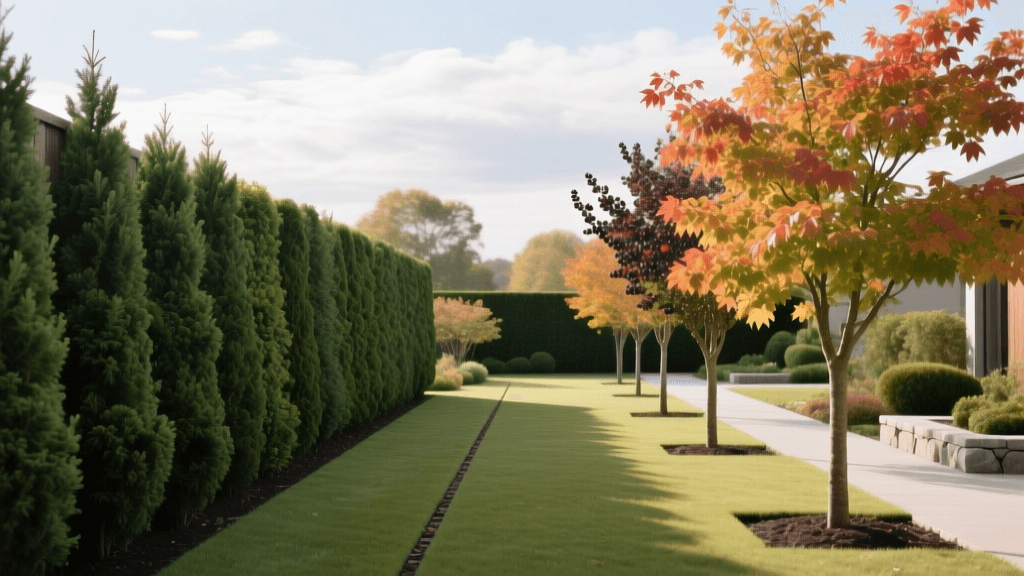
How to Plan and Design a Year-Round Tree Privacy Screen
The Case for Living Privacy Screens
When designing a landscape for privacy, homeowners often default to wooden or vinyl fences. While effective, hardscape barriers can be expensive, prone to storm damage, and visually monotonous. A well-planned living privacy screen utilizing a strategic mix of evergreen and deciduous trees offers a dynamic, year-round solution. According to the Arbor Day Foundation, strategically placed trees not only block unwanted views and reduce noise pollution by up to 50 percent, but they also act as windbreaks that can lower winter heating costs and provide cooling shade in the summer.
Designing a tree privacy screen requires more than simply digging a trench and planting a single row of identical shrubs. Monocultures are highly susceptible to pests and diseases, which can wipe out your entire screen in a single season. By planning a layered, multi-species layout, you ensure ecological resilience, seasonal visual interest, and a robust barrier that enhances your property value.
Site Assessment and Utility Safety
Before selecting your trees, you must thoroughly assess your planting site. Begin by mapping the sunlight patterns across your property line. Most privacy evergreens require full sun (at least six hours of direct sunlight daily) to maintain dense, lower-branch foliage. If your property line is heavily shaded by existing structures or neighboring trees, you will need to select shade-tolerant species like the Canadian Hemlock or American Holly, though their growth rates will be slower.
Next, evaluate your soil drainage and composition. Conduct a percolation test by digging a 12-inch deep hole and filling it with water. If the water takes longer than 24 hours to drain, you have heavy clay soil and will need to amend the planting area or choose moisture-tolerant trees like the Dawn Redwood or Bald Cypress. Finally, and most importantly, always contact your local utility notification center before digging. In the United States and Canada, dialing 811 or visiting Call 811 will ensure underground gas, water, and electrical lines are marked, preventing catastrophic damage and severe injury.
Selecting the Backbone Evergreens
The backbone of your privacy screen should consist of fast-growing, dense evergreens. These trees provide the primary visual barrier during the winter months when deciduous trees are bare. The NC State Extension Plant Toolbox highly recommends the Thuja 'Green Giant' for its rapid growth rate, disease resistance, and adaptability to various soil types. Unlike the Leyland Cypress, which is prone to canker diseases and bagworms, the Green Giant remains robust with minimal maintenance.
For tighter spaces or colder climates (USDA Zones 3-5), the Eastern Redcedar is an excellent native alternative. It tolerates poor soils, drought, and harsh winter winds, making it an ideal windbreak. If you prefer a broader, more textured evergreen, the Nellie Stevens Holly offers deep green, glossy leaves and vibrant red winter berries, adding a crucial food source for local bird populations while maintaining a solid visual screen.
Adding Deciduous Accents for Seasonal Interest
To prevent your privacy screen from looking like a monotonous green wall, integrate deciduous trees and large shrubs into the design. These plants provide brilliant spring blossoms, summer shade, and striking autumn foliage. The Serviceberry (Amelanchier arborea) is a fantastic understory or accent tree that offers early spring white flowers, edible summer berries, and fiery orange fall leaves.
For a taller canopy layer that filters harsh afternoon sun while allowing dappled light to reach your evergreens, consider the Red Maple (Acer rubrum). Its rapid growth and spectacular crimson fall foliage create a stunning contrast against the dark green backdrop of your evergreen backbone. By mixing these species, you create a multi-tiered habitat that supports local pollinators and breaks up the visual weight of a solid evergreen wall.
Spacing, Layout, and Staggered Rows
The most common mistake in privacy screen planning is planting trees too closely together in a single, straight line. This leads to intense root competition, poor air circulation (which invites fungal diseases), and a screen that thins out at the base as trees reach for the sun. Instead, design a staggered, double-row layout.
- Row 1 (The Backbone): Plant your primary evergreens 8 to 10 feet apart. This allows their canopies to eventually merge into a solid wall while giving roots ample space to establish.
- Row 2 (The Accents): Offset the second row by 4 to 5 feet in front of or behind the first row. Plant deciduous accents and large shrubs 12 to 15 feet apart in this row.
- Property Line Setbacks: Always plant at least 5 to 8 feet inside your property line. Tree trunks expand, and branches will cross boundaries, potentially leading to disputes with neighbors or violations of local municipal setback ordinances.
Cost Breakdown and Budgeting
Budgeting is a critical phase of landscape planning. The cost of your privacy screen will vary significantly based on the initial size of the trees you purchase. While larger trees provide instant privacy, they suffer from greater transplant shock and take longer to establish than smaller specimens. Below is an estimated cost comparison for common privacy trees based on average nursery pricing for 5-gallon to 15-gallon containers.
| Tree Species | Type | Mature Height | Growth Rate | Est. Cost (5-Gal) | Est. Cost (15-Gal) |
|---|---|---|---|---|---|
| Thuja 'Green Giant' | Evergreen | 40-60 ft | Fast (3-5 ft/yr) | $45 - $65 | $120 - $180 |
| Eastern Redcedar | Evergreen | 30-50 ft | Medium (1-2 ft/yr) | $40 - $55 | $90 - $140 |
| Nellie Stevens Holly | Broadleaf Evergreen | 15-25 ft | Medium (1-2 ft/yr) | $50 - $75 | $130 - $200 |
| Serviceberry | Deciduous | 15-25 ft | Slow-Medium | $60 - $85 | $150 - $250 |
| Red Maple | Deciduous | 40-60 ft | Fast (2-3 ft/yr) | $55 - $80 | $140 - $220 |
Note: Prices do not include delivery fees, soil amendments, or professional installation labor, which typically adds $100 to $250 per tree depending on site accessibility.
Proper Planting Techniques and Soil Prep
Timing is everything. The optimal time to plant your privacy screen is in early fall or early spring. Fall planting allows trees to establish their root systems in warm soil while the air is cool, reducing heat stress and water loss. When digging the planting hole, make it two to three times wider than the root ball, but no deeper. The root flare (the point where the trunk widens at the base) must sit slightly above the surrounding soil grade to prevent root rot.
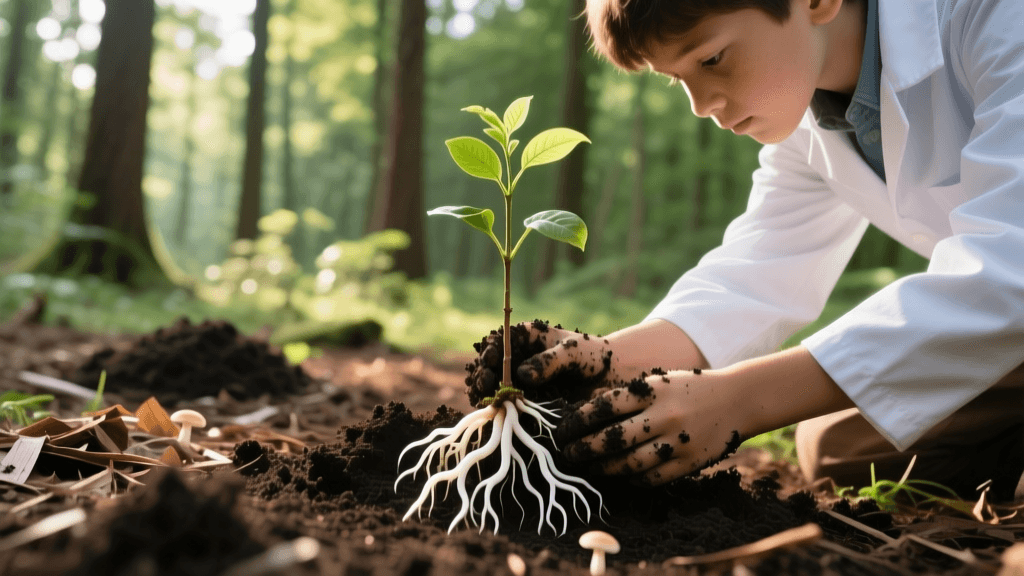
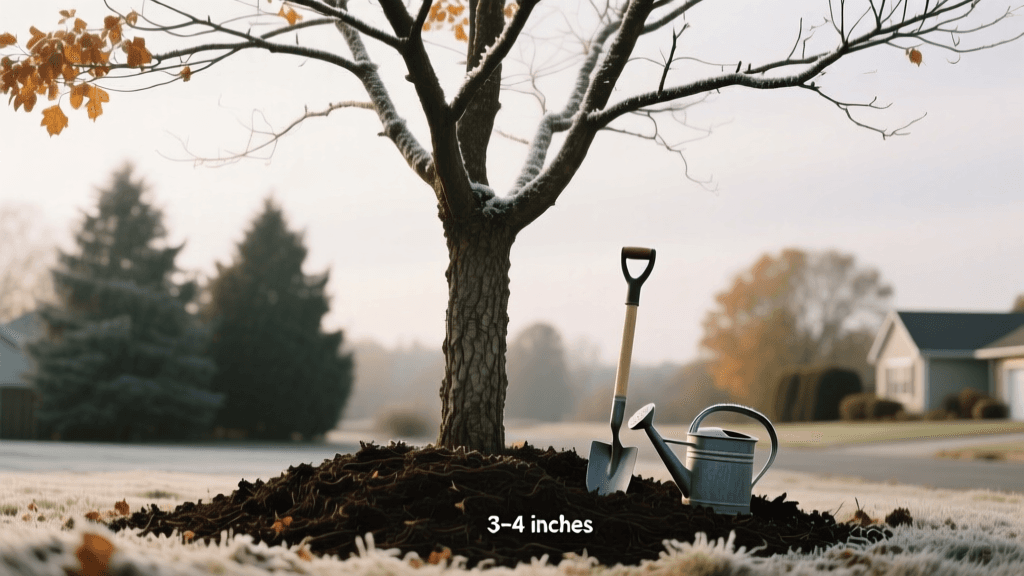
Amend the backfill soil with a high-quality compost and a mycorrhizal inoculant, such as Espoma Bio-tone Starter Plus. This introduces beneficial fungi that form a symbiotic relationship with the tree roots, vastly improving their ability to absorb water and nutrients. After backfilling, apply a 2- to 3-inch layer of organic hardwood mulch in a wide ring around the tree. Keep the mulch at least 3 inches away from the trunk itself to prevent rodent damage and bark decay—a mistake commonly known as 'volcano mulching'.
Understory Planting and Long-Term Maintenance
To complete the design, incorporate an understory layer of shade-tolerant shrubs and perennials at the base of your trees. This hides the bare lower trunks of the evergreens and suppresses weed growth. Oakleaf Hydrangeas, Sweet Fern, and native woodland grasses like Pennsylvania Sedge thrive in the dappled shade created by the tree canopy above.
During the first two growing seasons, consistent watering is non-negotiable. Invest in slow-release watering bags, such as Treegator, which wrap around the trunk and deliver 15 to 20 gallons of water directly to the root zone over several hours. This deep watering encourages roots to grow downward, anchoring the trees firmly against high winds. Limit heavy pruning to the late winter when trees are dormant, focusing only on removing dead, damaged, or crossing branches to maintain the natural, dense structure of your living privacy screen.