Lawn Care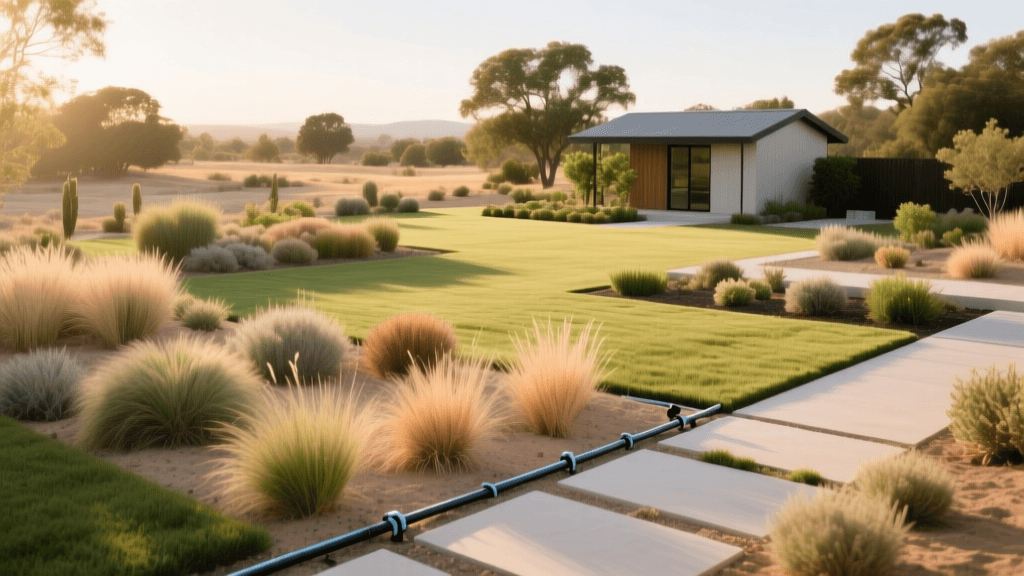
Planning a Drought-Tolerant Lawn: Design and Grass Selection
Introduction to Drought-Tolerant Lawn Planning
As water restrictions become more frequent and environmental awareness grows, homeowners are increasingly rethinking their outdoor spaces. Planning a drought-tolerant lawn is no longer just about letting the grass turn brown in the summer; it is a strategic approach to landscape design that balances aesthetics, ecology, and practical lawn care. By integrating smart design principles, selecting the right turfgrass or alternative groundcovers, and planning efficient irrigation zones, you can cultivate a vibrant landscape that thrives with minimal supplemental water.
Transitioning to a water-wise lawn requires upfront planning and a shift in traditional lawn care routines. Whether you are starting from bare soil or renovating an existing thirsty turf, this comprehensive guide will walk you through the design ideas, grass selections, and implementation strategies necessary to build a resilient, drought-tolerant lawn.
The Principles of Hydrozoning in Lawn Design
Hydrozoning is the foundational design principle of drought-tolerant landscaping. It involves grouping plants and turf areas based on their water requirements, sun exposure, and soil needs. By mapping your yard into distinct hydrozones, you prevent the common mistake of overwatering drought-tolerant plants just to keep a small patch of thirsty grass alive nearby.
- High-Water Zones: Reserve these for small, high-traffic functional areas near the house, such as a children's play space or an entertainment patio. Use a moderately drought-tolerant grass here and supply it with targeted irrigation.
- Moderate-Water Zones: These are transition areas that receive partial shade or have average soil quality. They can be planted with deep-rooted, water-wise grasses like Tall Fescue or fine-blended eco-lawns.
- Low-Water/No-Water Zones: The perimeters of your property, steep slopes, or narrow side yards fall into this category. Design these areas with native groundcovers, ornamental grasses, or permeable hardscaping to eliminate the need for irrigation entirely.
Soil Preparation: The Secret to Water Retention
A drought-tolerant lawn is only as resilient as the soil beneath it. Sandy soils drain too quickly, while heavy clay soils cause water runoff before it can reach the root zone. Before planting any drought-resistant seed or laying sod, you must amend the soil to maximize water retention.
Begin by conducting a professional soil test through your local university extension office. To improve moisture-holding capacity, incorporate 2 to 3 inches of organic compost into the top 6 inches of your existing soil. Products like Black Kow Composted Cow Manure or locally sourced municipal compost are excellent choices. Additionally, applying a slow-release, organic fertilizer like Milorganite (which contains iron and slow-release nitrogen) encourages deep root growth without pushing the rapid, water-demanding top growth associated with synthetic nitrogen fertilizers.
Selecting Drought-Tolerant Grass Species
Choosing the right grass species is the most critical decision in your lawn care plan. Drought tolerance varies wildly between cool-season and warm-season grasses. Below is a comparison chart of the top drought-resistant turfgrasses to help you plan your seeding or sodding project.
| Grass Type | Climate Zone | Drought Tolerance | Water Need (in/week) | Est. Seed Cost (per 1,000 sq ft) |
|---|---|---|---|---|
| Buffalograss | Warm/Arid | Excellent | 0.25 - 0.5 | $70 - $100 |
| Bermudagrass | Warm/Transition | High | 0.5 - 1.0 | $15 - $25 |
| Zoysia Grass | Warm/Transition | High | 0.5 - 1.0 | $40 - $60 (Plugs/Sprigs) |
| Tall Fescue | Cool/Transition | Moderate-High | 1.0 - 1.5 | $10 - $20 |
| Hard Fescue | Cool/Northern | Moderate | 0.5 - 1.0 | $15 - $30 |
For arid and semi-arid regions, Buffalograss (cultivars like 'Cody' or 'Bowie') is the undisputed champion. It requires only a quarter-inch of water per week once established and naturally goes dormant during extreme heat, bouncing back when moisture returns. In cool-season climates, blending Hard Fescue and Sheep Fescue creates a deep-rooted, low-water turf that thrives in poor soils and shaded areas where traditional Kentucky Bluegrass would fail.
Integrating Eco-Lawns and Grass Alternatives
If you are open to redefining what a "lawn" looks like, eco-lawns offer a fantastic design alternative. An eco-lawn typically mixes drought-tolerant grasses with nitrogen-fixing legumes and low-growing broadleaf plants. A popular combination is mixing fine fescues with Microclover (Trifolium repens var. Pirouette). Microclover stays low to the ground, requires 30% to 50% less water than traditional turf, and naturally fertilizes the soil by pulling nitrogen from the air.
Another design idea is to replace unused turf areas with creeping groundcovers like Creeping Thyme or Lippia (Phyla nodiflora). These alternatives handle light foot traffic, bloom with pollinator-friendly flowers, and drastically reduce the square footage of your yard that requires mowing and watering.
Designing for Efficient Irrigation and Drainage
Even drought-tolerant lawns require water to establish their root systems during the first 12 to 18 months. Planning your irrigation system design before planting is crucial. Ditch the traditional spray heads that lose up to 30% of water to wind drift and evaporation. Instead, design your system with high-efficiency rotary nozzles (like the Hunter MP Rotator) which apply water slowly, allowing heavy clay soils to absorb it without runoff.
Integrate a smart irrigation controller, such as the Rachio 3 or Orbit B-hyve, which connects to local weather stations and automatically skips watering when rain is in the forecast or when soil moisture is adequate. For your low-water hydrozones, design drip irrigation lines that deliver water directly to the base of shrubs and ornamental grasses, eliminating waste entirely.
Hardscape Integration to Reduce Turf Area
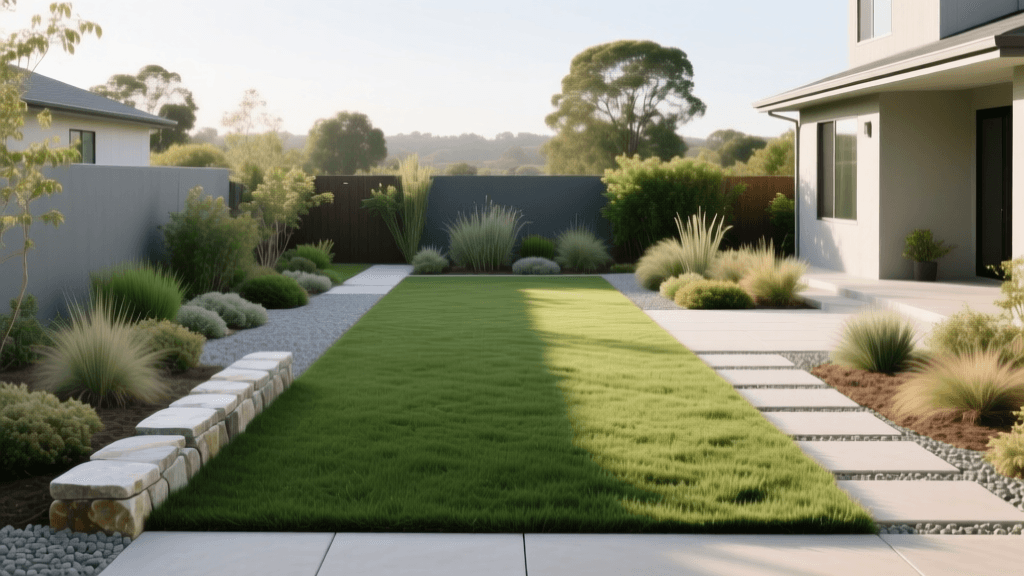
A major component of drought-tolerant lawn planning is deciding where not to plant grass. Expanding your hardscapes reduces the overall maintenance and water footprint of your property. Consider designing dry creek beds using river rock and native boulders to manage stormwater runoff while adding visual interest. Use permeable pavers for walkways and patios; these allow rainwater to percolate into the groundwater table rather than running off into municipal storm drains, thereby passively watering the adjacent drought-tolerant landscape zones.
Expert Insights on Outdoor Water Conservation
"Outdoor water use accounts for nearly 30% of total household water consumption, and in arid regions, this can exceed 60%. Transitioning to a planned, drought-tolerant landscape design and utilizing water-efficient technologies can reduce outdoor water use by 20% to 50% without sacrificing aesthetic appeal."
— United States Environmental Protection Agency (EPA) WaterSense Program
Step-by-Step Implementation Timeline
Executing your drought-tolerant lawn design requires patience and precise timing. Here is a practical timeline for a typical turf conversion project:
- Months 1-2 (Planning & Kill Phase): Map your hydrozones and test your soil. If removing existing turf, use the solarization method (covering the lawn with clear plastic for 4-6 weeks during peak summer heat) or apply a non-selective herbicide to kill the old grass. Avoid tilling, which brings dormant weed seeds to the surface.
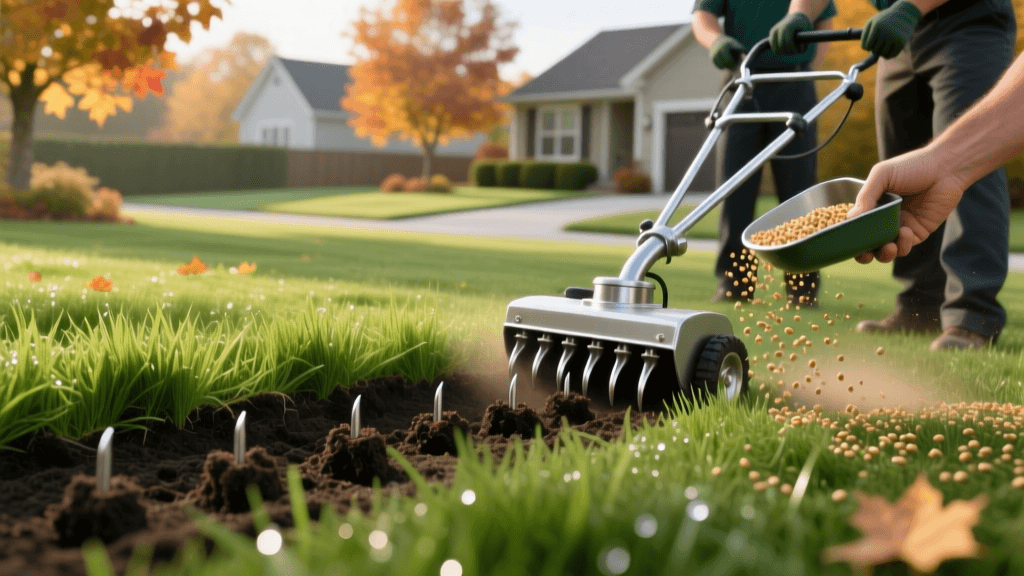
- Month 3 (Soil Amendment): Aerate the compacted soil deeply (core aeration to a depth of 3-4 inches). Top-dress with 1 inch of organic compost and rake it into the aeration holes.
- Month 4 (Planting): Seed or plant plugs during the optimal season for your chosen grass (Late Spring/Early Summer for Buffalograss; Early Fall for Fescues). Apply a starter fertilizer and a light layer of straw mulch to retain seedbed moisture.
- Months 5-12 (Establishment): Water lightly and frequently for the first 4 weeks to ensure germination. Gradually taper off to deep, infrequent watering (e.g., 0.5 inches twice a week) to force roots to grow deep into the soil profile.
Long-Term Lawn Care and Maintenance
Once established, the care routine for a drought-tolerant lawn is remarkably simple. Mow high—set your mower deck to at least 3 to 4 inches. Taller grass shades the soil, reducing surface evaporation and keeping root zones cool. Leave the clippings on the lawn to act as a natural mulch and slow-release fertilizer. Limit fertilization to once or twice a year using organic, slow-release products, and embrace a slightly more natural, meadow-like aesthetic that supports local biodiversity while saving you thousands of gallons of water annually.