Tree Care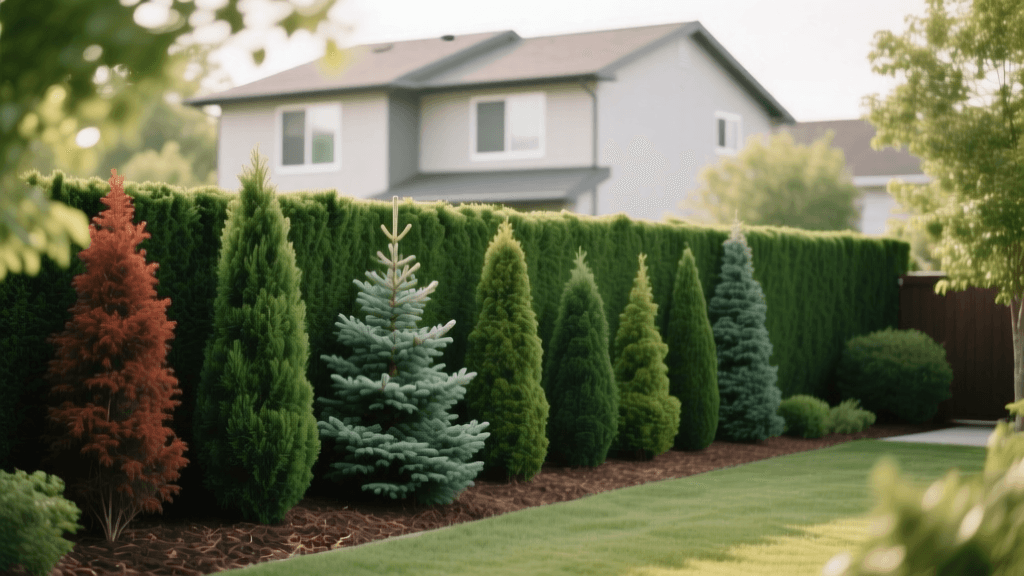
Designing the Perfect Evergreen Privacy Screen for Your Yard
When it comes to establishing boundaries and creating secluded outdoor living spaces, homeowners often default to wooden or vinyl fences. However, a living fence—a carefully planned privacy screen of evergreen trees—offers a dynamic, eco-friendly, and visually stunning alternative. Not only does a well-designed evergreen screen provide year-round seclusion, but it also acts as a natural windbreak, reduces noise pollution, and creates vital habitats for local wildlife.
Planning an evergreen privacy screen requires more than simply digging holes in a straight line. It demands a strategic approach to species selection, spatial planning, soil preparation, and long-term maintenance. In this comprehensive design guide, we will walk you through the essential steps to plan, plant, and maintain a thriving evergreen privacy screen that enhances your property's aesthetic and functional value.
The Benefits of a Living Fence
Before selecting your trees, it is important to understand the unique advantages that a living fence provides over traditional hardscaping. According to the Arbor Day Foundation, a well-placed tree windbreak can reduce winter heating costs by up to 30 percent. Beyond energy savings, a dense evergreen screen can absorb and deflect sound waves, reducing neighborhood noise by several decibels. Furthermore, living screens improve local air quality by trapping dust and particulate matter, and they offer year-round visual interest that a static wooden fence simply cannot match.
Selecting the Right Evergreen Species
The foundation of a successful privacy screen is choosing the right tree for your specific climate, soil type, and spatial constraints. Below is a comparison of some of the most popular evergreen trees used for privacy screens in North America.
| Species | Mature Height | Mature Width | Growth Rate | Est. Cost (5ft Sapling) |
|---|---|---|---|---|
| Thuja 'Green Giant' | 40-60 ft | 12-18 ft | Fast (3-5 ft/yr) | $45 - $65 |
| Leyland Cypress | 50-70 ft | 15-20 ft | Fast (3-4 ft/yr) | $40 - $60 |
| Eastern Redcedar | 40-50 ft | 8-15 ft | Moderate (1-2 ft/yr) | $35 - $50 |
| Nellie Stevens Holly | 15-25 ft | 8-10 ft | Moderate (1-2 ft/yr) | $60 - $90 |
Thuja 'Green Giant'
Widely considered the gold standard for modern privacy screens, the Thuja 'Green Giant' is a hybrid that boasts incredible vigor and resistance to common pests like bagworms. The NC State Extension notes that this arborvitae thrives in a variety of soil conditions and maintains a rich, dark green color throughout the winter months without bronzing.
Leyland Cypress
While historically popular for its explosive growth rate, the Leyland Cypress requires careful consideration. It is highly susceptible to fungal diseases such as Seiridium canker and root rot, especially when planted too closely together where air circulation is restricted. The Clemson Cooperative Extension recommends rigorous pruning and ample spacing if you choose this species.
Strategic Spacing and Layout Design
One of the most common design mistakes homeowners make is planting trees too close together in a desperate bid for instant privacy. Overcrowding leads to competition for water and nutrients, increased susceptibility to disease, and weak, spindly growth.
Straight Line vs. Staggered Layouts
For narrow property lines, a single straight row is often the only option. However, if you have the space, a staggered (or zig-zag) double-row layout is vastly superior. A staggered layout allows you to plant trees slightly further apart within each row while still achieving a dense, impenetrable visual barrier. This design promotes better airflow, reducing the humidity that breeds fungal diseases.
Calculating Spacing
A general rule of thumb for spacing evergreen trees is to divide the mature width of the tree by two. For example, if a Thuja 'Green Giant' has a mature width of 15 feet, plant them 7 to 8 feet apart. For a staggered layout, the distance between the two rows should be roughly half the distance of the spacing within the row.
Property Lines and Setbacks
Always check your local municipal codes and HOA regulations before planting. Most jurisdictions require a setback of 2 to 5 feet from the property line to ensure that the mature trunk and root system do not encroach on public sidewalks or neighboring lots. Remember, the trunk will be centered on your planting spot, but the canopy will extend outward in all directions.
Site Preparation and Planting Steps
Proper planting technique is critical for the long-term survival and rapid establishment of your privacy screen. The University of Minnesota Extension emphasizes the importance of correct planting depth and root flare exposure.
Soil Testing and Amendment
Before digging, conduct a soil test to determine your pH and nutrient levels. Most evergreens prefer a slightly acidic soil (pH 5.5 to 6.5). If your soil is heavy clay, avoid amending the individual planting holes with potting soil, as this creates a bathtub effect that traps water and rots roots. Instead, top-dress the entire planting area with organic compost.
The Planting Process
- Dig the hole: Make it two to three times as wide as the root ball, but no deeper. The root flare (where the trunk meets the roots) must sit slightly above the surrounding grade.
- Position the tree: Remove the burlap and wire basket (if applicable) once the tree is in the hole to prevent girdling roots.
- Backfill: Use the native soil you dug out to backfill the hole, tamping it down gently to remove large air pockets.
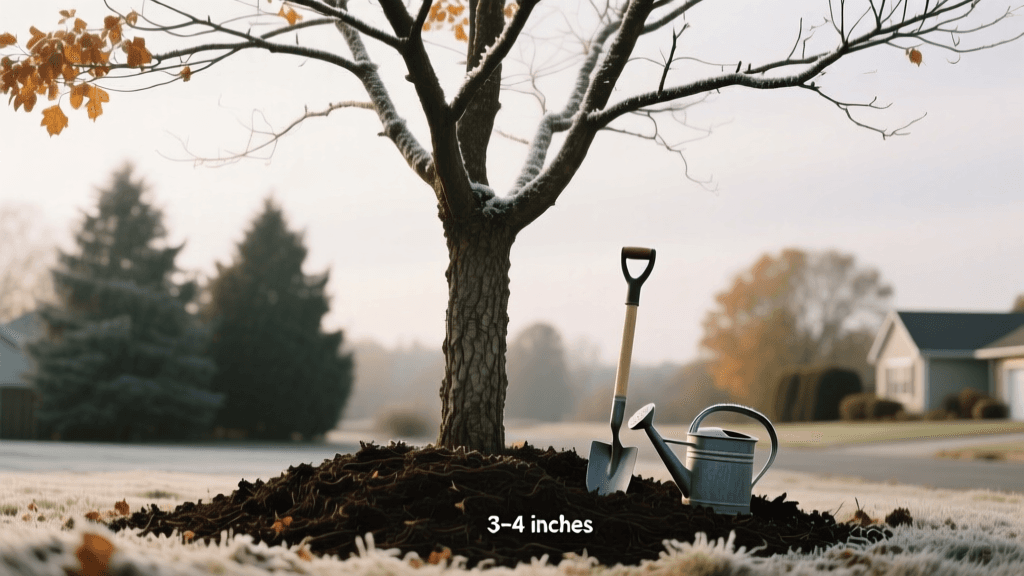
- Mulch: Apply a 2 to 3-inch layer of organic hardwood mulch in a wide ring around the base of the tree. Keep the mulch at least 3 inches away from the trunk to prevent rot and rodent damage.
Long-Term Maintenance and Pruning
A privacy screen is not a plant it and forget it project. The first two years are critical for root establishment.
Watering Schedule
Newly planted evergreens require deep, infrequent watering to encourage deep root growth. Provide 10 to 15 gallons of water per tree, once a week during the growing season. Use a slow-drip hose or a tree watering bag to allow the water to penetrate deeply into the soil profile.
Pruning for Density
To encourage a thick, dense screen, you must prune the trees during their early years. Lightly shear the new growth (candles) in the spring. This tip-pruning forces the tree to push out lateral branches, resulting in a thicker, more uniform screen. Never cut back into the old, brown wood of conifers, as they rarely produce new growth from dormant, interior buds.
Fertilization and Winter Care
In early spring, apply a slow-release, balanced fertilizer (such as a 10-10-10 or a specialized evergreen spike) to provide the nutrients necessary for vigorous growth. Avoid fertilizing in late summer or fall, as this can stimulate tender new growth that will be damaged by winter frosts. Additionally, winter desiccation is a major threat to newly planted evergreens. Because their needles continue to lose moisture to the wind even when the ground is frozen, consider applying an anti-desiccant spray in late fall and wrapping the trees in burlap if they are exposed to harsh, drying winter winds.
Budgeting for Your Privacy Screen
When planning your project, factor in the total cost of ownership. A 50-foot privacy screen using 5-foot Thuja 'Green Giant' saplings planted 8 feet apart will require roughly 7 trees.
Estimated Material Cost Breakdown (50-foot screen):
- Trees (7 x $55) = $385
- Premium Hardwood Mulch (3 cubic yards) = $120
- Compost and Soil Amendments = $60
- Drip Irrigation Kit = $80
Total Estimated DIY Cost: $645
Hiring a professional landscaping company will typically add 100% to 200% to this cost for labor, heavy equipment, and design fees, bringing the total to between $1,500 and $2,000.
Conclusion
Designing an evergreen privacy screen is an investment in your property's future. By selecting the right species, respecting spatial requirements, and committing to proper planting and maintenance techniques, you will cultivate a lush, living boundary that provides beauty, privacy, and ecological benefits for decades to come.