Lawn Care
Planning Your Lawn Layout: Microclimate Mapping and Turf Zoning
The Foundation of Modern Lawn Design: Microclimate Mapping
When homeowners think about lawn care, they often default to treating their entire yard as a single, uniform entity. However, from a landscape design and planning perspective, a lawn is a complex mosaic of microclimates. Planning your lawn layout through microclimate mapping and turf zoning is the most effective way to reduce water consumption, minimize fertilizer runoff, and ensure your grass thrives in its specific environment. Instead of fighting nature by forcing a single grass species to survive in both deep shade and scorching sun, intentional planning allows you to match the right turf to the right zone.
Microclimate mapping involves analyzing your yard for three primary variables: sunlight exposure, soil drainage, and topographical slopes. To map sunlight, observe your yard over three consecutive days in mid-summer, recording the hours of direct, unfiltered sunlight each area receives. Full sun is defined as 6 or more hours of direct light, partial sun as 4 to 6 hours, and shade as less than 4 hours. For soil drainage, conduct a simple percolation test: dig a hole 12 inches deep and 6 inches wide, fill it with water, and let it drain. Refill it and measure the drop in water level over one hour. An ideal drainage rate is between 1 and 2 inches per hour. Areas that drain slower than 0.5 inches per hour are prime candidates for alternative landscaping or moisture-tolerant groundcovers rather than traditional turf.
Turf Zoning: Matching Grass to the Environment
Once your microclimate map is complete, you can divide your yard into distinct management zones. This design strategy, known as turf zoning, dictates that high-traffic entertainment areas receive premium, durable turf, while peripheral or difficult-to-grow areas are transitioned to low-maintenance alternatives or hardscapes.
Zone 1: High-Traffic and Full Sun
These are your primary recreational areas, play zones, and patios. For cool-season climates, a blend of Kentucky Bluegrass and Perennial Ryegrass offers exceptional wear tolerance and rapid recovery. Products like Jonathan Green Black Beauty Ultra are engineered for these high-stress zones. In warm-season regions, Bermudagrass or Zoysia are the undisputed champions of traffic tolerance. Plan to invest more in soil amendments, core aeration, and frequent irrigation in these zones.
Zone 2: Shade and Low Traffic
Grass naturally struggles under the canopy of mature trees due to competition for water, nutrients, and light. For cool-season shade zones, Fine Fescues (Creeping Red, Chewings, and Hard Fescue) are the most shade-tolerant options available. They require less nitrogen and water than Kentucky Bluegrass. In warm-season zones, St. Augustinegrass is the standard for shaded areas, though it has poor traffic tolerance, making it ideal for decorative side yards rather than play areas.
Zone 3: Transition and Low-Maintenance Zones
These are the perimeters of your property, steep slopes, or areas with poor soil where traditional turf is a maintenance nightmare. Designing these areas out of the active lawn space is a hallmark of smart landscape planning. Consider replacing turf in Zone 3 with low-growing clover blends, native wildflower meadows, or drought-tolerant groundcovers like creeping thyme.
Data Table: Turfgrass Zoning Guide by Microclimate
| Zone Type | Sun Exposure | Traffic Tolerance | Recommended Grass | Est. Seed Cost / 1,000 sq ft |
|---|---|---|---|---|
| Primary / Entertainment | Full Sun (6+ hrs) | High | Kentucky Bluegrass / Bermudagrass | $25 - $40 |
| Secondary / Decorative | Partial (4-6 hrs) | Moderate | Tall Fescue / Zoysia | $15 - $25 |
| Shade / Under Canopy | Shade (<4 hrs) | Low | Fine Fescue / St. Augustine | $20 - $35 |
| Perimeter / Slopes | Variable | None | Microclover / Buffalograss | $30 - $50 |
Planning Hardscape and Planting Bed Borders
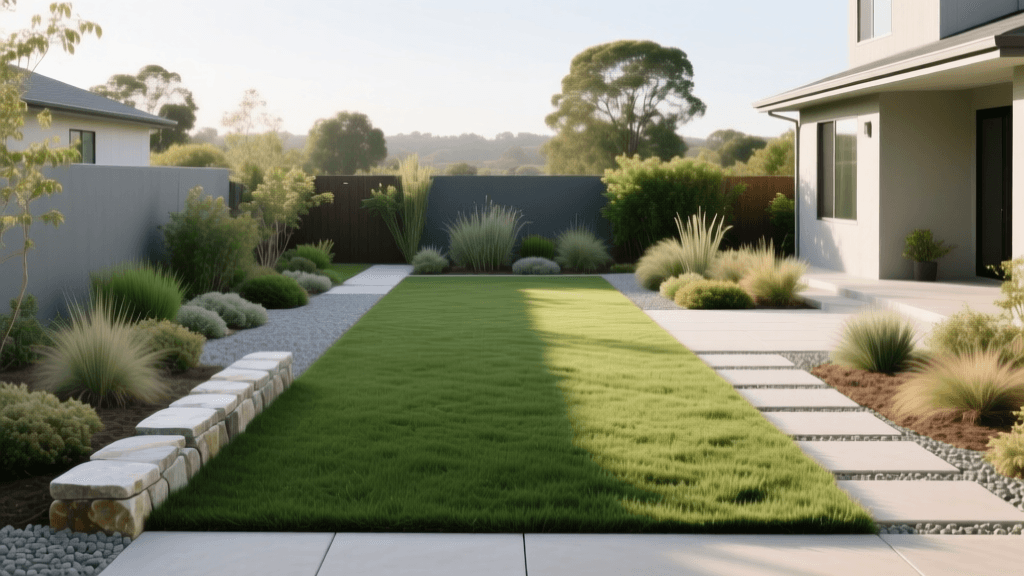
A crucial element of lawn design is knowing where the lawn should end. Attempting to grow grass in narrow strips between a house foundation and a walkway, or on slopes steeper than a 3:1 grade, leads to endless edging, trimming, and erosion issues. Plan to replace these difficult microclimates with mulched planting beds, river rock, or permeable pavers.
When transitioning from turf to hardscape or garden beds, install physical edging to prevent grass rhizomes from invading your design elements. Commercial-grade steel edging (such as EdgePro or Colmet) costs approximately $4 to $6 per linear foot installed and provides a clean, permanent barrier that stops mower wheels from dropping into garden beds. For a more organic design, consider a 6-inch deep trench edge, maintained twice a year with a half-moon edger.
Irrigation Planning by Hydrozone
Turf zoning must be paired with hydrozoning—the practice of grouping plants and turf with similar water requirements onto the same irrigation valves. According to the University of California Agriculture and Natural Resources (UC ANR), hydrozoning is a foundational principle of water-wise landscaping that can reduce outdoor water use by 20% to 40% without compromising landscape aesthetics.
'By placing plants with similar water needs in the same irrigation zone, you avoid the common mistake of overwatering drought-tolerant plants just to keep a nearby thirsty lawn alive.' - UC ANR Water Use Classification of Landscape Species (WUCOLS)
When planning your irrigation layout, ensure your high-traffic Zone 1 turf is on its own dedicated rotor or spray zone. Zone 2 and Zone 3 areas should be transitioned to drip irrigation or managed via smart controllers like the Rachio 3 or Orbit B-hyve, which use local weather data to automatically skip watering cycles for low-water zones when rain is imminent.
Step-by-Step Action Plan for Lawn Zoning
To implement a zoned lawn design, follow this actionable timeline, ideally starting 8 to 10 weeks before your region's optimal seeding season (late summer for cool-season grasses, late spring for warm-season grasses).
- Week 1: Site Analysis. Map your yard's sun exposure and conduct percolation tests in at least four distinct quadrants. Send soil samples from each quadrant to a local university extension office or use a comprehensive mail-in kit like SoilKit ($35) to establish baseline pH and nutrient profiles.
- Week 2: Design and Drafting. Sketch your property. Draw boundaries for Zone 1 (Primary), Zone 2 (Secondary), and Zone 3 (Perimeter). Calculate the square footage of each zone to accurately order seed, sod, and amendments.
- Week 3: Hardscape and Edging. Install steel edging and remove existing turf from Zone 3 areas. Apply a non-selective herbicide or use solarization (covering the area with clear 4-mil plastic for 4-6 weeks) to kill unwanted vegetation in transition zones.
- Week 4-5: Soil Preparation. Amend Zone 1 and Zone 2 soils based on your soil test results. Core aerate compacted areas and top-dress with 1/4 inch of screened compost to improve water retention and microbial activity.
- Week 6: Seeding and Irrigation Setup. Sow your zone-specific grass seeds. Reconfigure your irrigation controller to reflect your new hydrozones, adjusting run times so Zone 1 receives deep, infrequent watering (e.g., 1 inch per week), while Zone 3 receives minimal to no supplemental water.
Conclusion
Transitioning from a generic, wall-to-wall lawn to a thoughtfully planned, zoned landscape is one of the most impactful design decisions a homeowner can make. By respecting the microclimates of your yard and matching your turfgrass and irrigation strategies accordingly, you will cultivate a healthier, more resilient lawn that requires fewer chemical inputs, less water, and significantly less weekend maintenance.