Tree Care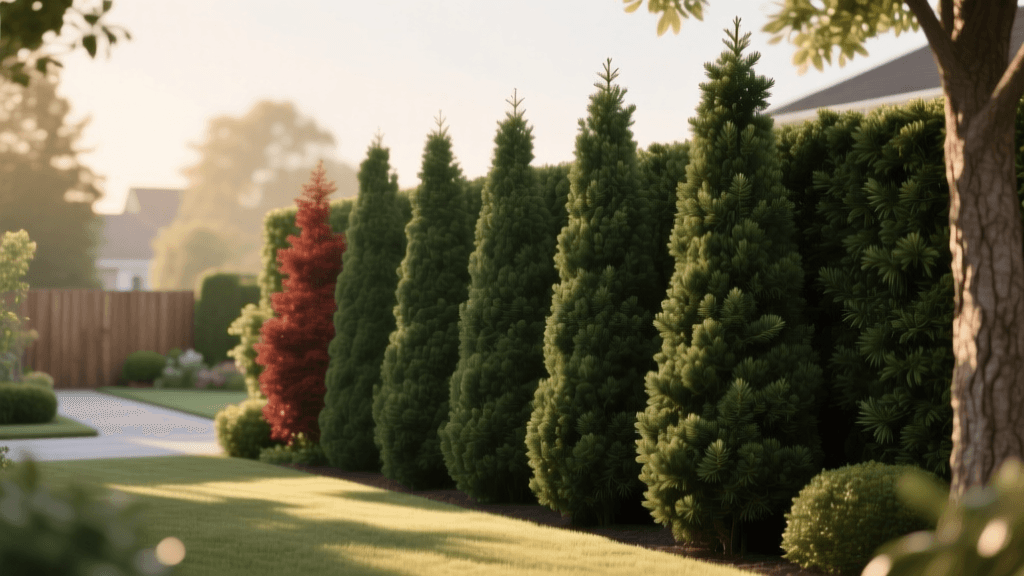
Planning a Living Privacy Screen With Evergreen Trees
Designing a Living Privacy Screen: Beyond the Wooden Fence
Designing a landscape that offers both seclusion and natural beauty is a primary goal for many homeowners. While wooden or vinyl fences provide immediate boundaries, they lack the ecological benefits, sound-dampening qualities, and dynamic seasonal interest of a living privacy screen. Planning a living privacy screen using evergreen trees requires careful consideration of species selection, spatial layout, soil preparation, and long-term maintenance. When executed correctly, a well-designed tree screen acts as a windbreak, reduces noise pollution, lowers winter heating costs, and significantly increases property value.
Unlike a static fence, a living screen evolves, growing denser and taller over time. However, this growth requires strategic planning to avoid overcrowding, disease, and structural damage. This comprehensive guide will walk you through the design, planning, and planting phases of creating a robust evergreen privacy screen for your property.
Site Assessment and Microclimate Evaluation
Before purchasing any trees, you must thoroughly evaluate your planting site. Start by mapping the sun exposure across your property line. Most evergreen species require full sun, defined as at least six hours of direct sunlight per day, to maintain dense foliage from the ground up. If your planting area is heavily shaded by existing structures or larger deciduous trees, you will need to select shade-tolerant species like the Canadian Hemlock or American Holly, though their growth rates will be slower.
Next, consider the microclimates created by your home and surrounding topography. South-facing walls reflect intense heat and dry out soil quickly, while low-lying areas may collect cold air and frost, or suffer from poor drainage. Identifying these microclimates ensures you place the right tree in the right location, reducing long-term stress and susceptibility to pests.
Soil Testing and Drainage Analysis
Evergreen trees are particularly sensitive to waterlogged soils, which can lead to fatal root rot diseases like Phytophthora. Conduct a simple percolation test before finalizing your design. Dig a hole twelve inches deep and twelve inches wide, fill it with water, and let it drain completely. Refill it and measure how long it takes to drain. If the water level drops less than one inch per hour, you have poor drainage and must either install French drains, build raised berms, or select moisture-tolerant species like the Dawn Redwood or Bald Cypress, which are deciduous conifers but offer excellent screening during the growing season.
Additionally, always contact your local utility locating service by dialing 811 before digging. This free service marks underground gas, water, and electrical lines, preventing catastrophic accidents and costly repairs.
Selecting the Right Evergreen Species
Choosing the appropriate tree species is the most critical decision in your design. You must balance growth rate, mature size, disease resistance, and your local USDA Hardiness Zone. Fast-growing trees often have weaker wood and shorter lifespans, while slow-growing trees provide long-lasting, dense timber but take years to establish a visual barrier.
| Species | Mature Height | Mature Width | Growth Rate | USDA Zones |
|---|---|---|---|---|
| Thuja Green Giant | 40 to 60 feet | 12 to 18 feet | 3 to 5 feet/year | 5 to 8 |
| Eastern Red Cedar | 40 to 50 feet | 8 to 20 feet | 1 to 2 feet/year | 2 to 9 |
| Nellie Stevens Holly | 20 to 30 feet | 10 to 15 feet | 2 to 3 feet/year | 7 to 9 |
| American Holly | 15 to 30 feet | 10 to 20 feet | 1 to 2 feet/year | 5 to 9 |
| Leyland Cypress | 50 to 70 feet | 15 to 25 feet | 3 to 4 feet/year | 6 to 9 |
Expert Note: While Leyland Cypress is famous for its rapid growth, it is highly susceptible to Seiridium canker and Cercospora needle blight, especially when planted too closely together. For a more disease-resistant alternative with similar rapid growth, the Thuja Green Giant is widely recommended by arborists.
Layout and Spacing Strategies
A common mistake in privacy screen planning is planting trees too close together. Overcrowding leads to intense competition for water and nutrients, poor air circulation, and increased fungal disease pressure. Furthermore, as the trees mature, their canopies will merge, but the lower branches will die off due to shade, resulting in a screen that lacks privacy at eye level.
Single Row vs. Double Staggered Row
For narrow property lines, a single row is often the only option. In a single row, space the trees at roughly 50% to 75% of their mature width. For example, if a Thuja Green Giant has a mature width of 15 feet, plant them 8 to 12 feet apart, measured from trunk to trunk.
If you have the space, a double staggered row (often called a zigzag pattern) is vastly superior for privacy and windbreaking. Plant two parallel rows, offsetting the trees in the second row so they sit in the gaps of the first row. This creates a denser visual barrier much faster and allows for wider spacing between individual trees within the same row, promoting better air circulation and root development.
Balled and Burlapped (B&B) vs. Container Trees
When sourcing your trees, you will generally choose between Balled and Burlapped (B&B) or container-grown specimens. B&B trees are dug directly from the field and offer a larger, more established root system, providing an instant screen. However, they are incredibly heavy, often requiring machinery or professional landscapers to move, and they lose up to 90% of their fine feeder roots during the digging process, leading to a longer transplant shock period.
Container-grown trees retain their entire root system, experience minimal transplant shock, and establish faster. While they start smaller, a 15-gallon container tree will often catch up to and surpass a larger B&B tree within three to four years because it does not have to regenerate lost root mass. For most DIY homeowners, 7-gallon to 15-gallon container trees offer the best balance of cost, manageability, and long-term health.
Execution: Proper Planting Techniques
Proper planting depth is the single most important factor in the survival of your privacy screen. The most common cause of tree death in residential landscapes is planting too deeply, which suffocates the root system and rots the trunk.
- Locate the Root Flare: Before digging, brush away the top layer of soil from the root ball to expose the root flare, the point where the trunk widens and transitions into the root system. This flare must sit slightly above the surrounding grade.
- Dig the Hole: Dig a hole that is two to three times as wide as the root ball, but no deeper. The wide hole encourages lateral root expansion into the surrounding soil.
- Roughen the Sides: If your soil is heavy clay, use a shovel to roughen the smooth sides of the planting hole. This prevents the roots from circling inside the hole, a phenomenon known as the bathtub effect.
- Backfill Native Soil: Place the tree in the hole and backfill with the native soil you just dug out. Avoid amending the backfill with heavy compost or peat moss, as this creates a textural difference that discourages roots from venturing into the native soil.
Mulching, Watering, and Staking
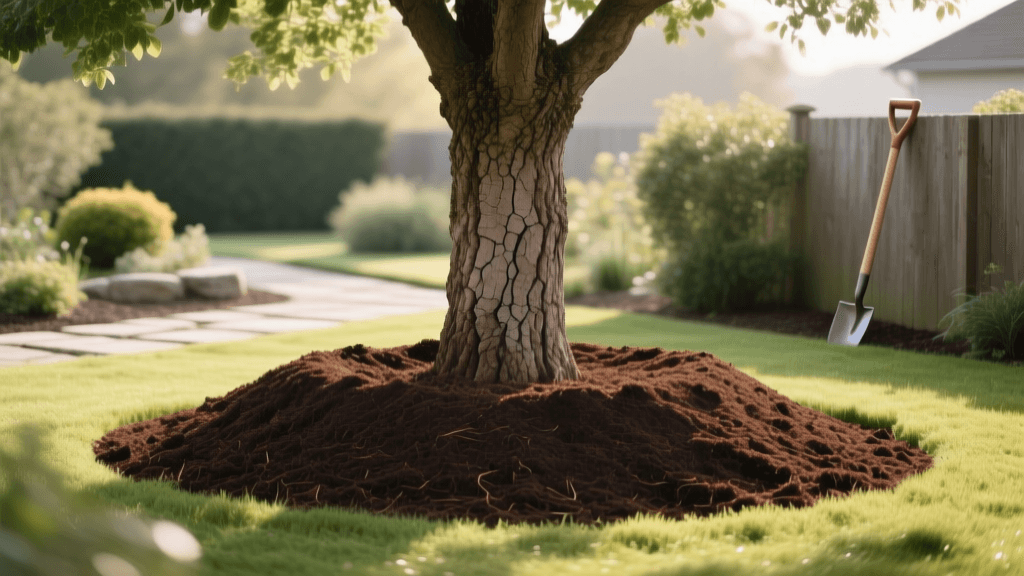
After planting, apply a two to three-inch layer of organic hardwood mulch over the planting area to retain moisture and regulate soil temperature. Keep the mulch pulled back at least three inches from the trunk to prevent bark rot and rodent damage. Never pile mulch against the trunk in a volcano shape.
Newly planted evergreens require consistent, deep watering to establish. A general rule is to provide 1.5 gallons of water per inch of trunk caliper per watering session. During the first growing season, water deeply twice a week, adjusting for rainfall. Use a soaker hose or slow-drip irrigation system to deliver water directly to the root zone without wetting the foliage, which can invite fungal pathogens.
Staking is generally unnecessary unless you are planting tall, top-heavy trees in high-wind areas. If staking is required, use broad, flexible canvas straps rather than wire, which can girdle the trunk. Remove the stakes after one year to allow the trunk to develop natural taper and strength through wind-induced swaying.
Pruning for Density and Long-Term Health
To maintain a dense privacy screen from the ground up, selective pruning is required during the first few years of establishment. Do not shear evergreens with hedge trimmers like a formal boxwood, as this creates a thick outer shell of foliage that blocks sunlight from reaching the interior branches, eventually causing the interior to die out.
Instead, use hand pruners to selectively tip-prune the terminal buds of lateral branches. This encourages the tree to push out secondary buds, resulting in a denser, more natural form. Always maintain apical dominance by allowing the central leader to grow taller than the lateral branches, preventing the tree from splitting under the weight of snow or ice.
Budgeting and Cost Analysis
Investing in a living privacy screen requires a different financial approach than building a fence. While a high-quality vinyl fence might cost between $50 and $100 per linear foot installed, a living screen's costs are distributed across plant material, soil amendments, and irrigation.
A 10-to-12-foot tall B&B Thuja Green Giant typically costs between $150 and $250 per tree at a wholesale nursery, plus delivery and heavy equipment installation fees. A smaller 15-gallon container tree (typically 6 to 8 feet tall) costs between $80 and $130 and can be planted by hand. Over a 50-foot property line, you might spend $1,500 to $2,500 on container trees, compared to $3,500 to $5,000 for a premium fence. However, you must also factor in the cost of a drip irrigation system ($200 to $400) and annual mulch and fertilizer ($50 to $100).
According to Penn State Extension, a properly designed and maintained evergreen windbreak can reduce wind velocity for a distance of up to 30 times the height of the trees, significantly lowering winter heating costs for the adjacent home while providing unmatched year-round privacy and wildlife habitat.
By carefully planning your layout, selecting disease-resistant species, and adhering to proper planting depths and watering schedules, your living privacy screen will thrive for decades, offering a lush, green sanctuary that improves with age.