Tree Care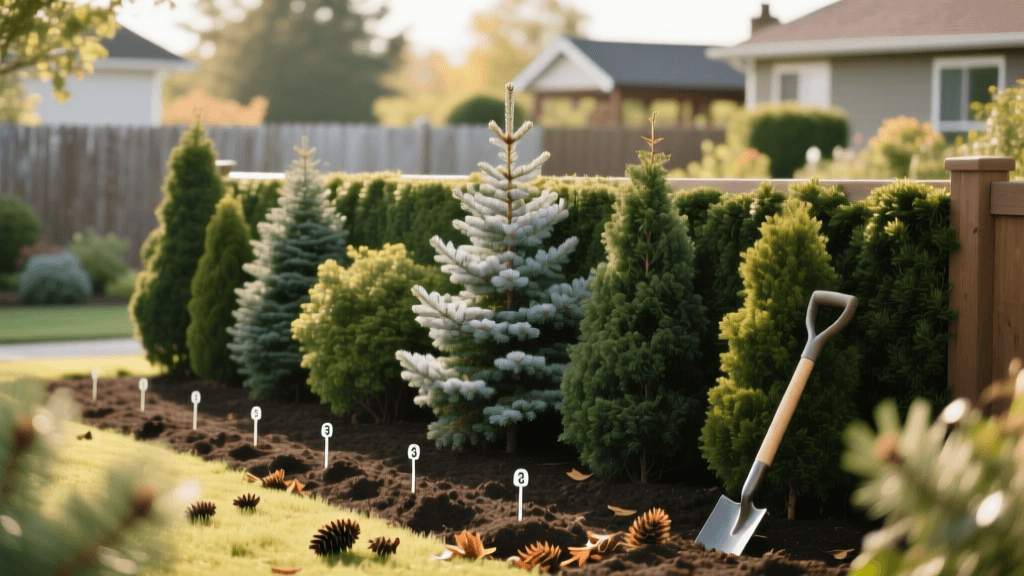
Planning a Year-Round Tree Privacy Screen for Your Yard
The Strategic Advantage of a Living Privacy Screen
When planning your landscape design, establishing privacy is often a top priority for homeowners. While traditional wooden or vinyl fences offer immediate boundaries, they lack the ecological benefits, noise-buffering capabilities, and natural beauty of a living fence. Designing and planting a year-round tree privacy screen is a strategic investment that enhances property value, creates a microclimate for your garden, and provides essential habitat for local wildlife. Unlike a wooden fence that degrades over time and requires costly replacements, a well-planned evergreen screen grows more robust and valuable with each passing year.
From a financial perspective, the cost comparison is striking. Installing a high-quality cedar wood fence typically costs between $35 and $50 per linear foot. For a 100-foot property line, you are looking at $3,500 to $5,000. In contrast, a professionally designed tree privacy screen using premium 6-to-8-foot balled-and-burlapped (B&B) evergreens might require 15 trees at an average cost of $150 each, plus $300 for soil amendments and drip irrigation. The total investment sits around $2,550, yielding a living barrier that actively cools your property, sequesters carbon, and reduces winter heating bills by acting as a windbreak.
Site Assessment and Property Line Rules
Before selecting species or digging a single hole, thorough site planning is mandatory. Begin by identifying your exact property lines. Planting trees directly on a property line can lead to legal disputes and shared maintenance liabilities. Most landscape architects and arborists recommend planting the center of the tree trunk at least 4 to 6 feet inside your property boundary. This accounts for future trunk expansion and ensures that the mature canopy does not excessively encroach on a neighbor's airspace or drop excessive debris on their lawn.
Next, call your local utility marking service (such as 811 in the United States) at least three business days before digging. This free service will mark underground gas, water, and electrical lines. When designing your layout, also look up. Avoid planting tall-growing evergreens directly under overhead power lines, as utility companies will aggressively prune them into unnatural, unhealthy shapes to maintain clearance.
Finally, assess your soil and light conditions. Evergreens generally require full sun (at least 6 hours of direct sunlight daily) to maintain dense, lower-branch foliage. If your planting strip is heavily shaded by existing structures or larger deciduous trees, you will need to select shade-tolerant species like the Canadian Hemlock or specific Holly varieties, though their growth rates will be slower.
Selecting the Right Evergreen Species
Choosing the correct species is the most critical design decision you will make. The goal is to select trees that match your USDA Hardiness Zone, soil drainage profile, and desired mature dimensions. Below is a comparison chart of top-performing evergreen species frequently used in residential privacy screen designs.
| Species | Mature Height | Mature Width | Growth Rate | USDA Zones | Est. Cost (6-8ft B&B) |
|---|---|---|---|---|---|
| Thuja 'Green Giant' | 40-60 ft | 12-18 ft | Fast (2-3 ft/yr) | 5-8 | $120 - $180 |
| Eastern Redcedar | 40-50 ft | 10-20 ft | Medium (1-2 ft/yr) | 2-9 | $90 - $140 |
| Nellie Stevens Holly | 20-30 ft | 10-15 ft | Medium (1-2 ft/yr) | 6-9 | $150 - $220 |
| Norway Spruce | 40-60 ft | 25-30 ft | Medium (1-2 ft/yr) | 2-7 | $130 - $200 |
| Spartan Juniper | 15-20 ft | 4-5 ft | Medium (1-2 ft/yr) | 4-9 | $80 - $120 |
For rapid screening in zones 5 through 8, the Thuja 'Green Giant' is widely considered the gold standard due to its disease resistance and rapid growth. However, for narrower spaces where width is restricted, the columnar Spartan Juniper provides excellent density without consuming the entire yard. In southern landscapes with heavy clay soils, the broadleaf evergreen Nellie Stevens Holly offers a brilliant alternative, producing striking red berries in winter while maintaining a dense, dark green canopy.
Spacing Formulas for Maximum Density
A common mistake in landscape planning is spacing trees based on their full mature width. If a tree matures to 15 feet wide, planting them 15 feet apart will leave gaps in your privacy screen for the first decade. To create a rapid, interlocking living fence, use the 60% spacing rule: multiply the mature width by 0.6 to determine your planting distance.
- Standard Single Row: For a tree with a 15-foot mature width, plant trees 9 feet apart (center of trunk to center of trunk). This forces the canopies to merge within 3 to 4 years.
- Staggered Double Row: If you have the space (at least 12 feet of depth), a staggered double row is the ultimate design for privacy and noise reduction. Plant two parallel rows, spacing trees 10 feet apart within each row. Offset the second row by 5 feet so the trees sit in the gaps of the first row. Space the rows 8 feet apart. This creates an impenetrable visual and acoustic barrier.
Step-by-Step Planting and Soil Preparation
Timing is everything. The optimal window for planting evergreen privacy screens is early fall (September to mid-October) in zones 5 through 7. This allows the root system to establish in cool, moist soil before the stress of summer heat. In colder regions (zones 3 and 4), spring planting (April to May) is preferred to avoid winter desiccation damage on newly planted roots.
When executing the planting design, dig a hole that is exactly as deep as the root ball but two to three times as wide. This wide, shallow hole encourages lateral root expansion, which is crucial for anchoring tall evergreens against high winds. Never plant an evergreen too deep. The root flare—the point where the trunk widens at the base and meets the roots—must remain slightly above the surrounding soil grade. Planting too deep suffocates the roots and invites fatal fungal pathogens like Phytophthora.
Before backfilling, score the sides of the planting hole if your soil is heavy clay, and gently loosen any circling roots on the outside of the root ball. Backfill with the native soil you removed, avoiding the temptation to amend the hole heavily with compost, which can create a 'bathtub effect' where water pools and drowns the roots.
Irrigation and Mulching Strategy
A newly planted privacy screen requires consistent moisture to survive the critical first two years. Hand-watering 15 large evergreens is impractical and often leads to underwatering. Design a dedicated drip irrigation system for your screen. A commercial-grade drip line with inline emitters spaced every 12 inches (such as Netafim or Rain Bird drip kits) can be snaked through the base of the trees and connected to a standard hose bibb with a digital timer. A 100-foot drip kit costs approximately $150 and ensures deep, slow watering that reaches the root zone without evaporating.
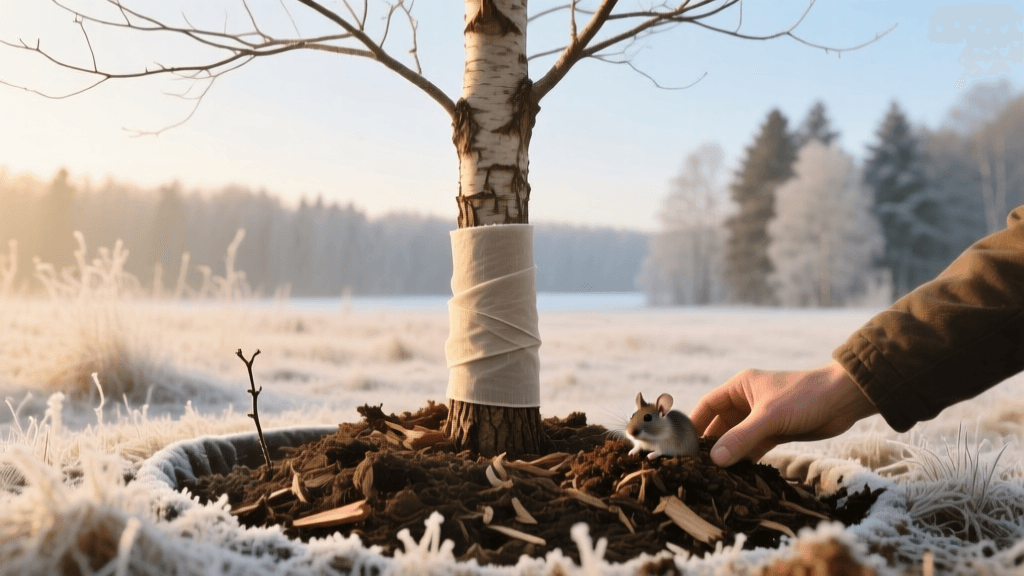
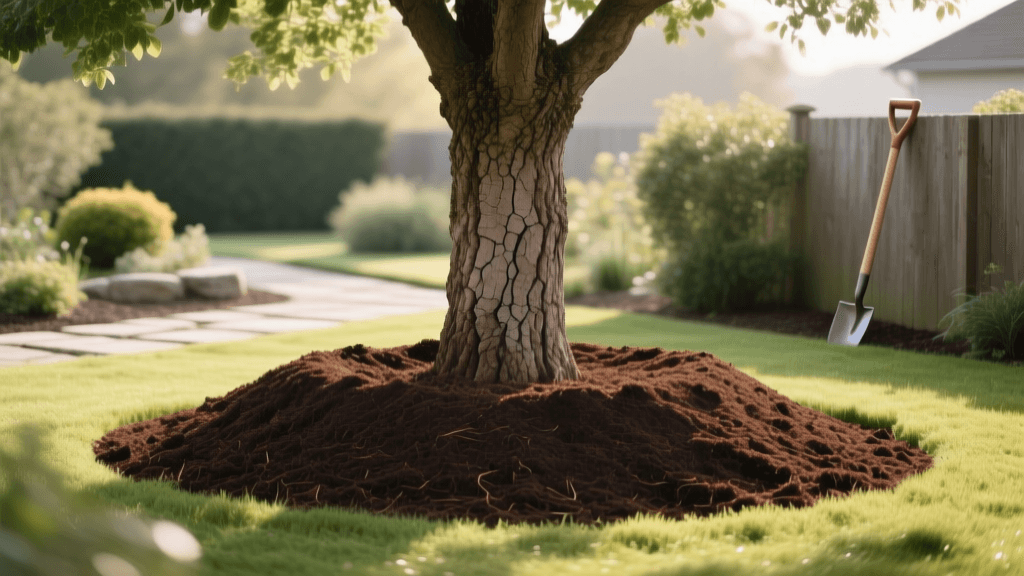
Apply a 3-inch layer of premium hardwood or pine bark mulch over the root zone to retain moisture and suppress weeds. Crucially, maintain a strict 'no-mulch zone' of 3 to 4 inches around the base of the trunk. Volcano mulching—piling mulch against the trunk—traps moisture against the bark, leading to rot and providing a winter haven for bark-gnawing rodents.
Pruning and Maintenance for a Dense Canopy
To maintain a formal, dense privacy screen, selective pruning is required. The technique depends heavily on the species you selected. For broadleaf evergreens like Holly, standard heading cuts in late winter will encourage bushy, lateral growth. For arborvitae and junipers, light shearing in early summer helps maintain a uniform shape, but you must never cut back into the 'dead zone' (the older, brown, needle-less wood near the center of the tree), as these species will not regenerate foliage from old wood.
For pine species, use the candle pruning method. In spring, when the new growth shoots (candles) are half-expanded, pinch or cut them back by half. This forces the tree to produce multiple lateral buds, resulting in a significantly denser canopy over time without the need for mechanical shearing.
Expert Insights on Windbreaks and Screening
According to the University of Minnesota Extension, a well-designed evergreen windbreak and privacy screen can reduce winter wind speeds by up to 50 percent, significantly lowering home heating costs while providing year-round visual screening. They strongly recommend utilizing a mix of species to prevent total screen loss from species-specific pests or diseases.
Following this expert advice, consider mixing two compatible species in your design. For example, alternate Nellie Stevens Holly with Eastern Redcedar. Both thrive in similar conditions, but if a specific blight or pest targets one species, your entire privacy screen will not be compromised. By combining meticulous site planning, precise spacing mathematics, and proper horticultural techniques, your living fence will become a permanent, thriving asset to your landscape design.