
Landscaping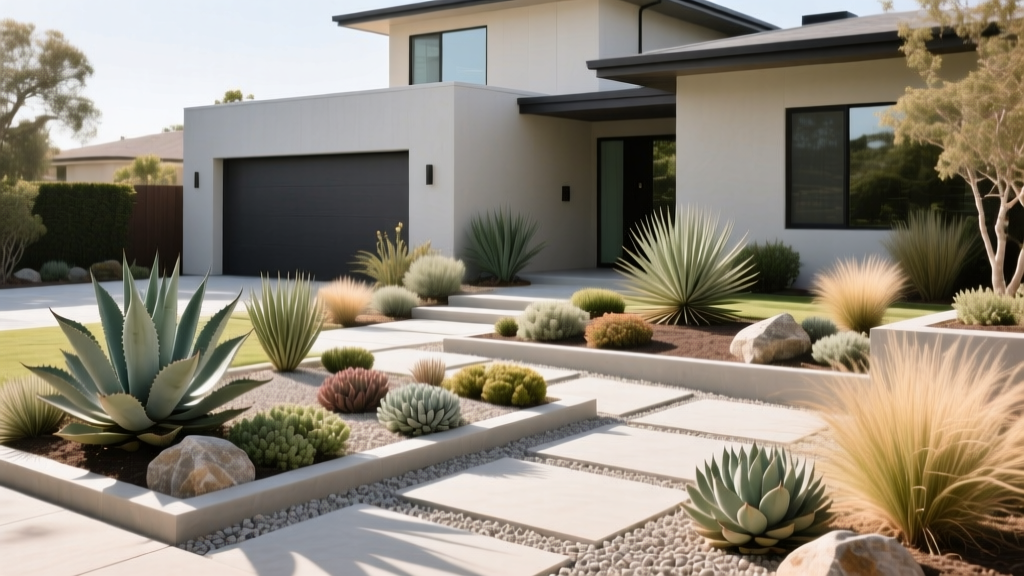
How to Plan a Xeriscape Front Yard: Design Ideas and Costs
Anna KowalskiPublished
The Shift Toward Sustainable Curb Appeal
For decades, the standard for front yard landscaping was a sprawling, water-thirsty turf lawn. However, as water conservation becomes a critical priority and maintenance costs rise, homeowners are increasingly turning to xeriscaping. Contrary to the popular 'zero-scape' myth—which often conjures images of barren dirt and a single lonely cactus—modern xeriscape design is about creating lush, vibrant, and ecologically resilient outdoor spaces. Planning a xeriscape front yard requires a strategic approach to design, plant selection, and hardscaping to ensure your home maintains exceptional curb appeal while drastically reducing water usage.
The 7 Principles of Xeriscape Planning
The term 'xeriscape' was coined in the early 1980s, and its foundational principles remain the gold standard for sustainable landscaping. According to the Colorado State University Extension, a leading authority on water-wise gardening, implementing these seven principles can reduce landscape water use by 60% or more without sacrificing aesthetic value. The principles include:
- Planning and Design: Creating a comprehensive base map and conceptual layout.
- Soil Improvement: Amending soil to optimize water retention and drainage.
- Efficient Irrigation: Utilizing drip systems and smart controllers rather than overhead spray.
- Plant Zoning (Hydrozoning): Grouping plants with similar water and sunlight requirements.
- Mulching: Applying organic or inorganic mulch to reduce evaporation and suppress weeds.
- Turf Alternatives: Replacing high-water grass with drought-tolerant groundcovers or hardscaping.
- Appropriate Maintenance: Adapting care routines to the specific needs of a water-wise garden.
When planning your front yard, the first and most crucial step is the design phase. A well-drawn plan prevents costly mistakes and ensures a cohesive visual flow from the sidewalk to your front porch.
Step 1: Site Analysis and Sun Mapping
Before purchasing a single plant or bag of mulch, you must understand your site's unique microclimates. Spend a few days observing your front yard. Note which areas receive full, unfiltered sun (typically the south and west-facing zones) and which areas are shaded by the house or existing trees.
Draw a base map of your property to scale (e.g., 1 inch equals 10 feet). Mark the location of your house, driveway, walkways, utility boxes, and downspouts. Identify natural drainage patterns; if water pools near your foundation during heavy rains, your design must incorporate swales or rain gardens to direct water away from the structure. Testing your soil pH and drainage rate is also vital. Most drought-tolerant plants prefer well-draining, slightly alkaline soil. If you have heavy clay, you will need to plan for soil amendment or build raised berms to improve drainage.
Step 2: Hydrozoning Your Landscape Design
Hydrozoning is the practice of grouping plants into distinct zones based on their water needs. This prevents the common mistake of overwatering drought-tolerant plants simply because they share an irrigation valve with a thirsty fern. In a front yard design, you typically divide the space into three zones:
- The Oasis Zone: Located near the front door or entryway. This area is highly visible and can accommodate moderate-water plants that benefit from roof runoff or occasional supplemental watering. Use this zone for vibrant, high-impact color.
- The Transition Zone: The middle ground between the Oasis and the perimeter. Plants here are watered less frequently and serve as a visual bridge between the lush entryway and the broader landscape.
- The Low-Water Zone: Typically the parkway (the strip between the sidewalk and street) and the outer edges of the yard. Plants here are strictly native or highly adapted to survive on natural rainfall once established.
Step 3: Selecting Hardscaping and Groundcovers
Hardscaping provides the 'bones' of your xeriscape design. It reduces the square footage of planted areas, lowers maintenance, and adds architectural interest. When planning pathways, dry creek beds, or patios, choose materials that complement your home's exterior and allow for permeability where possible.
| Material | Cost per Sq. Ft. | Pros | Cons | Best Design Use |
|---|---|---|---|---|
| Decomposed Granite (DG) | $1.50 - $3.00 | Permeable, natural look, easy to install | Can track into the house, requires a stabilizer | Pathways, dry creek beds |
| Flagstone | $15.00 - $25.00 | Durable, high-end aesthetic, timeless | Expensive, requires professional masonry | Entryway patios, stepping stones |
| River Rock (2-4 inch) | $2.00 - $4.00 | Excellent drainage, suppresses weeds, permanent | Retains heat, difficult to walk on | Drainage swales, modern accents |
| Shredded Cedar Mulch | $0.50 - $1.00 | Improves soil, retains moisture, natural | Fades over time, requires annual top-ups | Planting beds, Oasis zones |
Note: Always install a high-quality, permeable geotextile landscape fabric beneath inorganic materials like river rock or DG to prevent weed growth and soil mixing, but avoid using plastic sheeting, which suffocates soil biology and causes water runoff.
Step 4: Curating a Drought-Tolerant Plant Palette
The key to a stunning xeriscape is variety in texture, height, and bloom time. Avoid the temptation to plant a monoculture. Instead, mix architectural succulents with wispy ornamental grasses and broad-leafed perennials. Here are four exceptional, low-water plants that provide year-round curb appeal:
- Coral Yucca (Hesperaloe parviflora): A striking, architectural evergreen that produces tall spikes of coral-red blooms from late spring through fall. It thrives in intense heat, requires virtually no supplemental water once established, and grows to 3-4 feet tall and wide. Perfect as a focal point in the Low-Water Zone.
- Autumn Sage (Salvia greggii): A compact, woody shrub that produces a profusion of tubular red, pink, or white flowers. It is a magnet for hummingbirds and blooms heavily in both spring and fall. Plant it in the Transition or Oasis zone, pruning it back by one-third in early spring to maintain a dense shape.
- Hummingbird Mint (Agastache rupestris): Known for its silvery-green foliage and spikes of orange and purple flowers, this perennial offers a delightful licorice-mint scent. It is highly resistant to deer and rabbits, making it ideal for front yards in suburban areas.
- Blue Fescue (Festuca glauca): A clumping ornamental grass that forms neat, 12-inch domes of icy-blue foliage. Use it in mass plantings along walkways or as a contrasting border in front of darker green shrubs. It requires excellent drainage and full sun.
Step 5: Designing an Efficient Drip Irrigation System
Even drought-tolerant plants require consistent moisture during their first one to two years of establishment. Overhead sprinklers are highly inefficient, losing up to 50% of water to wind drift and evaporation. Instead, plan for a subsurface or point-source drip irrigation system.
Use 1/2-inch polyethylene mainlines branching into 1/4-inch micro-tubing. For shrubs and trees, utilize adjustable emitters (rated at 2 to 4 gallons per hour) placed at the root ball and expanded outward as the plant matures. For groundcovers and dense perennial beds, use inline drip tubing (such as Netafim Techline CV) with emitters spaced every 12 inches. Connect the system to a smart Wi-Fi irrigation controller that adjusts watering schedules based on local evapotranspiration (ET) rates and weather forecasts.
Cost Breakdown and Project Timeline
Transforming a standard 500-square-foot front yard from turf to xeriscape is a manageable project that can be completed over a few weekends. Here is a realistic cost and timeline breakdown for a DIY approach versus hiring a professional landscaping contractor:
- Turf Removal: Renting a sod cutter or using a solarization method takes 1-2 days. Cost: $1.00 - $2.00 per sq. ft. if hired out; under $0.50 per sq. ft. DIY.
- Hardscaping & Mulch: Installing DG pathways and applying 3 inches of wood mulch across planting beds. Materials cost roughly $2.00 - $4.00 per sq. ft.
- Plants: Purchasing 1-gallon to 5-gallon nursery stock. Expect to spend $15 to $60 per plant depending on the species and size. A 500 sq. ft. yard typically requires 25-40 plants.
- Irrigation: Drip components and a smart controller will cost between $300 and $600 for an average front yard.
Total DIY Cost: Approximately $4.00 to $8.00 per square foot ($2,000 - $4,000 for 500 sq. ft.).
Professional Installation Cost: Approximately $12.00 to $20.00 per square foot ($6,000 - $10,000 for 500 sq. ft.), which includes design fees, labor, and premium materials.
Long-Term Maintenance and Establishment
A common pitfall in xeriscape planning is the 'plant it and forget it' mentality. During the first growing season, your new drought-tolerant plants will need deep watering 1 to 2 times per week to encourage deep root growth. By the second year, you can reduce watering to once every two weeks during the peak of summer. By year three, many native species in the Low-Water Zone will survive entirely on natural rainfall, requiring only seasonal pruning, occasional weeding, and an annual refresh of organic mulch to maintain a pristine, modern curb appeal.

