Tree Care
Beginner's Guide to Planting and Growing Eastern Redbud Trees
Introduction to the Eastern Redbud
The Eastern Redbud (Cercis canadensis) is a breathtaking deciduous tree native to eastern North America. Beloved for its vibrant, early-spring blooms and heart-shaped leaves, this tree is a favorite among home gardeners and landscape designers alike. If you are a beginner looking to add a splash of color and elegant structure to your yard, the Eastern Redbud is an exceptional choice. It is relatively low-maintenance, adaptable to various soil types, and provides year-round visual interest.
Unlike many ornamental trees that demand meticulous care, the Eastern Redbud thrives with basic, consistent attention during its establishment phase. According to the Clemson University Home & Garden Information Center, this tree is an excellent understory species that can tolerate partial shade, making it highly versatile for different landscape layouts. Whether you are planting a single specimen as a focal point or creating a naturalized woodland border, understanding the foundational requirements of the Redbud will ensure your tree thrives for decades.
Quick Reference Growing Chart
Before you break ground, it is essential to understand the basic environmental requirements of the Eastern Redbud. Use the table below as a quick reference guide to ensure your landscape can support this beautiful tree.
| Growing Parameter | Ideal Specification |
|---|---|
| USDA Hardiness Zones | 4 to 9 |
| Sunlight Requirements | Full sun to partial shade (4-6 hours minimum) |
| Soil Type & pH | Well-draining, loamy soil; pH 6.0 to 7.0 |
| Mature Height & Spread | 20 to 30 feet tall, 25 to 35 feet wide |
| Growth Rate | Moderate (1 to 2 feet per year) |
| Bloom Time & Color | Early Spring (March to May); Lavender-pink to purple |
Selecting the Perfect Location
Site selection is arguably the most critical step in the tree planting process. The Eastern Redbud naturally grows as an understory tree in forested areas, which means it is highly tolerant of partial shade. However, for the most prolific spring blooms, planting in a location that receives full morning sun and light afternoon shade is ideal. This protects the delicate foliage from scorching during the peak heat of late summer.
Pay close attention to soil drainage. While Redbuds are adaptable to clay, loam, and sandy soils, they absolutely cannot tolerate 'wet feet' or standing water. Poorly drained soils will quickly lead to root rot and fungal diseases. To test your drainage, dig a hole 12 inches deep and fill it with water. If the water takes more than four hours to drain completely, you will need to amend the soil with organic compost or choose a higher elevation in your yard. Furthermore, ensure your planting site is at least 15 to 20 feet away from your home's foundation, driveways, and overhead utility lines to accommodate the tree's mature canopy spread.
Step-by-Step Planting Guide
Planting your tree correctly from day one sets the stage for a robust root system and a long, healthy life. Follow these precise steps to plant your Eastern Redbud like a professional arborist.
Step 1: Digging the Hole
The dimensions of your planting hole are crucial. Dig a hole that is two to three times wider than the tree's root ball, but no deeper than the root ball itself. The wider hole loosens the surrounding soil, allowing the tender new roots to expand horizontally with ease. The depth must be exact; planting a tree too deep is one of the most common and fatal mistakes beginners make. The root flare (the point where the trunk widens at the base and meets the roots) must sit slightly above the surrounding grade level.
Step 2: Preparing the Root Ball
If you purchased a container-grown Redbud, gently remove the pot and inspect the roots. If the roots are circling the outside of the soil mass, use a sterilized pruning saw or sharp knife to make three or four vertical slices down the sides of the root ball. This process, known as 'scarifying,' severs the circling roots and encourages them to grow outward into the native soil. For bare-root trees, soak the roots in a bucket of water for 3 to 6 hours before planting to rehydrate them.
Step 3: Backfilling and Watering
Place the tree in the center of the hole, ensuring it is straight from multiple viewing angles. Begin backfilling with the native soil you just dug out. Avoid adding heavy fertilizers or excessive soil amendments directly into the planting hole, as this can create a 'pot effect' where roots refuse to leave the enriched soil. As you backfill, gently tamp the soil down with your hands or the handle of your shovel to eliminate large air pockets. Once the hole is filled, build a shallow berm of soil around the outer edge of the planting hole to create a watering basin.
Watering and Mulching Strategies
Consistent moisture is vital during the first two growing seasons. A newly planted Eastern Redbud requires about 10 to 15 gallons of water per week, either from rainfall or supplemental irrigation. Use a slow-trickling garden hose placed at the base of the tree for 30 to 45 minutes to ensure the water penetrates deeply into the root zone. Shallow, frequent watering encourages weak surface roots that are vulnerable to drought and temperature extremes.
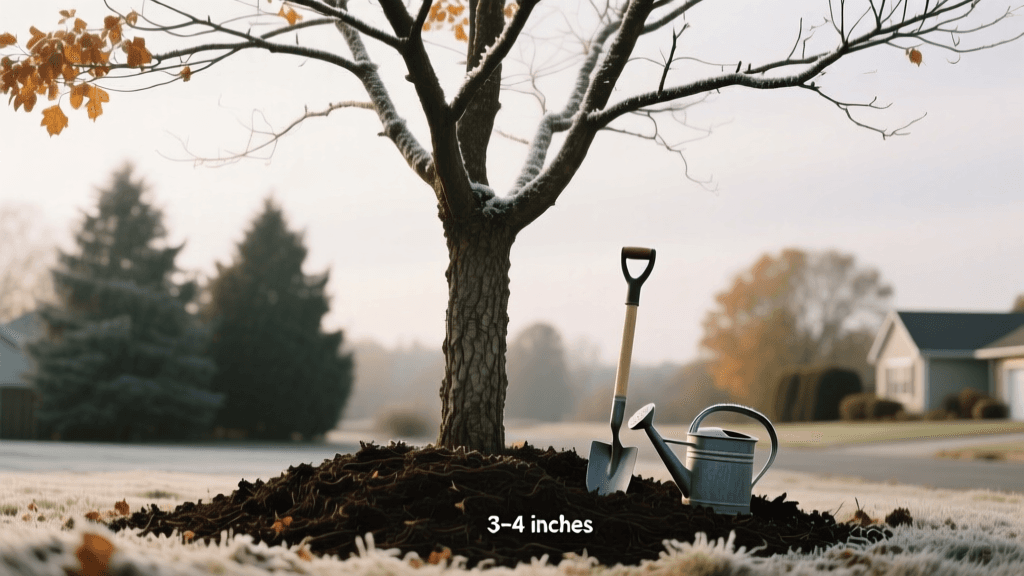
Mulching is equally important for moisture retention and temperature regulation. Apply a 2 to 3-inch layer of organic mulch, such as shredded hardwood bark or pine straw, in a 3-foot diameter ring around the tree. Crucially, keep the mulch at least 3 inches away from the actual trunk of the tree. Piling mulch against the bark (often called 'volcano mulching') traps moisture against the trunk, inviting rot, fungal infections, and rodent damage. The Penn State Extension emphasizes that proper mulching techniques are essential for preventing stress-related diseases in young ornamental trees.
Pruning for Structure and Health
Eastern Redbuds naturally develop a graceful, multi-trunked or low-branching vase shape. However, strategic pruning during the tree's early years will establish a strong structural framework capable of withstanding heavy snow and wind. The best time to prune is in late spring or early summer, immediately after the tree has finished blooming. Pruning in late winter or early spring can cause excessive sap bleeding and increase the risk of disease transmission.
Focus on removing dead, damaged, or diseased wood first. Next, identify any branches that are crossing, rubbing against each other, or growing inward toward the center of the canopy. Select a central leader or a strong, well-spaced set of scaffold branches with wide, U-shaped crotches, which are significantly stronger than narrow, V-shaped crotches. Always use sharp, sterilized bypass pruners or a pruning saw, and make clean cuts just outside the branch collar to promote rapid healing.
Managing Pests and Diseases
While generally resilient, the Eastern Redbud is susceptible to a few specific issues. Canker diseases, particularly Botryosphaeria canker, are the most significant threat. This fungal disease enters through pruning wounds or stress-induced cracks, causing sunken, dark lesions on the bark and eventual dieback of branches. There is no chemical cure for canker; prevention is your best defense. Keep your tree well-watered during droughts, avoid mechanical damage to the trunk from lawnmowers, and prune out infected branches immediately, sterilizing your tools between every cut.
Insect pests like leafhoppers, scale insects, and Japanese beetles may occasionally feed on the foliage. In most cases, the cosmetic damage is minimal and does not threaten the overall health of a mature tree. For minor infestations, a strong blast of water from the hose or the application of insecticidal soap is usually sufficient. The Missouri Botanical Garden notes that maintaining vigorous growth through proper watering and mulching is the most effective way to deter severe pest outbreaks.
Budgeting and Sourcing Your Tree
When budgeting for your Eastern Redbud, expect to spend anywhere from $30 to $150, depending on the size and how it is sold. Bare-root trees are the most economical option, typically costing between $25 and $45, and are best planted in early spring while dormant. Container-grown trees (ranging from 3-gallon to 15-gallon pots) cost between $60 and $150 but offer the advantage of an established root system that can be planted throughout the spring and fall seasons. Balled-and-burlapped (B&B) specimens are the most expensive, often exceeding $200, and usually require professional delivery and planting due to their immense weight.
Pro Tip: Always purchase your trees from reputable local nurseries or certified online growers. Trees sourced from local growers are already acclimated to your regional climate and soil conditions, giving them a significant survival advantage over mass-produced trees shipped from distant growing zones.
By following this comprehensive guide, you will be well-equipped to plant, nurture, and enjoy the spectacular seasonal beauty of the Eastern Redbud in your own landscape for many years to come.