Tree Care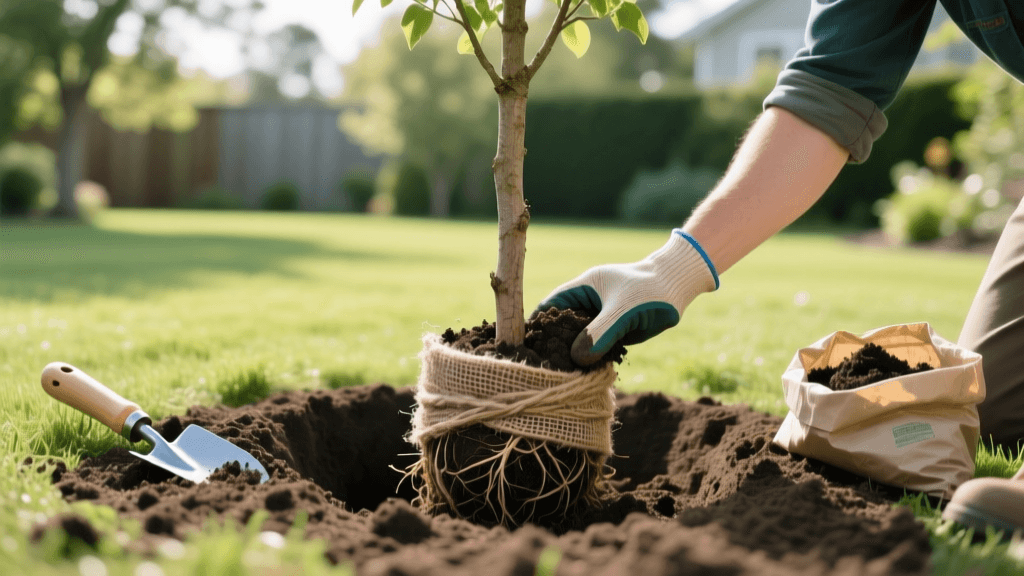
How to Plant a Balled and Burlapped Tree: Step-by-Step Guide
The Ultimate Guide to Planting Balled and Burlapped Trees
Planting a balled and burlapped (B&B) tree is one of the most rewarding investments you can make in your home landscape. Unlike container-grown trees, which are often younger and smaller, B&B trees are typically harvested from field nurseries after several years of growth. This means you are starting with a larger caliper trunk, a more established structural framework, and an immediate visual impact on your property. However, the sheer weight and size of the root ball make proper planting techniques absolutely critical. A poorly planted B&B tree can suffer from girdling roots, stem rot, and premature decline.
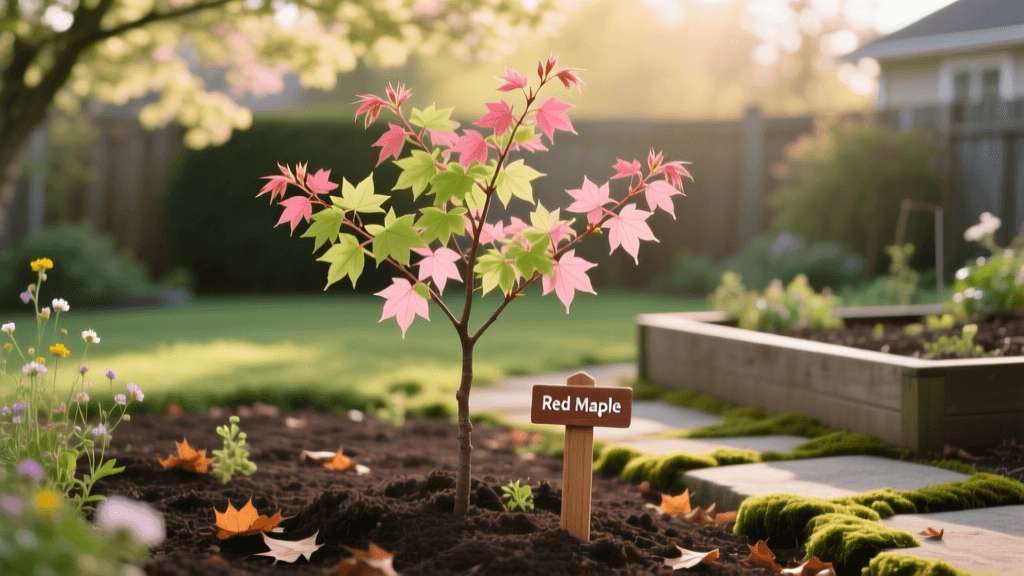
In this comprehensive, practical how-to guide, we will walk you through the exact steps to plant a B&B tree correctly. We will cover everything from identifying the crucial root flare to digging the perfect hole, handling the wire basket, and establishing a post-planting watering schedule. Whether you are planting a mature shade tree like a Red Maple or an evergreen like an Eastern White Pine, these principles apply universally.
Timing and Cost Expectations
The best time to plant a B&B tree is during the dormant season—specifically in early fall after the leaves have dropped, or in early spring before the buds break. Planting during these windows allows the tree to focus its energy on establishing a robust root system rather than supporting top-growth foliage. In terms of budget, expect to spend anywhere from $150 to $400 for a standard 2-inch to 3-inch caliper landscape tree, while specimen trees with root balls exceeding 36 inches can easily cost $800 to $1,500 or more, especially when factoring in heavy equipment delivery fees.
Tools and Materials Required
Before you break ground, gather the following tools to ensure a smooth planting process:
- Round-point digging shovel and a flat spade
- Mattock or digging bar (for breaking up compacted clay)
- Heavy-duty canvas tarp (for moving the root ball)
- Tarp or drop cloth (to hold excavated soil)
- Wire cutters and heavy-duty gloves
- Pruning shears or a hand saw
- Garden hose with a slow-flow nozzle or soaker hose
- Organic hardwood or pine bark mulch
Step 1: Locate and Expose the Root Flare
The single most common mistake homeowners make when planting B&B trees is burying the trunk too deeply. To prevent this, you must locate the root flare—the area at the base of the trunk where the trunk widens and transitions into the primary structural roots. In many nursery-harvested trees, the root flare is buried under 2 to 4 inches of excess soil that accumulated during the tree's time in the field.
Before digging your hole, use your hands or a small hand trowel to gently brush away the top layer of soil from the top of the root ball until you clearly see the root flare. Mark this spot with a piece of tape on the trunk or simply remember the measurement. The root flare must sit at or slightly above (1 to 2 inches) the final grade level of your landscape to ensure proper drainage and prevent the trunk from rotting.
Step 2: Digging the Perfect Hole
When it comes to digging the hole for a B&B tree, the golden rule is: dig wide, not deep. Tree roots grow outward, not straight down. The majority of a tree's absorbing roots will develop in the top 12 to 18 inches of soil. Therefore, your hole should be 2 to 3 times wider than the diameter of the root ball to provide loose, aerated soil for the new roots to expand into. However, the depth of the hole should be exactly the height of the root ball, or even slightly shallower, to account for soil settling.
B&B Tree Planting Dimensions and Cost Chart
| Root Ball Diameter | Required Hole Width | Required Hole Depth | Est. Tree Cost (USD) |
|---|---|---|---|
| 18 inches | 54 inches | 16 inches | $150 - $250 |
| 24 inches | 72 inches | 22 inches | $250 - $400 |
| 30 inches | 90 inches | 28 inches | $400 - $650 |
| 36+ inches | 108+ inches | 34+ inches | $650 - $1,200+ |
Note: Always measure the root ball height from the bottom of the ball to the exposed root flare, not the total height of the soil mound.
Step 3: Moving and Placing the Tree
A B&B tree root ball is incredibly heavy, often weighing between 300 and 800 pounds depending on soil moisture and size. Never lift or drag the tree by its trunk. Doing so will sever the delicate root connections inside the ball and cause catastrophic transplant shock. Instead, roll the root ball onto a heavy-duty canvas tarp. Use the tarp to drag or carefully roll the tree into the planting hole. If the tree is too large, enlist the help of two or three strong adults, or use a mechanical skid steer if access permits.
Once the tree is in the hole, step back and look at it from multiple angles to ensure the trunk is perfectly straight and the best-looking side of the canopy is facing your primary viewing area. Adjust the soil under the root ball now, as it will be nearly impossible to fix later.
Step 4: Managing the Burlap and Wire Basket
There is ongoing debate in the arboriculture community about whether to remove the wire basket and burlap. According to guidelines published by Clemson University Cooperative Extension, all synthetic burlap must be completely removed, as it will not decompose and will girdle the roots over time. Natural jute burlap can be left in the hole, but it should be pulled back away from the trunk and cut into strips to allow roots to escape easily.
Regarding the wire basket: it is highly recommended to use heavy-duty wire cutters to remove at least the top third to one-half of the wire basket once the tree is securely resting in the hole. This prevents the wire from eventually girdling the expanding trunk years down the road, while the remaining bottom half of the basket continues to hold the root ball together during the critical backfilling process.
'Planting a tree too deeply is the number one cause of transplant failure and premature decline in urban landscapes. Always ensure the root flare is visible and at or slightly above grade.' - The Morton Arboretum
Step 5: Backfilling with Native Soil
Contrary to popular belief, you should not amend the backfill soil with heavy amounts of compost, peat moss, or potting mix. If you create a highly porous, nutrient-rich pocket of amended soil surrounded by dense native clay, water will pool in the planting hole like a bathtub, drowning the roots. Furthermore, roots will prefer to stay in the amended zone rather than venturing out into the native soil, leading to a circling root system.
Use the native soil you excavated to backfill the hole. Break up large clods of clay and remove any rocks or construction debris. As you shovel the soil back in, use the blunt end of your shovel or a tamper to gently firm the soil every few inches to eliminate large air pockets. Do not stomp on the soil with your boots, as this destroys soil structure and compacts it too tightly for root penetration.
Step 6: Applying Mulch Correctly
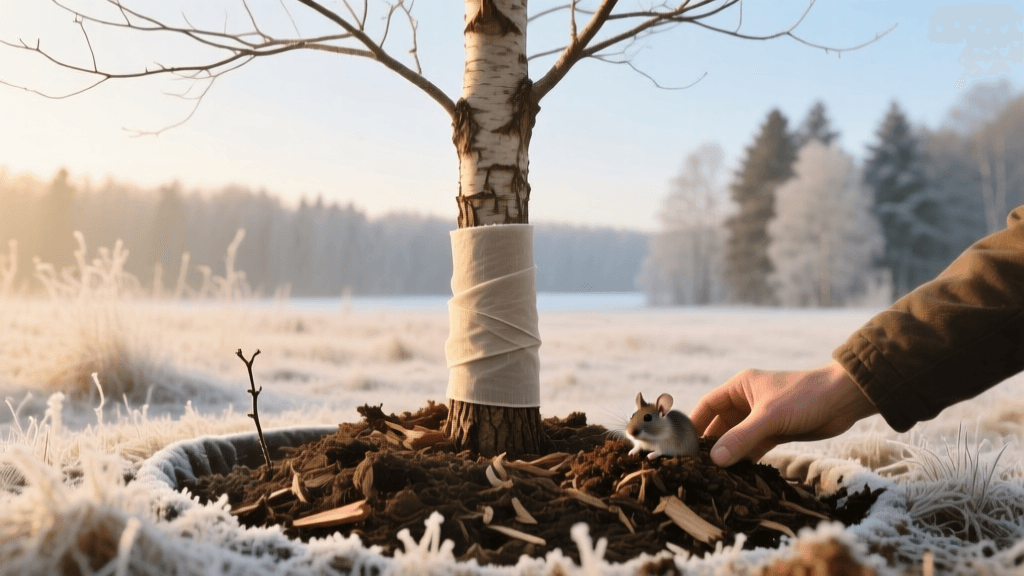
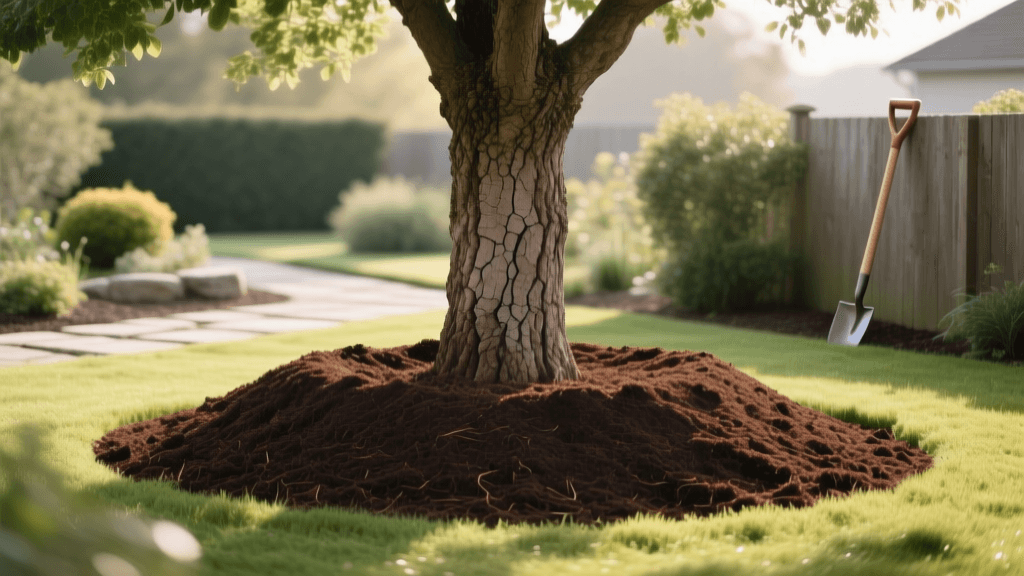
Mulch is essential for retaining soil moisture, regulating soil temperature, and keeping lawn mowers away from the trunk. However, improper mulching (often called 'volcano mulching') is lethal. Piling mulch against the trunk traps moisture against the bark, inviting fungal pathogens and rodent damage.
Apply a 2 to 4-inch layer of organic hardwood or pine bark mulch in a wide ring around the tree, extending out to the drip line if possible. Create a 'donut' shape by pulling the mulch completely away from the trunk, leaving a 3-inch bare-soil buffer around the base of the tree. The root flare must remain completely exposed to the air.
Step 7: Staking (Only When Necessary)
Most B&B trees do not require staking if they were planted correctly and have a solid root ball. Trees need to sway in the wind to develop reaction wood and a strong, tapered trunk. However, if you are planting in an extremely windy area, on a steep slope, or if the tree has a disproportionately large canopy compared to its root ball, staking may be necessary.
If you must stake, use two wooden or metal stakes driven into the undisturbed soil outside the root ball. Attach the tree using wide, flexible canvas straps or rubber hose segments to prevent the wire from cutting into the bark. The ties should be loose enough to allow the trunk to sway slightly. Crucially, remove all stakes and ties after 6 to 12 months. Leaving stakes on long-term will girdle the tree and weaken its structural integrity.
Post-Planting Watering and Care Schedule
Watering is the most critical factor in the survival of your newly planted B&B tree. The root ball will dry out much faster than the surrounding native soil. Use the following schedule to ensure deep, infrequent watering that encourages deep root growth:
- Weeks 1-2: Water deeply every day or every other day. Apply approximately 5 gallons of water per inch of trunk caliper.
- Weeks 3-12: Reduce watering to 2 or 3 times per week, depending on rainfall and temperature.
- Months 4-12: Water once a week during dry spells. Continue this schedule through the first winter if the ground is not frozen and there is no snow cover.
- Year 2 and Beyond: The tree should be largely self-sufficient, requiring water only during severe drought conditions.
Always use a slow-flowing garden hose or a soaker hose placed at the base of the root ball. Let it run for 30 to 45 minutes to ensure the water penetrates deep into the root zone rather than running off the surface.
Final Thoughts
Planting a balled and burlapped tree is heavy work, but taking the time to locate the root flare, dig a wide hole, remove the top wire basket, and mulch properly will guarantee a thriving, majestic tree for decades to come. By following these practical, science-backed steps, you are setting your landscape up for long-term success and vitality.