Tree Care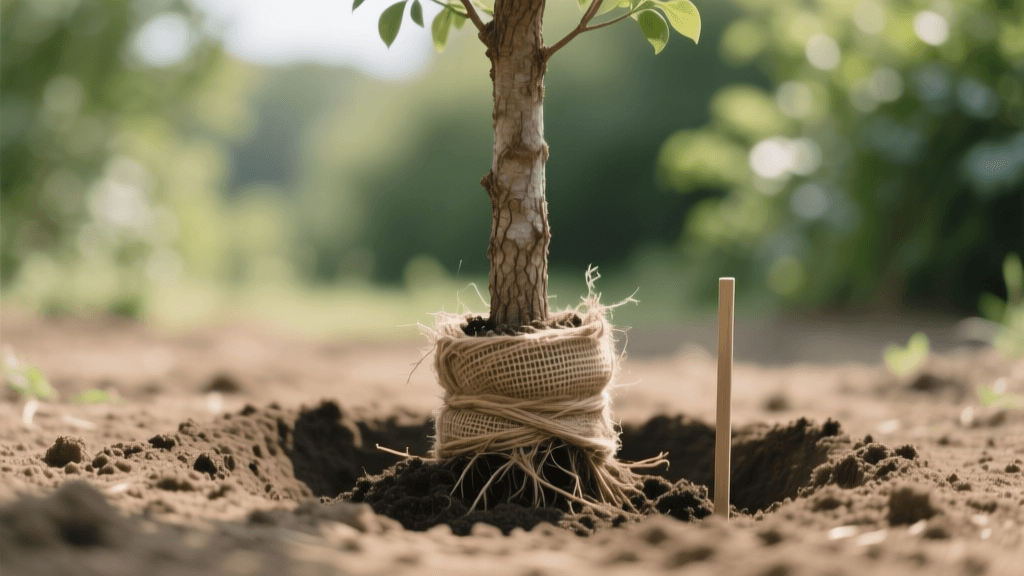
How to Plant a Balled-and-Burlapped Tree Correctly
Introduction to Balled-and-Burlapped Trees
When you invest in a mature, balled-and-burlapped (B&B) tree, you are purchasing a significant head start on your landscape design. Unlike smaller container-grown saplings, B&B trees offer immediate shade, privacy, and curb appeal. However, their size and weight also mean that planting mistakes are much harder to fix. According to the Arbor Day Foundation, improper planting depth is the number one cause of transplant shock and long-term tree decline. This practical, step-by-step guide will walk you through the exact measurements, tools, and techniques required to plant a balled-and-burlapped tree correctly, ensuring it thrives for decades.
B&B vs. Container vs. Bare-Root Trees
Before heading to the nursery, it helps to understand how B&B trees compare to other common nursery stock formats. Each type has distinct advantages, costs, and planting windows.
| Feature | Balled and Burlapped | Container-Grown | Bare-Root |
|---|---|---|---|
| Cost | High ($150-$500+) | Medium ($50-$150) | Low ($20-$60) |
| Weight | Very Heavy (150-1000+ lbs) | Light to Medium | Very Light |
| Planting Window | Spring and Fall | Year-round | Early Spring or Late Fall |
| Root Shock | Moderate | Low | High |
Tools and Materials Needed
Preparing your site and equipment before the tree arrives is crucial. B&B trees require specific heavy-duty tools to handle their weight and packaging.
- Round-point shovel ($45): Essential for digging and moving heavy clay soils efficiently.
- Heavy-duty tarp ($20): Used to drag excavated soil away from the hole without smothering your lawn.
- Tin snips or bolt cutters ($25): Required for safely cutting away the metal wire basket.
- Utility knife ($10): For slicing away natural or synthetic burlap wrapping.
- Canvas tree straps ($15): If staking is necessary, never use wire or rope; use wide canvas to protect the bark.
- Organic hardwood mulch ($6 per bag): You will need approximately 10-15 cubic feet for a standard planting bed.
Step 1: Locating the Root Flare
The most critical step in tree planting occurs before you even dig a hole. You must locate the root flare (also known as the trunk flare). This is the area at the base of the trunk where the wood expands and transitions into the structural root system. In many B&B trees, nursery workers have piled soil over the root flare during the digging process. If you plant the tree with the root flare buried, the tree will slowly suffocate, and adventitious girdling roots will eventually strangle the trunk. Use a hand trowel to carefully brush away the top 2 to 3 inches of soil from the root ball until you clearly see the flare. The Clemson University Home and Garden Information Center emphasizes that the root flare must be visible at or slightly above the final grade level after planting.
Step 2: Digging the Perfect Hole
The dimensions of your planting hole dictate how quickly the tree establishes and how well it anchors.
Width
Dig the hole 2 to 3 times wider than the diameter of the root ball. This wide, shallow bowl shape fractures the surrounding soil, making it easier for new fibrous roots to expand horizontally in search of water and nutrients.
Depth
This is where most homeowners fail. Measure the exact height of the root ball from the bottom to the newly exposed root flare. Dig your hole exactly that depth, or even 1 inch shallower. The tree should rest on undisturbed, solid native soil at the bottom of the hole so it does not sink over time. Never loosen the soil at the bottom of the hole; as the tree settles, the loosened soil will compress, pulling the root flare below grade and causing fatal rot.
Step 3: Moving the Tree and Removing the Basket
Never lift a B&B tree by its trunk. The weight of the root ball can snap the trunk or severely damage the vascular cambium layer. Always roll the tree onto a heavy-duty tarp and drag it to the hole, or use a mechanical dolly. Once the tree is gently lowered into the hole, check the alignment and ensure the root flare is 1 to 2 inches above the surrounding grade.
Next, address the wire basket and burlap. Using your tin snips, cut away the top third of the wire basket and fold it down into the hole. While some arborists argue the basket can remain, removing the top portion prevents wire girdling as the trunk expands. If the burlap is natural, you can leave the bottom portion to decompose, but pull it away from the top of the root ball. If the burlap is synthetic (plastic), it must be entirely removed, as it will not decompose and will restrict root growth and water penetration.
Step 4: Backfilling with Native Soil
Decades ago, gardeners were taught to amend backfill soil with compost or peat moss. Modern arboriculture science advises against this. According to Penn State Extension, amending the soil in the planting hole creates a "bathtub effect." The loose, rich amended soil holds water, while the dense native clay outside the hole acts as a barrier. Roots will circle inside the amended zone rather than venturing into the native soil, leading to a weak, unstable anchor system.
Use the native soil you dug out of the hole to backfill around the root ball. Break up large clods of clay, and use a hose to wash soil into the air pockets as you fill. Do not step on or heavily tamp the backfill, as this destroys soil structure and removes vital oxygen pockets necessary for root respiration.
Step 5: Proper Mulching Techniques
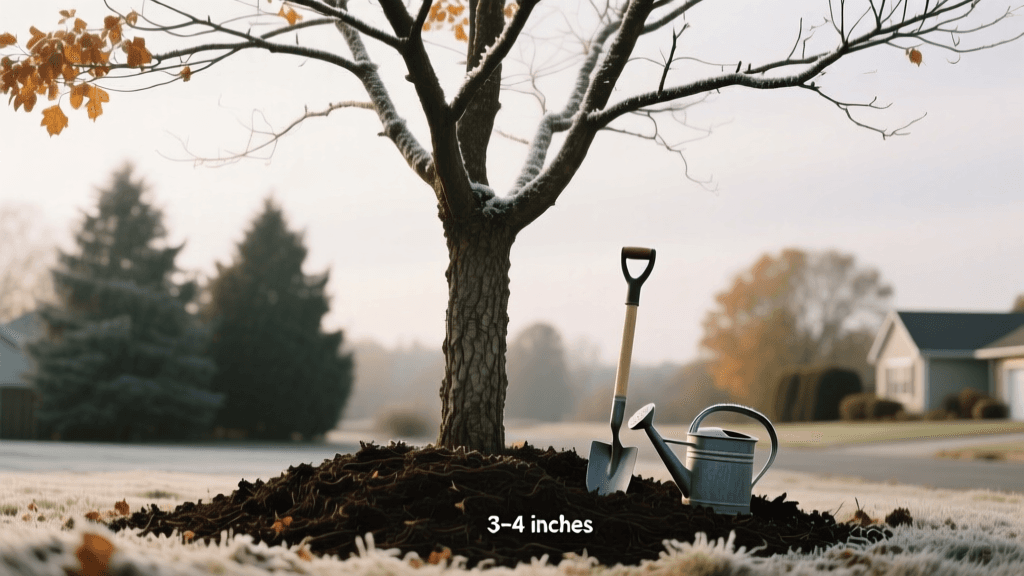
Mulch is essential for retaining moisture, regulating soil temperature, and suppressing grass competition. However, improper mulching—often called "volcano mulching"—is fatal. Apply a 2 to 3-inch layer of organic hardwood mulch in a wide ring around the tree, extending out to the drip line if possible. Crucially, keep the mulch at least 3 inches away from the actual trunk. Piling mulch against the bark traps moisture, inviting fungal pathogens, rot, and rodent damage during the winter months.
Step 6: Watering and Staking Protocols
A newly planted B&B tree requires deep, infrequent watering to encourage deep root growth. A general rule of thumb is to provide 10 gallons of water per inch of trunk diameter (measured at knee height) each week during the growing season. Use a slow-trickling hose or a tree watering bag to allow the water to penetrate deeply into the root ball.
Regarding staking, most B&B trees do not need to be staked if they have a proper root ball and are planted in a sheltered area. If the tree is in a high-wind zone or has a top-heavy canopy, use two flexible canvas straps attached to wooden stakes driven outside the root ball. Remove the stakes after exactly one year to allow the trunk to develop natural taper and structural strength.