Tree Care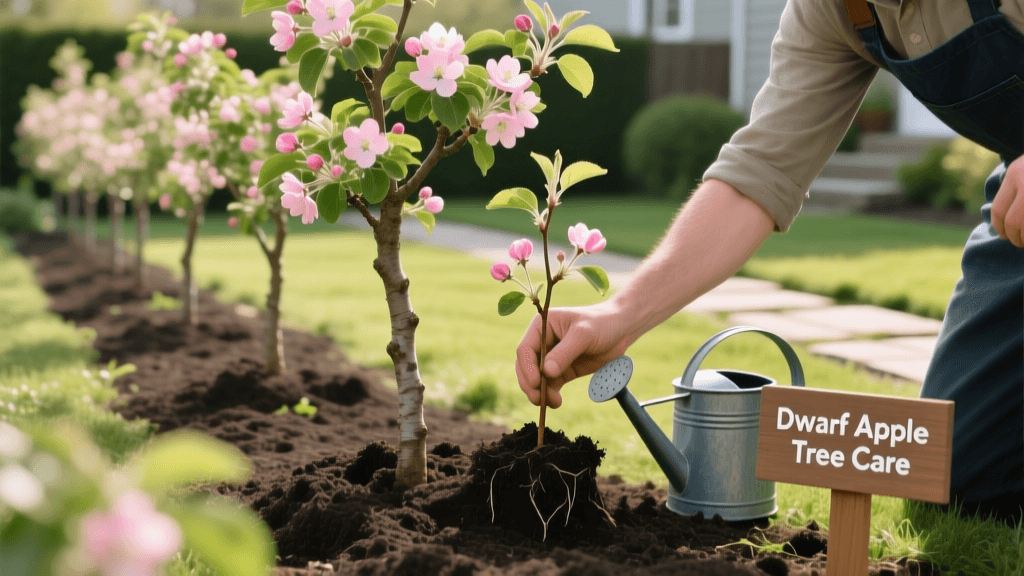
How to Plant and Grow Dwarf Apple Trees: Beginner Guide
Why Choose Dwarf Apple Trees?
Growing your own fruit is one of the most rewarding experiences for any home gardener, and apple trees are a classic choice. However, standard apple trees can grow up to 25 feet tall and wide, requiring massive amounts of space, heavy ladders for harvesting, and years of waiting before they produce their first crop. For beginners and those with limited yard space, dwarf apple trees are the ultimate solution. Dwarf varieties typically mature at just 8 to 10 feet tall and wide, making them perfect for small backyards, urban gardens, and even large patio containers.
Beyond their manageable size, dwarf apple trees offer several distinct advantages for novice growers. First, they bear fruit much earlier than standard trees, often producing a harvest within two to three years of planting. Second, their compact stature makes pruning, pest management, and harvesting significantly easier and safer. You can expect to pay between $40 and $80 for a high-quality, bare-root dwarf apple tree from a reputable nursery, making it an affordable long-term investment for your landscape.
Understanding Rootstocks: The Secret to Tree Size
Unlike seed-grown trees, which can reach massive proportions, dwarf apple trees are created through a process called grafting. A desired fruit-producing variety (the scion) is attached to a specialized, size-controlling root system (the rootstock). The rootstock dictates the tree's ultimate size, disease resistance, and soil adaptability, while the scion determines the type of apple you will eat. According to the Cornell University Fruit Research and Extension Center, selecting the right rootstock is just as important as choosing your favorite apple variety.
Below is a comparison chart of the most common dwarfing rootstocks used in home orchards:
| Rootstock Name | Mature Height | Time to First Fruit | Soil & Climate Preferences | Staking Required? |
|---|---|---|---|---|
| Malling 9 (M.9) | 6 - 8 feet | 2 - 3 years | Well-drained, fertile soils; cold hardy | Yes, permanent |
| Budagovsky 9 (Bud. 9) | 6 - 8 feet | 2 - 3 years | Excellent for heavy soils; very cold hardy | Yes, permanent |
| Geneva 41 (G.41) | 8 - 10 feet | 2 - 3 years | High disease resistance; adaptable to varied soils | Yes, for first 3 years |
| Malling 26 (M.26) | 10 - 12 feet | 3 - 4 years | Good for average soils; susceptible to fire blight | Semi-permanent |
Pro Tip: Always check the graft union on your tree. It looks like a slight bulge or bend near the base of the trunk. This union must remain above the soil line after planting, or the scion will develop its own roots, completely bypassing the dwarfing rootstock and turning your tree into a standard-sized giant.
Site Selection and Soil Preparation
Proper site selection is critical for the long-term health of your apple tree. Apples require full sun, which means at least eight hours of direct, unfiltered sunlight daily. Avoid planting in low-lying areas where cold air settles, as these "frost pockets" can damage early spring blossoms and destroy your crop.
Soil drainage is equally important. Apple trees will not tolerate "wet feet" (waterlogged roots). To test your drainage, dig a hole 12 inches deep and fill it with water. If it takes more than 24 hours to drain completely, you will need to amend the soil with organic compost or plant the tree on a raised berm. The ideal soil pH for apple trees is slightly acidic to neutral, ranging from 6.0 to 7.0. You can easily test your soil pH using an inexpensive home kit or by sending a sample to your local cooperative extension office.
Step-by-Step Planting Instructions
Timing is everything. The best time to plant bare-root dwarf apple trees is in early spring, as soon as the soil is thawed and workable, but before the tree breaks dormancy. Container-grown trees can be planted in spring or early fall. Follow these actionable steps for a successful planting:
- Hydrate the Roots: If planting a bare-root tree, soak the roots in a bucket of water for 12 to 24 hours before planting to rehydrate them.
- Dig the Hole: Dig a hole that is twice as wide as the root spread, but no deeper than the root system itself. The soil at the bottom of the hole should remain undisturbed to prevent the tree from sinking later.
- Position the Tree: Place the tree in the center of the hole. Spread the roots out evenly in all directions. Ensure the graft union is exactly 2 to 3 inches above the final soil line.
- Backfill and Water: Fill the hole halfway with native soil, then water heavily to eliminate air pockets. Finish filling the hole with soil and tamp it down gently with your foot.
- Install a Stake: Because dwarf rootstocks have smaller, less anchoring root systems, drive a sturdy wooden or metal stake 18 inches into the ground next to the trunk. Secure the tree to the stake using flexible tree ties in a figure-eight pattern to prevent bark rubbing.
Ongoing Care: Watering, Mulching, and Feeding
Newly planted apple trees require consistent moisture to establish their root systems. During the first growing season, provide 1 to 2 inches of water per week. Use a soaker hose or drip irrigation system to deliver water directly to the root zone, which helps prevent fungal diseases on the leaves.
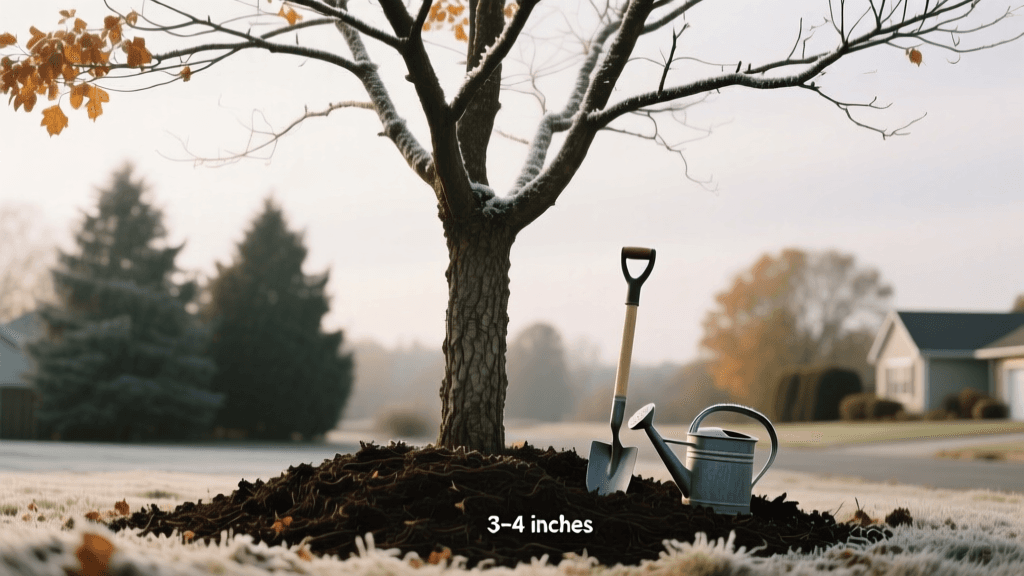
Mulching is a non-negotiable step for tree care. Apply a 2 to 4-inch layer of organic mulch, such as shredded hardwood bark or pine straw, in a 3-foot radius around the tree. Mulch retains soil moisture, suppresses weeds, and regulates soil temperature. However, you must keep the mulch at least 3 inches away from the actual trunk of the tree. "Volcano mulching" (piling mulch against the bark) invites rot, rodent damage, and disease. According to Penn State Extension, maintaining a weed-free zone around the base of the tree is one of the most effective ways to ensure rapid early growth.
Avoid heavy fertilization in the first year. If your soil was properly prepared, the tree has enough nutrients to survive. In the second year, apply a balanced 10-10-10 fertilizer in early spring, using roughly 1/2 pound of fertilizer per year of the tree's age, spread evenly under the drip line.
Pollination Requirements
One of the most common mistakes beginners make is planting only one apple tree. Most apple varieties are self-unfruitful, meaning they require cross-pollination from a different apple variety that blooms at the same time to produce fruit. If you only have space for one dwarf tree, ensure that a neighbor has a flowering crabapple or a different apple variety within 100 feet, or consider planting two different dwarf varieties in the same large hole or in adjacent containers.
First-Year Seasonal Care Schedule
To keep your young tree on track, follow this simple seasonal maintenance schedule:
- Early Spring: Apply dormant horticultural oil to smother overwintering insect eggs. Fertilize just before bud break if the tree is in its second year or older.
- Late Spring: Monitor for pests like aphids and codling moths. Thin fruit clusters to one apple per cluster when the fruit is the size of a marble to ensure larger, healthier apples and prevent branch breakage.
- Summer: Maintain consistent watering during dry spells. Keep the mulch ring intact and pull any encroaching weeds.
- Fall: Clean up all fallen leaves and rotting fruit to break the life cycle of fungal diseases like apple scab. Reduce watering as the tree prepares for dormancy.
- Winter: Prune the tree while it is fully dormant (late winter). Protect the lower trunk from rodents and sunscald using a plastic tree guard or white latex paint diluted with water.
Pruning Basics for Beginners
Pruning dwarf apple trees is essential for building a strong framework and allowing sunlight to penetrate the canopy. For beginners, the "Central Leader" system is the easiest to master. This involves training the tree to have one main vertical trunk (the leader) with horizontal branches radiating outward like a Christmas tree.
During the first winter, cut the central leader back by about one-third to encourage lateral branching. Remove any branches that are growing straight up, crossing over other branches, or forming a narrow, weak "V" angle with the trunk. Ideally, scaffold branches should form wide, 45-to-60-degree angles with the trunk. You can use wooden clothespins or branch spreaders to gently force young, pliable branches into these optimal angles during the early summer months.
Managing Common Pests and Diseases
Apples can be susceptible to a variety of issues, but proactive care minimizes damage. Apple Scab is a fungal disease that causes olive-green spots on leaves and rough, corky lesions on the fruit. It thrives in cool, wet spring weather. Planting scab-resistant varieties like 'Liberty', 'Enterprise', or 'Freedom' is the best defense. Codling Moths are the culprits behind "wormy" apples. You can manage them by hanging pheromone traps in the canopy to monitor their presence and applying organic sprays like Spinosad or Bt (Bacillus thuringiensis) when the eggs hatch. For comprehensive, region-specific pest management strategies, consult the University of Minnesota Extension's guide on growing apples, which offers excellent organic and conventional spray schedules tailored to home growers.
By selecting the right rootstock, planting with precision, and adhering to a consistent care schedule, your dwarf apple tree will become a beautiful, productive centerpiece in your garden for decades to come.