Tree Care
How to Plant and Grow a Japanese Maple: Beginner Guide
Introduction to Japanese Maples
Japanese maples (Acer palmatum) are among the most beloved ornamental trees in home landscaping, prized for their elegant branching structures, delicate foliage, and spectacular seasonal color changes. For beginners, the delicate appearance of these trees can be intimidating, leading to the misconception that they are difficult to grow. In reality, when planted in the right location and given proper foundational care, Japanese maples are remarkably resilient and low-maintenance.
Whether you are looking to create a striking focal point in your front yard or add a touch of zen to a shaded backyard garden, this comprehensive beginner-friendly guide will walk you through everything you need to know. From selecting the perfect cultivar and preparing the soil to mastering watering schedules and pruning techniques, you will find actionable advice to ensure your tree thrives for decades. Expect to invest between $60 and $150 for a healthy 5-gallon nursery specimen, a worthwhile investment for a tree that can easily live for over a century.
Choosing the Right Japanese Maple Variety
Before breaking ground, it is crucial to select a variety that fits your available space and aesthetic preferences. Japanese maples generally fall into two main growth habit categories: upright and laceleaf (weeping). Upright varieties tend to grow taller and offer a more traditional, vase-like canopy, while laceleaf varieties feature deeply dissected leaves and a cascading, mounding habit that is perfect for smaller spaces or planting near water features.
According to the University of Minnesota Extension, selecting a cultivar rated for your specific USDA Hardiness Zone is critical, as some varieties are more susceptible to winter dieback in colder climates.
| Variety Name | Growth Habit | Foliage Color | Mature Height |
|---|---|---|---|
| Bloodgood | Upright, Rounded | Deep Burgundy (Red in Fall) | 15 - 20 Feet |
| Crimson Queen | Laceleaf, Weeping | Bright Crimson (Red in Fall) | 8 - 10 Feet |
| Coral Bark (Sango Kaku) | Upright, Vase-shaped | Light Green (Yellow in Fall), Red Winter Bark | 15 - 20 Feet |
| Butterfly | Upright, Bushy | Variegated Green & White | 7 - 12 Feet |
Site Selection: Sunlight and Soil Requirements
Location is the single most important factor in the long-term health of your Japanese maple. While they are highly adaptable, they have specific preferences regarding sunlight and soil drainage.
Sunlight Needs
In cooler climates (Zones 4-6), Japanese maples can tolerate and even thrive in full morning sun, provided they receive some afternoon shade to protect them from scorching. In warmer climates (Zones 7-9), dappled sunlight or partial shade is mandatory. The intense late afternoon sun in southern regions will quickly cause leaf scorch, turning the delicate edges of the leaves brown and crispy.
Soil Preferences
Japanese maples require well-draining, slightly acidic soil with a pH between 5.5 and 6.5. Heavy clay soils that retain standing water will quickly lead to root rot and phytophthora, a fatal soil-borne disease. If your yard has dense clay, you must amend the soil heavily with organic compost or consider planting the tree in a raised berm to ensure adequate drainage.
Step-by-Step Planting Guide
Planting correctly from day one prevents years of stunted growth and health issues. The ideal time to plant a Japanese maple is in early spring after the last frost, or in early fall, allowing the root system to establish before extreme temperatures hit.
- Dig the Hole: Dig a hole that is two to three times wider than the tree's root ball, but no deeper than the root ball itself. Roughen the sides of the hole with your shovel to help roots penetrate the native soil.
- Check the Depth: The root flare (the point where the trunk widens at the base and meets the roots) must sit slightly above the surrounding soil grade. Planting too deep suffocates the roots.
- Amend the Backfill: Mix the native soil you removed from the hole with high-quality organic compost at a ratio of 70% native soil to 30% compost. Avoid using heavy fertilizers at planting time, as they can burn tender new roots.
- Position and Backfill: Gently place the tree in the center of the hole. Ensure the most attractive side faces your primary viewing angle. Backfill the hole with your soil mixture, tamping down gently with your hands to remove large air pockets.
- Water Thoroughly: Immediately after planting, water the tree deeply with at least 10 gallons of water to settle the soil around the roots.
Pro Tip: Never plant a Japanese maple deeper than it was growing in its nursery container. Planting too deep is the number one cause of transplant shock and root rot in ornamental maples.
Ongoing Care: Watering, Mulching, and Fertilizing
The first two years of a Japanese maple's life are dedicated entirely to root establishment. Your care routine during this period will dictate the tree's lifelong vigor.
Watering Schedule
Newly planted maples need consistent moisture but hate 'wet feet.' During the first summer, water deeply twice a week, providing about 5 to 10 gallons per session depending on the tree's size and local temperatures. Use a slow trickle from a garden hose at the base of the tree for 30-45 minutes rather than a quick blast from a spray nozzle, which only wets the surface. Once established, Japanese maples are moderately drought-tolerant but will drop leaves prematurely if subjected to severe, prolonged dry spells.
The Right Way to Mulch
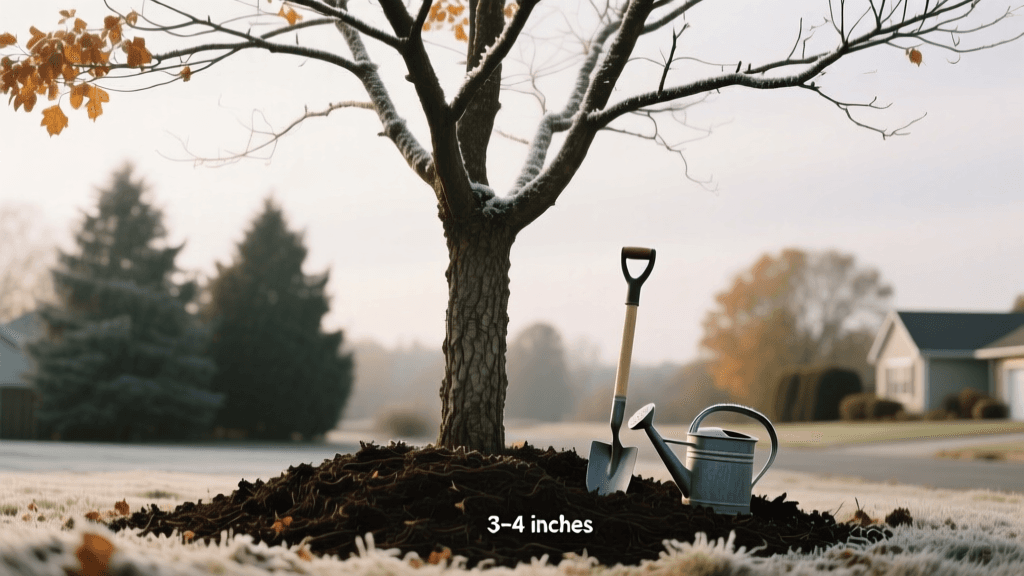
Mulch is essential for retaining soil moisture, regulating soil temperature, and suppressing weeds. Apply a 2 to 3-inch layer of organic mulch, such as shredded hardwood bark or pine straw, in a 3-foot radius around the tree. Crucially, keep the mulch at least 3 inches away from the trunk itself. Piling mulch against the bark (a practice known as 'volcano mulching') traps moisture against the trunk, inviting fungal infections and rodent damage.
Fertilizing Guidelines
Japanese maples are not heavy feeders. In fact, over-fertilizing can lead to weak, leggy growth that is highly susceptible to wind damage and pests. The Clemson University Home & Garden Information Center recommends applying a slow-release, balanced fertilizer (such as a 10-10-10 or 14-14-14 blend) only once a year in late winter or early spring before new growth emerges. Avoid high-nitrogen fertilizers, which can dull the vibrant red and purple pigments in the foliage.
Pruning Techniques for Beginners
One of the most common beginner mistakes is over-pruning. Japanese maples naturally develop beautiful, layered, and architectural shapes with minimal human intervention. Pruning should be viewed as a light grooming process rather than a heavy shaping exercise.
- Timing: The best time to perform structural pruning is in late winter while the tree is fully dormant. Pruning in late winter prevents the heavy 'sap bleeding' that occurs if you prune in early spring, and it allows you to see the branch structure clearly without leaves in the way.
- The Three Ds: Always start by removing the 'Three Ds'—Dead, Damaged, and Diseased wood. Cut these branches back to the nearest healthy lateral branch or the main trunk.
- Thinning: If the canopy is overly dense, selectively remove a few interior branches to improve air circulation and allow dappled light to reach the inner leaves. This enhances the tree's autumn color display.
- Tools: Use sharp, sterilized bypass pruners for small twigs and a fine-toothed pruning saw for branches larger than 1.5 inches in diameter. Wipe your blades with rubbing alcohol between cuts to prevent the spread of disease.
Troubleshooting Common Issues
Even with the best care, Japanese maples can occasionally face environmental stressors or pest pressures. Recognizing these early is key to saving your tree.
Leaf Scorch
If the edges of your maple's leaves turn brown and crispy in mid-to-late summer, the tree is likely suffering from leaf scorch. This is usually caused by too much direct afternoon sun, insufficient watering, or harsh drying winds. While the damaged leaves will not recover, you can prevent future scorch by ensuring deep watering during dry spells and, if necessary, transplanting the tree to a shadier location during its dormant winter season.
Pests: Aphids and Scale
Japanese maples can occasionally attract aphids or scale insects, which feed on the sap of new growth. Aphids secrete a sticky substance called honeydew, which can lead to the growth of black sooty mold on the leaves below. For minor infestations, a strong blast of water from the hose is often enough to dislodge aphids. For scale, apply horticultural oil during the winter dormant season to smother overwintering eggs.
Verticillium Wilt
This is a serious soil-borne fungal disease that causes sudden wilting and dieback of individual branches, often on just one side of the tree. Unfortunately, there is no chemical cure for Verticillium wilt. The Arbor Day Foundation emphasizes that the best defense is prevention: plant in well-draining soil, avoid wounding the roots during landscaping, and maintain the tree's overall vigor through proper watering and mulching.
Conclusion
Growing a Japanese maple is a highly rewarding endeavor that adds unparalleled elegance to any landscape. By focusing on proper site selection, careful planting depth, and a consistent watering routine during the establishment years, even novice gardeners can successfully cultivate these stunning trees. Remember to observe your tree throughout the seasons, adjust your watering based on rainfall, and resist the urge to over-prune or over-fertilize. With patience and the right foundational care, your Japanese maple will become a cherished, multi-generational centerpiece in your garden.