Tree Care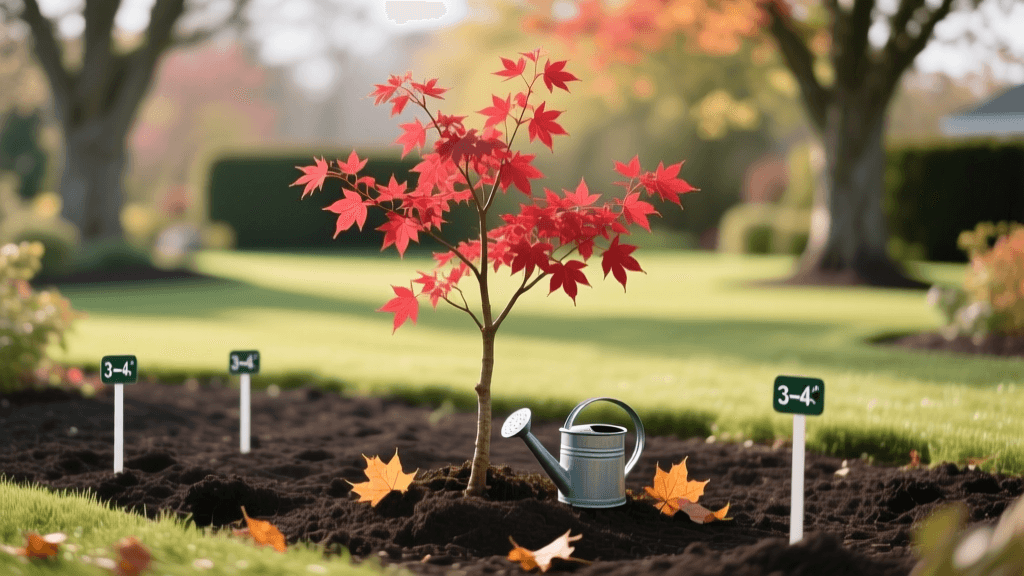
How to Plant and Grow Red Maple Trees: A Beginner Guide
Introduction to the Red Maple (Acer rubrum)
If you are a beginner looking to add stunning, year-round visual interest to your landscape, the Red Maple (Acer rubrum) is one of the most rewarding trees you can plant. Native to eastern and central North America, this deciduous tree is celebrated for its brilliant crimson fall foliage, delicate spring flowers, and rapid growth rate. Whether you are looking to create a shaded patio area or establish a vibrant property border, understanding the foundational steps of planting and caring for a Red Maple will ensure your tree thrives for decades.
Growing a tree from a nursery sapling can feel intimidating, but the Red Maple is remarkably forgiving. It adapts to a wide variety of soil types and moisture levels, making it an ideal candidate for novice gardeners. In this comprehensive, beginner-friendly guide, we will walk you through everything from selecting the right specimen at the garden center to establishing a long-term seasonal care schedule.
Why Choose a Red Maple for Your Yard?
Before you break ground, it helps to understand why the Red Maple is a staple in residential landscaping. First, its growth rate is moderately fast, typically adding 12 to 24 inches of height per year under optimal conditions. This means you will not have to wait decades to enjoy a mature canopy. Second, the Red Maple is highly adaptable. While it naturally prefers moist, slightly acidic soils, it can tolerate clay, loam, and even occasional wet feet better than many other shade trees.
From a financial perspective, investing in a Red Maple is highly cost-effective. A standard 5-gallon nursery tree (usually 4 to 6 feet tall) typically costs between $60 and $90. If you want an immediate impact, a 15-gallon specimen (8 to 10 feet tall) ranges from $150 to $250. Given the shade it provides, which can lower summer cooling costs by up to 20%, the return on investment is substantial.
Red Maple vs. Other Popular Maples
Beginners often confuse the Red Maple with other popular varieties. Here is a quick comparison chart to help you confirm that the Acer rubrum is the right choice for your specific landscape needs.
| Feature | Red Maple (Acer rubrum) | Sugar Maple (Acer saccharum) | Japanese Maple (Acer palmatum) |
|---|---|---|---|
| Mature Height | 40 - 60 feet | 60 - 80 feet | 15 - 25 feet |
| Growth Rate | Fast (12-24 in/yr) | Slow to Medium | Slow (1-2 ft/yr) |
| Soil Tolerance | High (Tolerates wet clay) | Low (Needs well-drained) | Medium (Needs good drainage) |
| Fall Color | Brilliant Red/Crimson | Yellow, Orange, Red | Red, Purple, or Bronze |
| Best Use | Large shade tree, lawns | Large estates, syrup | Accent, patios, containers |
Step-by-Step Planting Guide for Beginners
1. Timing Your Planting
The best time to plant a Red Maple is during its dormant season. Early spring (after the ground thaws but before buds break) or early fall (at least six weeks before the first hard frost) are the ideal windows. Fall planting is often preferred by arborists because the cooler air temperatures reduce stress on the canopy while the soil remains warm enough to encourage vigorous root growth.
2. Choosing the Right Location
Red Maples thrive in full sun to partial shade, requiring at least 4 to 6 hours of direct sunlight daily to produce their signature bright red fall foliage. Because their mature canopy can spread 30 to 40 feet wide, you must plant the tree at least 20 feet away from your home's foundation, driveways, and overhead power lines. Avoid planting near septic systems, as their aggressive root systems will seek out moisture and can damage underground pipes.
3. Digging and Prepping the Hole
Proper hole preparation is the most critical step for a beginner. Measure the height and width of the tree's root ball. Dig a hole that is exactly the same depth as the root ball, but 2 to 3 times as wide. This wide, shallow hole allows the lateral roots to easily penetrate the surrounding soil. Crucial Tip: Never dig the hole deeper than the root ball. Planting a tree too deep is the number one cause of transplant failure. The 'root flare' (the trunk base where the roots begin to spread outward) must be visible and sit 1 to 2 inches above the surrounding soil grade.
4. Planting and Backfilling
Carefully lower the tree into the center of the hole. If your tree came in a burlap sack, cut the twine and peel the burlap away from the top third of the root ball. If it is in a plastic nursery pot, gently tease out any circling roots with your fingers or a hand cultivator to prevent girdling later in the tree's life. Backfill the hole with the native soil you just dug out. Avoid amending the backfill with heavy compost or potting soil, as this creates a 'bathtub effect' where water pools in the loose soil and drowns the roots. Tamp the soil down gently with your hands to remove large air pockets, and water deeply immediately after planting.
Watering and Mulching Best Practices
Newly planted Red Maples require consistent moisture to establish their root systems. For the first two growing seasons, water your tree deeply once a week, providing approximately 1.5 gallons of water per inch of trunk caliper (measured at knee height). During periods of extreme summer heat or drought, increase watering to twice a week. Use a slow-drip soaker hose placed at the drip line of the canopy for 2 to 3 hours to ensure the water penetrates deeply into the soil profile.
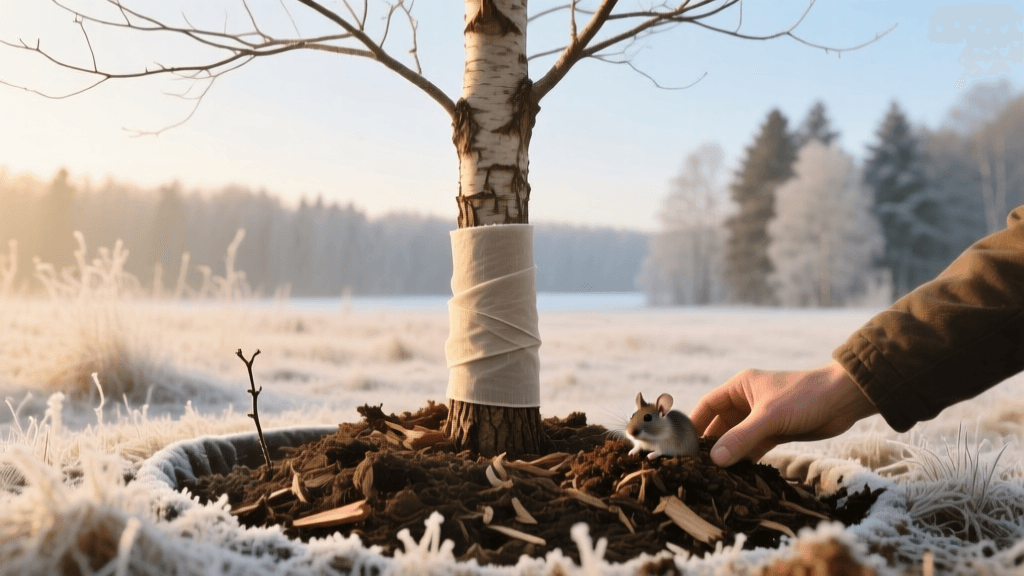
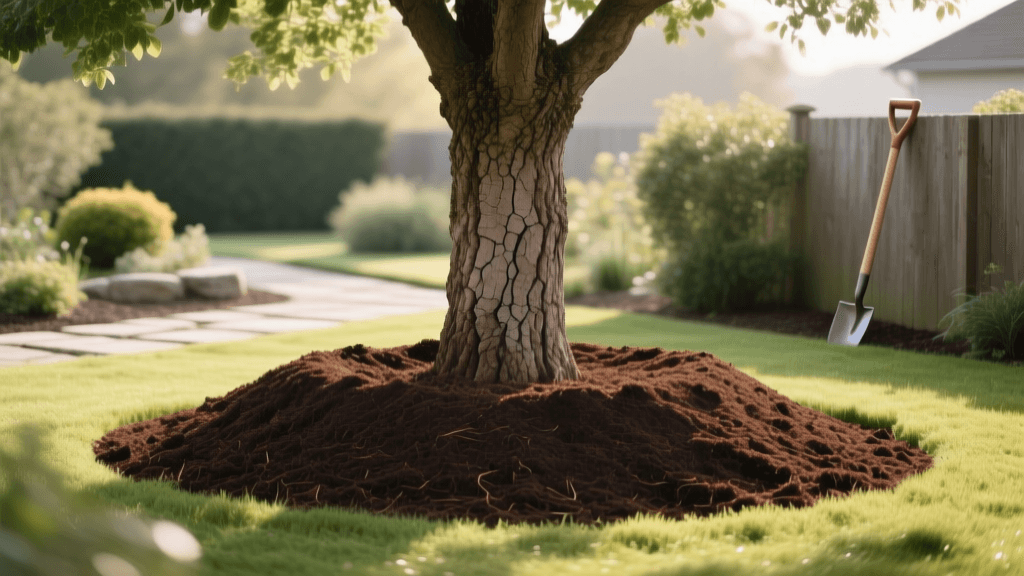
Mulching is equally important for moisture retention and weed suppression. Apply a 2 to 3-inch layer of organic mulch, such as shredded hardwood bark or pine straw, in a wide ring around the tree. Never 'volcano mulch' (piling mulch against the trunk). Keep the mulch at least 3 inches away from the trunk flare to prevent bark rot, fungal diseases, and rodent damage. A mulch ring spanning 3 to 4 feet in diameter is ideal for young trees.
Soil Preparation and Fertilization
Red Maples prefer slightly acidic soil with a pH between 4.5 and 6.5. If your soil is highly alkaline (pH above 7.0), the tree may suffer from manganese chlorosis, a condition where the leaves turn pale yellow while the veins remain green. You can test your soil pH using an inexpensive home kit or by sending a sample to your local university extension office. If the pH is too high, apply elemental sulfur or a soil acidifier according to the package directions to lower it gradually.
For fertilization, newly planted trees do not need heavy feeding in their first year; focus on root establishment. In the second spring, apply a slow-release, granular tree fertilizer. A product like Espoma Tree-Tone (6-3-2 NPK) is an excellent organic choice that provides essential nutrients without burning tender roots. Apply the fertilizer evenly over the mulch ring and water it in thoroughly. Avoid high-nitrogen synthetic lawn fertilizers near the tree's root zone, as they can promote weak, leggy growth that is susceptible to storm damage.
Seasonal Care Schedule
To keep your Red Maple healthy year-round, follow this simple seasonal maintenance checklist:
| Season | Primary Tasks | Beginner Tips |
|---|---|---|
| Spring | Fertilize, inspect for pests, refresh mulch. | Apply Tree-Tone before bud break. Pull weeds from the mulch ring. |
| Summer | Deep watering, monitor for drought stress. | Water early in the morning to reduce evaporation. Watch for leaf scorch. |
| Fall | Plant new trees, reduce watering, protect trunk. | Install a plastic tree guard to prevent winter sunscald and rodent chewing. |
| Winter | Structural pruning, plan for spring. | Prune only when fully dormant (late winter) to avoid excessive sap bleeding. |
Pruning Young Red Maples
Red Maples naturally develop a strong, central leader (the main upward trunk). As a beginner, your primary pruning goal during the first five years is to maintain this central leader and remove competing upright branches. Use a clean, sharp pair of bypass pruners (such as the Fiskars Steel Bypass Pruning Shears) for branches under 1/2 inch thick, and a pruning saw for anything larger.
Always make your cuts just outside the 'branch collar'—the swollen area where the branch meets the trunk. Never flush-cut against the trunk, as this removes the tree's natural healing tissue and invites decay. Remove any dead, diseased, or crossing branches to improve air circulation and light penetration within the canopy.
Common Pests and Diseases
While generally robust, Red Maples can occasionally fall victim to specific issues. Aphids and scale insects may feed on the sap of new growth, leaving behind a sticky residue called honeydew. These can usually be managed by introducing beneficial insects like ladybugs or by applying horticultural oil (like Bonide All Seasons Horticultural Oil) during the dormant winter season.
The most serious disease to watch for is Verticillium Wilt, a soil-borne fungus that causes sudden wilting and dieback of individual branches. There is no chemical cure for Verticillium Wilt. Prevention is key: avoid planting Red Maples in areas where susceptible crops (like tomatoes or potatoes) were previously grown, and ensure the soil has adequate drainage. If a branch is infected, prune it out immediately, sterilizing your tools with a 10% bleach solution between cuts.
Expert Tips and Authoritative Sources
When caring for your Red Maple, it is always wise to consult localized data, as microclimates and regional soil compositions vary wildly. According to the Clemson University Home & Garden Information Center (HGIC), Red Maples are highly susceptible to trunk damage from string trimmers and lawnmowers. The HGIC strongly recommends maintaining a wide, mulched buffer zone around the trunk to eliminate the need for close-proximity mowing, which can fatally girdle the tree's shallow vascular system.
By following these beginner-friendly guidelines—respecting the root flare, maintaining consistent moisture, and adhering to a seasonal care schedule—your Red Maple will establish quickly and reward you with decades of spectacular shade and brilliant autumn color. Take your time during the planting process, observe your tree's responses to the seasons, and enjoy the lifelong benefits of growing one of nature's most beautiful native shade trees.