Tree Care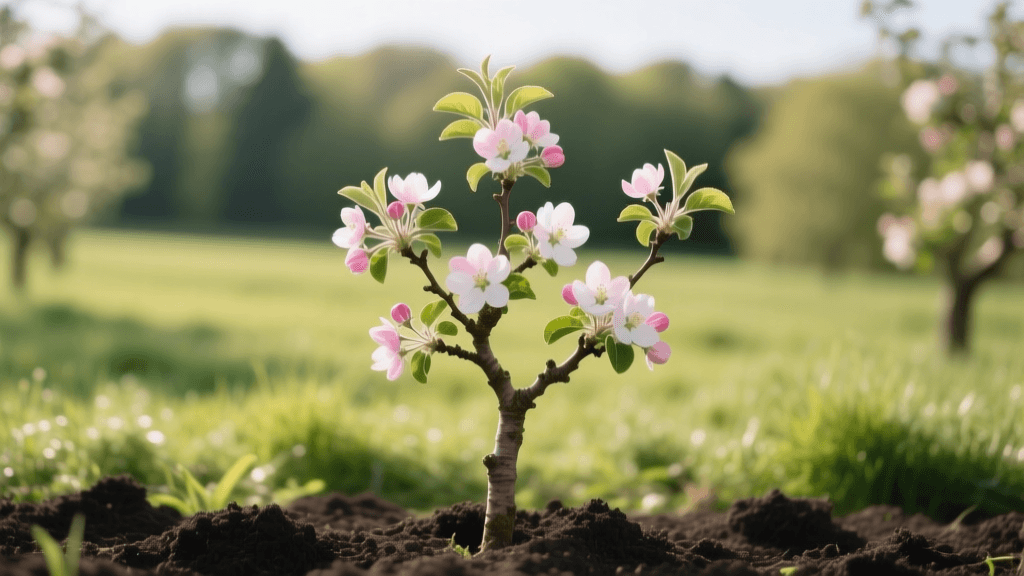
Beginner Guide to Planting Dwarf Honeycrisp Apple Trees
Why Choose a Dwarf Honeycrisp Apple Tree?
For many home gardeners, the idea of growing a fruit orchard seems like a daunting task reserved for those with acres of land. However, the advent of dwarfing rootstocks has revolutionized home fruit production, making it entirely possible to grow premium, grocery-store-quality apples in a modest suburban backyard. The Honeycrisp apple, celebrated for its explosive crunch and perfect balance of sweet and tart flavors, is one of the most highly sought-after varieties for home growers. When grafted onto a dwarfing rootstock, these trees remain manageable, typically reaching a mature height of just 8 to 12 feet.
Standard apple trees can grow up to 25 feet tall, requiring heavy ladders for pruning and harvesting. Dwarf trees, on the other hand, can be pruned, sprayed, and harvested while standing firmly on the ground. Furthermore, dwarf trees often begin bearing fruit much earlier than their standard counterparts, sometimes producing a small harvest within just two to three years of planting. For beginners looking to achieve a quick and rewarding gardening victory, a dwarf Honeycrisp is an unparalleled choice.
Pre-Planting Checklist: Setting Up for Success
Before you purchase your tree or dig a hole, it is crucial to ensure that your local climate and yard conditions can support a Honeycrisp apple tree. Apples are not universally adaptable; they have specific environmental triggers that must be met for the tree to thrive and produce fruit.
Hardiness Zones and Chill Hours
Honeycrisp apple trees are exceptionally cold-hardy, thriving in USDA Hardiness Zones 3 through 6. They require a significant dormant period to reset their internal clock and prepare for spring blooming. This is measured in 'chill hours,' which are the cumulative hours the tree spends in temperatures between 32°F and 45°F during the winter. A true Honeycrisp requires between 800 and 1,000 chill hours. If you live in a warmer climate (Zone 7 or above), the tree may fail to break dormancy properly, resulting in poor leafing and zero fruit production.
Sunlight and Soil Requirements
Apple trees are sun-worshippers. You must select a planting site that receives full sun, defined as a minimum of 6 to 8 hours of direct, unfiltered sunlight per day. Morning sun is particularly important because it helps dry dew off the leaves early in the day, significantly reducing the risk of fungal diseases like apple scab.
Soil drainage is equally critical. Apple trees will not tolerate 'wet feet.' If water pools in the planting area for more than a few hours after a heavy rain, the roots will suffocate and rot. Ideal soil is a well-draining loam with a slightly acidic to neutral pH ranging from 6.0 to 7.0. Beginners should invest in a simple $15 digital soil pH meter or send a soil sample to their local university extension office before planting.
The Pollination Puzzle
One of the most common mistakes beginners make is planting a single apple tree and wondering why it never produces fruit. Honeycrisp apple trees are not self-fertile; they require cross-pollination from a different apple variety that blooms at the same time. You will need to plant a compatible pollinator tree within 50 feet of your Honeycrisp. Excellent pollination partners include Gala, Fuji, Granny Smith, or any flowering crabapple tree. If you or a close neighbor already have one of these varieties in your yard, you may not need to plant a second tree, as bees will easily travel the distance to transfer the pollen.
Step-by-Step Planting Guide
Proper planting technique is the foundation of a healthy tree. Follow these exact measurements and steps to give your dwarf Honeycrisp the best possible start.
- Step 1: Digging the Hole. Dig a hole that is twice as wide as the root ball or root spread of the bare-root tree, but no deeper than the root system itself. For most 2-year-old nursery trees, a hole that is 24 inches wide and 18 inches deep is sufficient. Rough up the sides of the hole with your shovel to allow roots to easily penetrate the native soil.
- Step 2: Inspecting and Teasing the Roots. If you bought a potted tree, gently tease out any roots that are circling the bottom of the pot. If left intact, these circling roots will eventually girdle and strangle the tree. For bare-root trees, soak the roots in a bucket of water for 2 to 4 hours before planting to rehydrate them.
- Step 3: Locating the Graft Union. This is the most critical step for dwarf trees. Look for a distinct bump or scar on the lower trunk; this is the graft union where the Honeycrisp scion was attached to the dwarfing rootstock (often Malling 9 or Budagovsky 9). The graft union MUST remain at least 2 to 3 inches above the final soil line. If the graft union is buried, the scion wood will develop its own root system, completely bypassing the dwarfing rootstock and turning your tree into a massive standard-sized giant.
- Step 4: Backfilling. Fill the hole with the native soil you dug out. Do not amend the backfill with heavy compost or rich potting soil. Creating a highly enriched pocket of soil encourages roots to stay in the hole rather than expanding outward into the native earth, effectively creating a 'pot effect' in the ground.
- Step 5: Initial Watering and Staking. Water the tree deeply with 5 to 10 gallons of water immediately after planting to collapse air pockets. Because dwarfing rootstocks like M.9 have brittle, shallow root systems, you must stake the tree for the first three years. Drive a sturdy wooden or metal stake 18 inches into the ground next to the trunk, and secure the tree using a wide, flexible tree tie in a figure-eight pattern to prevent bark damage.
Ongoing Care: Watering, Mulching, and Feeding
Once your tree is in the ground, establishing a consistent care routine will dictate its long-term vigor and fruit quality.
Watering Strategy
Young apple trees require about 1 to 2 inches of water per week during the growing season. The most efficient way to deliver this is via a soaker hose or drip irrigation line laid in a spiral around the root zone. Avoid overhead sprinklers, as wetting the foliage promotes fungal pathogens. During the heat of late summer, deeply water the tree once a week rather than giving it a light sprinkle every day, which encourages shallow, drought-prone roots.
The Donut Mulch Method
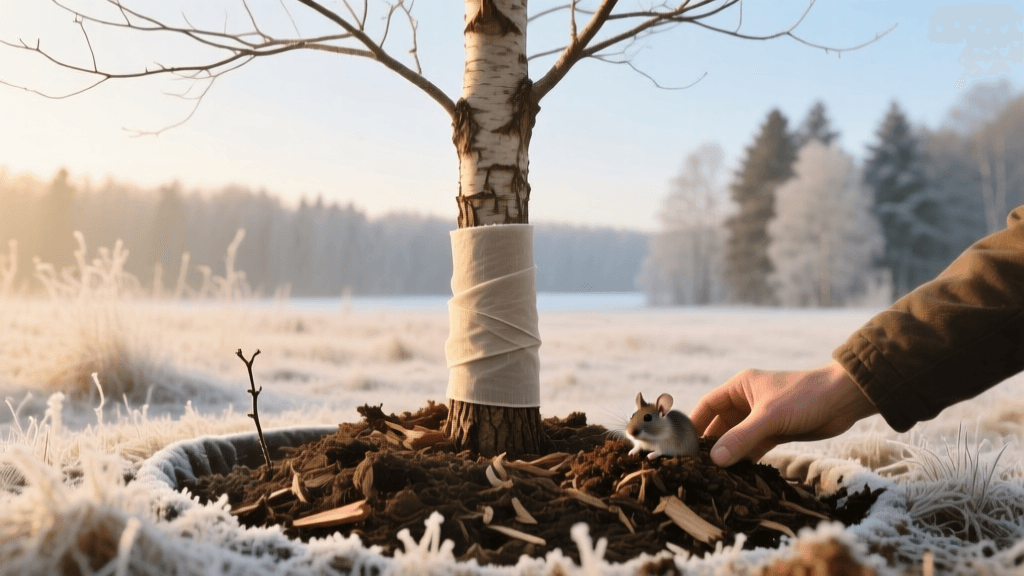
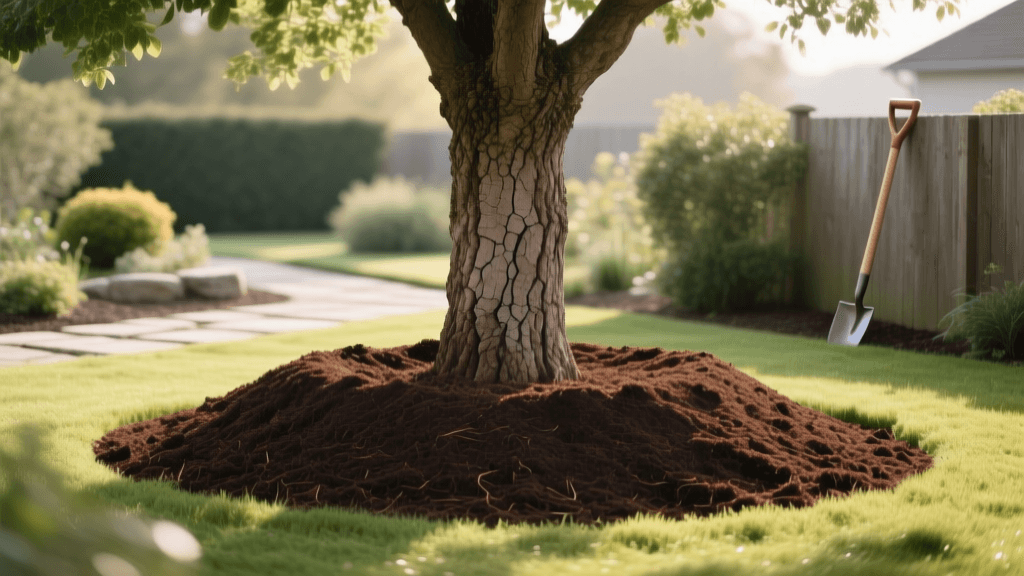
Mulch is essential for moisture retention and weed suppression, but improper mulching kills thousands of trees annually. Apply a 3-inch layer of shredded hardwood bark or wood chips in a 3-foot diameter circle around the tree. However, you must create a 'donut' shape by keeping the mulch at least 3 inches away from the actual trunk. Piling mulch against the bark (often called 'volcano mulching') traps moisture, leading to trunk rot and providing a warm winter habitat for voles that will chew through your tree's bark.
Fertilizing Guidelines
Do not fertilize your tree during its first year in the ground; you want to encourage root growth, not excessive leafy top growth. In the spring of the second year, apply 1/2 pound of a balanced 10-10-10 granular fertilizer, spreading it evenly under the drip line (the outer edge of the branch canopy). Increase the amount by 1/2 pound each subsequent year, capping at 3 pounds per year for mature dwarf trees.
Beginner Pruning Techniques
Pruning shapes the tree, allows sunlight to penetrate the canopy, and ensures air circulation. For dwarf apple trees, the 'Central Leader' system is highly recommended. This involves training the tree to have one main vertical trunk with horizontal lateral branches spiraling around it, resembling a Christmas tree shape.
Prune only during the dormant season, ideally in late winter just before the buds begin to swell. Use sharp, sterilized bypass pruners. Make all cuts at a 45-degree angle, about 1/4 inch above an outward-facing bud. Remove any 'water sprouts' (vertical shoots growing straight up from branches), 'suckers' (shoots growing from the base of the trunk below the graft union), and any branches that cross or rub against one another.
Pest and Disease Management
Honeycrisp trees have moderate resistance to some diseases but are notably susceptible to Fire Blight and Apple Scab. Fire Blight is a bacterial disease that causes branches to look as though they have been scorched by fire, often bending into a 'shepherd's crook' shape. If you spot this, immediately prune the affected branch at least 12 inches below the visible damage, and sterilize your pruning shears with a 10% bleach solution between every single cut to prevent spreading the bacteria.
According to experts at the Penn State Extension, managing fire blight in susceptible cultivars like Honeycrisp requires a combination of selecting resistant rootstocks, avoiding excessive nitrogen fertilization which promotes vulnerable succulent growth, and applying copper-based bactericides during the early bloom period if the disease is prevalent in your region.
For Apple Scab, which manifests as olive-green or black velvety spots on leaves and fruit, the best defense is fall sanitation. Rake up and destroy all fallen leaves in autumn to eliminate the overwintering fungal spores.
Year-by-Year Care and Harvest Timeline
Patience is a virtue in fruit growing. Use this timeline to set realistic expectations for your dwarf Honeycrisp apple tree.
| Tree Age | Primary Focus | Expected Harvest | Key Annual Task |
|---|---|---|---|
| Year 1 | Root Establishment | None (Remove any blossoms) | Consistent watering and staking |
| Year 2 | Canopy Structuring | None to 2-3 apples | Begin central leader pruning |
| Year 3 | Early Fruiting | 10 to 20 lbs of fruit | Begin spring fertilization routine |
| Year 4 | Branch Support | 30 to 40 lbs of fruit | Thin fruit clusters to 1 apple per 6 inches |
| Year 5+ | Maintenance & Yield | 50 to 80 lbs of fruit | Summer pruning for light penetration |
Final Thoughts for the Home Orchardist
Growing a dwarf Honeycrisp apple tree is a deeply rewarding endeavor that connects you to the seasons and provides a tangible, delicious harvest. By respecting the tree's need for proper chill hours, ensuring cross-pollination, carefully managing the graft union during planting, and adhering to a disciplined pruning and sanitation schedule, you will set the stage for decades of crisp, juicy apples right outside your back door. Start small, observe your tree's responses to your care, and enjoy the literal fruits of your labor.