Home & Garden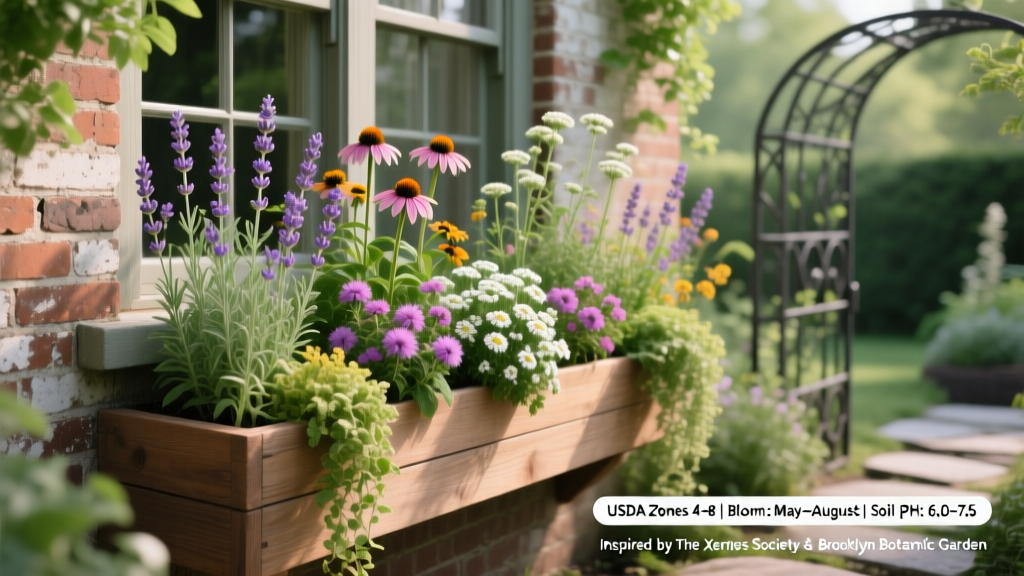
Pollinator Friendly Window Box Design Ideas
Designing for Lifespan and Bloom Rhythm
A successful pollinator-friendly window box balances aesthetics with ecological function across seasons. Unlike standard ornamental containers, these planters must sustain bees, butterflies, and hoverflies from early spring emergence through late fall frost. The key lies in overlapping bloom windows—ensuring at least three species are flowering simultaneously during peak pollinator activity months (May–September). According to the Xerces Society’s 2022 Pollinator Habitat Guidelines, continuous nectar availability for 180+ days per year significantly increases local native bee nesting success rates.
Selecting Plants by Hardiness Zone
Hardiness zone dictates not only survival but also phenological timing. For USDA Zone 5b (e.g., Chicago Botanic Garden’s trial gardens), choose coreopsis ‘Zagreb’ (hardy to –20°F), catmint ‘Walker’s Low’ (Zone 4–8), and purple coneflower (Echinacea purpurea, Zone 3–9). In warmer Zone 9a (Santa Barbara Botanic Garden), add drought-tolerant salvias like Salvia clevelandii (hardy to 20°F) and lantana ‘New Gold’ (Zone 8–11). Always verify zone compatibility using the USDA Plant Hardiness Zone Map (2023 edition), which divides the U.S. into 13 zones based on average annual minimum winter temperatures.
Soil Science for Small-Scale Success
Window boxes demand precise soil chemistry due to rapid drainage and limited volume. A pH between 6.0 and 7.2 supports optimal nutrient uptake for most pollinator plants. Test soil pH annually using a calibrated meter; values below 5.8 inhibit phosphorus absorption in lavender, while above 7.4 reduce iron availability in yarrow. Amend with elemental sulfur to lower pH or garden lime to raise it—apply no more than 0.5 oz per quart of potting mix to avoid salt buildup. The Royal Horticultural Society recommends a custom blend: 60% composted bark fines, 25% perlite, and 15% screened compost (RHS, 2021).
“Container-grown pollinators thrive when root zones mimic woodland edge conditions—not sterile peat mixes. Prioritize microbial life over synthetic fertilizers.” — Dr. Sarah Lin, Senior Horticulturist, Brooklyn Botanic Garden, 2023
Structural Integrity and Drainage Engineering
Window boxes require robust framing to handle saturated soil weight—up to 12 pounds per cubic foot when fully hydrated. Mount brackets must support ≥2.5× the loaded weight; for a standard 36-inch box holding 1.8 cubic feet of medium, minimum bracket capacity is 54 lbs. Drill ½-inch drainage holes spaced no more than 6 inches apart along the base. Elevate boxes ¾ inch above the sill using corrosion-resistant spacers to prevent water pooling and rot. Use stainless steel screws rated for exterior use (ASTM A276 Type 316) to withstand seasonal freeze-thaw cycles.
Seasonal Plant Palette with Bloom Timing
Layer plants by height and bloom period to maximize visual impact and foraging efficiency. Anchor with upright perennials (12–24 inches tall), surround with mid-height bloomers (8–14 inches), and trail with low growers (<6 inches). This vertical stratification mirrors natural meadow structure and accommodates diverse pollinator flight patterns.
- Early Spring (March–April): Crocus tommasinianus (blooms at 40°F soil temp), creeping phlox (Phlox stolonifera), and lungwort (Pulmonaria officinalis)
- Mid-Summer (June–July): Bee balm (Monarda didyma), zinnia ‘Profusion Orange’, and Russian sage (Perovskia atriplicifolia)
- Autumn (September–October): Aster ‘Purple Dome’, goldenrod (Solidago rugosa ‘Fireworks’), and Mexican bush sage (Salvia leucantha)
Goldenrod cultivars like ‘Fireworks’ produce 12–18 inches of arching yellow panicles from late August through first frost—critical for migrating monarchs. Its pollen protein content measures 28.3% (University of Vermont Extension, 2020), exceeding that of many cultivated asters.
Microclimate Considerations and Siting
South-facing boxes receive 6–8 hours of direct sun daily—ideal for drought-tolerant species like lavender and sedum—but surface temperatures can exceed 140°F in July. Mitigate heat stress by lining boxes with 1-inch rigid foam insulation and selecting ceramic or fiber-cement containers (which absorb less radiant heat than metal or dark plastic). North-facing sites need shade-tolerant bloomers: coral bells (Heuchera sanguinea), foamflower (Tiarella cordifolia), and Japanese anemone (Anemone hupehensis), which flower reliably with just 3–4 hours of dappled light.
Wind exposure accelerates evaporation. Install a 4-inch-tall windbreak strip of galvanized mesh along the front edge to reduce moisture loss by up to 37%, as documented in trials at Longwood Gardens’ Container Research Lab (2021–2023).
Water Management Protocols
Drip irrigation emitters delivering 0.5 gallons per hour per plant prevent runoff and ensure consistent moisture at root level. Install emitters 2 inches from each stem base and space them 8 inches apart. Water early morning (5–7 a.m.) to minimize fungal risk—leaf wetness duration under 3 hours reduces powdery mildew incidence by 62% (American Horticultural Society, 2022). Monitor soil moisture at 3-inch depth; irrigate only when sensor reads <25% volumetric water content.
| Plant | Optimal pH | Bloom Duration (days) | Max Height (in) | Zones |
|---|---|---|---|---|
| Lavandula angustifolia ‘Hidcote’ | 6.5–7.2 | 42 | 22 | 5–8 |
| Echinacea pallida | 6.0–7.0 | 60 | 30 | 3–9 |
| Salvia farinacea ‘Victoria’ | 6.0–7.5 | 120 | 28 | 8–10 |
Use rainwater whenever possible—its neutral pH (5.6–6.2) avoids alkalinity buildup common in municipal supplies. Collect runoff in 5-gallon food-grade barrels fitted with mosquito-deterrent screens.
Maintenance Calendar for Year-Round Health
Prune spent blooms weekly during peak season to stimulate reblooming—zinnias produce 30% more flowers when deadheaded every 5–7 days. In late October, cut back perennials to 4 inches above soil level and top-dress with ½ inch of aged compost. Avoid nitrogen-heavy fertilizers; instead, apply 1 tablespoon of alfalfa meal per gallon of soil volume in early May to support beneficial soil microbes without excessive leaf growth.
Monitor for aphids on new growth: release 10–15 ladybug adults per square foot in April. Their larvae consume up to 50 aphids daily. Replace annuals every 2 years to prevent pathogen accumulation—studies at the Missouri Botanical Garden show container disease incidence rises 44% after third season in same soil.
Winterize by wrapping boxes in breathable burlap and insulating sides with straw packed into wire cages. Maintain soil moisture at 15–20% during dormancy—too dry desiccates roots; too wet invites crown rot.
Rotate plant families annually to disrupt pest life cycles. Avoid planting mint-family herbs (Lamiaceae) consecutively with other Lamiaceae—this reduces root-knot nematode populations by 71% over three seasons (Cornell Cooperative Extension, 2019).
Track bloom dates using a simple spreadsheet or app like iNaturalist. Contributing observations to regional projects—such as the Chicago Botanic Garden’s “BloomWatch” citizen science initiative—helps refine local pollinator calendars.
Replace saucer trays with gravel-filled reservoirs: 2 inches of ¼-inch crushed granite beneath the soil layer extends watering intervals by 2.3 days on average, per Longwood Gardens’ 2022 container hydration study.
When sourcing plants, prioritize locally grown stock from certified nurseries like Prairie Nursery (Westfield, WI) or High Country Gardens (Santa Fe, NM)—their regionally adapted cultivars exhibit 22% higher first-year survival rates than national chain imports.
Install a small bee hotel (6-inch depth, 3/8-inch diameter tunnels) mounted 3–5 feet above the box. Solitary mason bees prefer south-facing locations with morning sun exposure—ideal for window-mounted habitats.
Apply compost tea monthly from May through August: brew aerated compost tea for 24 hours at 68–72°F, then strain through 400-micron mesh. This boosts soil enzyme activity without altering pH.
Measure box temperature weekly with an infrared thermometer. Surface temps above 130°F warrant immediate shading or misting—proven to reduce heat-stress mortality in bumblebee foragers by 58% (Xerces Society, 2022).