Gardening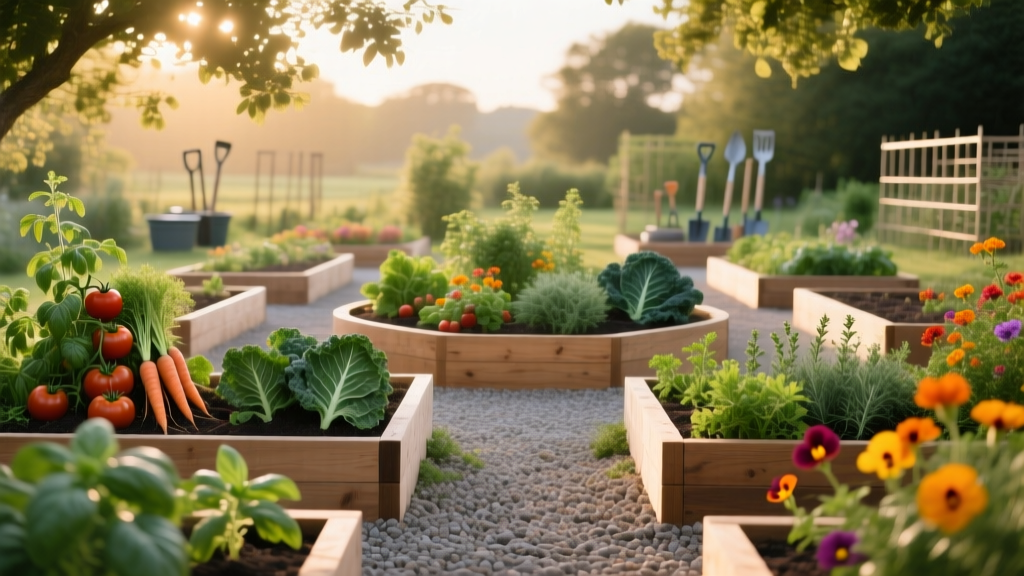
Planning A Potager Kitchen Garden: Layouts & Design
James MillerPublished
The Art of the Potager: Blending Beauty and Utility
The French jardin potager is a centuries-old gardening tradition that transcends the traditional, utilitarian vegetable patch. Unlike standard row-crop gardens designed purely for maximum caloric yield, a potager garden is a highly structured, ornamental kitchen garden where vegetables, herbs, and flowers are interplanted to create a stunning visual tapestry. Designing a potager requires a thoughtful approach to geometry, color, texture, and companion planting. Whether you have a sprawling backyard or a modest urban lot, planning a potager garden allows you to grow your own food while creating a breathtaking landscape feature.
In this comprehensive design guide, we will walk through the essential steps of planning a potager kitchen garden, from hardscaping and bed dimensions to plant layering and soil preparation.
Step 1: Site Selection and Microclimate Mapping
Before sketching your garden layout, you must understand your site's microclimate. According to the Royal Horticultural Society (RHS), a successful kitchen garden requires a minimum of six to eight hours of direct sunlight daily. However, light is not the only factor.
- Sun Mapping: Track the sun's arc across your yard during the peak growing season (June/July). Note where shadows fall from trees, fences, or your home.
- Water Access: A potager requires consistent moisture. Ensure your chosen site is within 50 feet of a reliable water spigot. Dragging hoses across ornamental pathways will quickly ruin the garden's aesthetic and become a chore.
- Wind Protection: Tall, vertical crops and delicate blossoms need protection from harsh prevailing winds. Plan to use hedges, trellises, or lattice fencing as windbreaks on the windward side of your garden.
Step 2: Hardscaping and Raised Bed Dimensions
Raised beds are the backbone of a modern potager. They provide excellent drainage, allow for precise soil control, and create the clean, geometric lines necessary for formal garden designs. When planning your hardscaping, adhere to these ergonomic and structural measurements:
- Width: Never exceed 4 feet in width. This ensures you can easily reach the center of the bed (2 feet) from either side without stepping on and compacting the soil.
- Length: Standard lengths are 8, 10, or 12 feet. Longer beds can warp over time unless reinforced with interior cross-bracing.
- Depth: A depth of 12 to 18 inches is ideal for most root vegetables, including carrots and parsnips.
- Materials: Opt for naturally rot-resistant woods like untreated cedar or redwood. For a more permanent, classical European look, consider brick, stone, or woven wattle.
Step 3: Designing the Layout and Geometry
The layout of a potager is where your design vision comes to life. Traditional French potagers rely heavily on symmetry and geometric patterns. Here are three classic layout concepts to consider:
- The Parterre: A symmetrical layout featuring four equal-sized beds intersected by a central cross-path. The center intersection often features a focal point, such as a birdbath, a dwarf fruit tree, or a classic obelisk.
- The Checkerboard: Alternating squares of planted beds and paved or mulched seating areas. This is ideal for smaller spaces and integrates hardscaping directly into the planting zones.
- The Cartwheel: Circular beds divided into wedge-shaped planting zones, resembling a wheel. This is highly ornamental and perfect for herb-centric gardens.
When sketching your plan, always leave adequate space for pathways. Main pathways should be at least 36 to 48 inches wide to accommodate a wheelbarrow, while secondary paths between beds can be 24 inches wide.
Step 4: The Four Layers of Potager Planting
To achieve the lush, abundant look of a kitchen garden, you must design in layers. Borrowing from ornamental landscape design, apply these four layers to your edible beds:
1. Vertical Elements (The Height)
Utilize trellises, arbors, and obelisks to draw the eye upward. Plant indeterminate tomatoes, pole beans (like 'Blue Lake'), and climbing nasturtiums. Vertical elements also serve as structural backdrops for lower-growing plants.
2. Structural Plants (The Anchor)
These are large, visually striking plants that provide form and mass. Examples include globe artichokes, cardoons, 'Bright Lights' Swiss chard, and 'Ruby Perfection' cabbage. Place these near the center or back of the bed.
3. Filler Plants (The Bulk)
These form the lush, green (or colorful) matrix of the garden. Use bush beans, leaf lettuces, peppers, and bushy herbs like basil and parsley. Interplant fast-growing crops like radishes between slower-growing fillers to maximize space.
4. Spillers and Edging (The Border)
Softening the hard edges of raised beds is crucial for the potager aesthetic. Plant trailing flowers and herbs along the borders. Sweet alyssum, creeping thyme, and trailing nasturtiums will spill beautifully over the edges of cedar or stone beds while attracting vital pollinators.
Step 5: Companion Planting and Design Matrix
In a potager, plants are chosen not just for their culinary value, but for their ecological relationships. The Old Farmer's Almanac emphasizes that strategic companion planting can deter pests, improve soil health, and enhance flavor. Below is a design matrix to help you plan your interplanting strategy:
| Primary Crop | Beneficial Companion | Design Role & Benefit | Plants to Avoid |
|---|---|---|---|
| Tomatoes | Basil, Marigolds | Marigolds deter nematodes; basil improves flavor and masks scent from pests. | Brassicas, Fennel |
| Carrots | Alliums (Onions, Chives) | The strong scent of alliums confuses the carrot rust fly. | Dill, Parsnips |
| Beans (Bush) | Nasturtiums, Rosemary | Nasturtiums act as a trap crop for aphids; rosemary deters bean beetles. | Alliums, Peppers |
| Cucumbers | Sunflowers, Radishes | Sunflowers provide shade and trellis support; radishes deter cucumber beetles. | Potatoes, Sage |
| Brassicas | Dill, Chamomile, Alyssum | Alyssum attracts predatory wasps that eat cabbage worms; chamomile improves vigor. | Tomatoes, Strawberries |
Step 6: Pathways and Infrastructure
The pathways in a potager are just as important as the beds themselves. They define the geometry and provide all-weather access. Avoid muddy, grassy aisles that require constant mowing and edging. Instead, consider these materials:
- Decomposed Granite (DG): Offers a formal, European look. It compacts well, drains beautifully, and provides a stable surface for wheelbarrows. Requires a weed-blocking landscape fabric underneath.
- Arborist Woodchips: A more rustic, cost-effective option. Woodchips break down over time, feeding the soil biology, but require annual top-ups. The Penn State Extension notes that organic mulches in pathways can help retain ambient moisture in the garden microclimate.
- Brick or Flagstone: Expensive but permanent. Ideal for the main central axis of a formal parterre design.
Step 7: Soil Preparation and Filling
Because raised beds are a closed system, you cannot rely on native ground soil. You must engineer a soil profile that is rich in nutrients, moisture-retentive, yet free-draining. A popular and highly effective recipe for raised potager beds is a modified "Mel's Mix":
- 1/3 High-Quality Compost: Use a blend of composts (e.g., mushroom, cow manure, homemade leaf mold) to ensure a broad spectrum of micronutrients.
- 1/3 Coarse Vermiculite or Perlite: Provides essential aeration and prevents the soil from compacting over the season.
- 1/3 Sphagnum Peat Moss or Coconut Coir: Acts as a sponge, holding moisture and releasing it slowly to plant roots. (Coir is a more sustainable alternative to peat).
Fill your beds to within two inches of the rim to allow for mulch application and to prevent soil runoff during heavy rains.
Budgeting Your Potager Garden
Planning a budget is a critical step in the design process. For a standard 4x8 foot cedar raised bed (12 inches deep), expect the following approximate costs:
- Lumber and Hardware: $120 - $180
- Soil Amendments (Compost, Coir, Vermiculite): $80 - $120 (buying in bulk from a local landscape supplier is significantly cheaper than bagged soil).
- Trellising and Vertical Supports: $40 - $100
- Pathway Materials (for a 3x10 ft path): $50 (mulch) to $300 (stone/brick).
While the initial investment is higher than tilling a patch of lawn, the reduced water usage, lower weed pressure, and higher yields of a well-designed potager offer an excellent return on investment over time.
Conclusion
Designing a potager kitchen garden is an exercise in marrying the practical with the beautiful. By carefully planning your site, adhering to ergonomic bed dimensions, utilizing the four layers of planting, and embracing companion planting, you can create a space that feeds both the body and the soul. Grab your graph paper, map your sunlight, and begin sketching the garden of your dreams today.
