Tree Care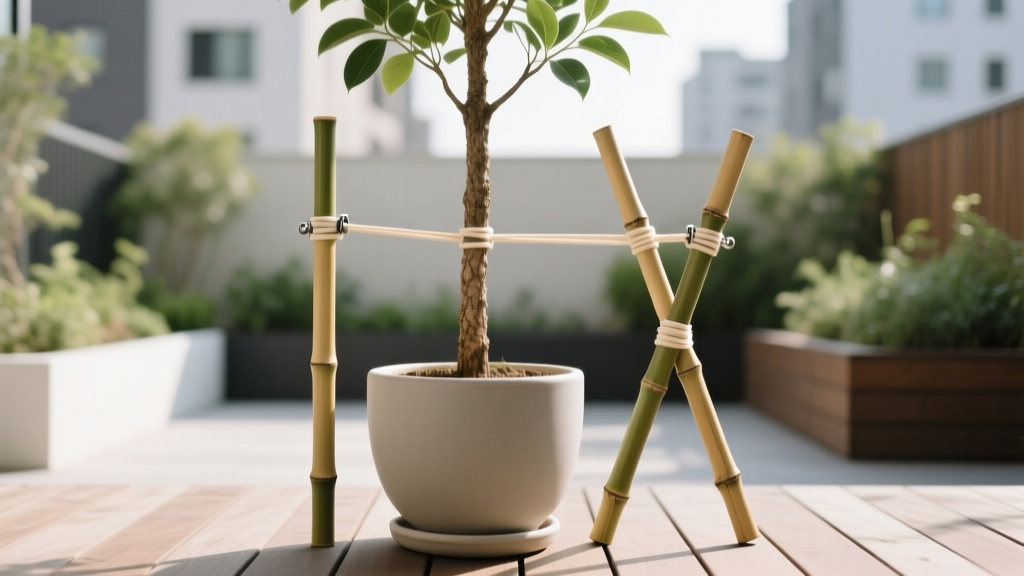
Potted Tree Staking Guide 2026: Single vs Double Stake
Lisa ThompsonPublished
Container gardening has seen a massive resurgence in 2026, with urban dwellers and suburban homeowners alike transforming balconies, rooftops, and patios into lush, tree-filled retreats. Growing trees in pots—whether dwarf citrus, Japanese maples, or columnar apples—presents unique challenges. Unlike trees planted directly in the earth, potted trees have a restricted root zone, making them highly susceptible to tipping, windthrow, and trunk damage. This brings us to a critical horticultural question: when staking a young tree in a container, should you use a single stake or a double stake?
Understanding the biomechanics of container-grown trees is essential for long-term health. According to the University of Minnesota Extension, trees need to sway slightly in the wind to develop trunk taper and structural strength. Over-staking can lead to a weak, spindly trunk that snaps under pressure. However, in a container, the root ball cannot anchor itself into the surrounding earth to stabilize the canopy. Therefore, your staking strategy must perfectly balance rigid support with natural movement.
Why Container Trees Face Unique Stability Challenges
Trees grown in containers operate under a completely different set of physical rules compared to their in-ground counterparts. In 2026, many gardeners use lightweight aeration fabric pots, smart resin planters, or composite materials to reduce overall weight on structural balconies and decks. While these modern containers are excellent for root pruning, aeration, and drainage, they offer a much lower center of gravity and less ballast than traditional terracotta or concrete pots.
When a sudden microburst or strong seasonal wind hits a balcony or rooftop garden, the tree's canopy acts like a sail. Because the potting mix is lightweight and the roots cannot spread outward to grip the earth, the leverage exerted on the trunk base is immense. Furthermore, the 'wind tunnel' effect created by urban architecture can subject potted trees to erratic, multi-directional gusts. Staking is not just about keeping the tree upright; it is about preventing the root ball from rocking inside the container, which tears delicate feeder roots and halts nutrient uptake.
The Single Stake Method for Potted Trees
The single stake method involves driving one sturdy stake into the container and securing the tree's main trunk to it. This is the most common approach for small to medium-sized containers (ranging from 5 to 15 gallons) and is ideal for young whips or trees with a strong, natural central leader.
When to Use a Single Stake
- Sheltered Patios: If your container is placed in a courtyard or against a wind-breaking fence.
- Small to Medium Pots: Where inserting multiple stakes would overcrowd the limited root zone.
- Training a Central Leader: Ideal for young columnar fruit trees or ornamental standards that just need guidance to grow straight.
To install a single stake in a pot, you must use a rigid material, such as a thick fiberglass rod or a heavy-duty bamboo pole. The stake must be inserted at the edge of the container and pushed all the way down until it rests firmly against the bottom interior floor of the pot. If the stake only sits in the top few inches of potting soil, it will act as a lever and pull out during a storm. The tree is then tied to the stake using a flexible, broad tie placed about two-thirds of the way up the trunk, allowing the top third to sway freely.
The Double Stake Method for Containers
The double stake method utilizes two stakes placed on opposite sides of the container, usually perpendicular to the prevailing wind direction. The tree is secured between them using cross-ties. This method provides superior lateral support and is highly recommended for larger planters and exposed environments.
When to Use a Double Stake
- Large Half-Barrels and Smart Pots: Containers holding 20 gallons or more of soil, which house larger, top-heavy trees.
- Windy Balconies and Rooftops: Locations exposed to high-elevation gusts or urban wind tunnels.
- Top-Heavy Dwarf Fruit Trees: Trees bearing heavy fruit loads that could pull the central leader off-center.
According to guidelines from Penn State Extension, double staking allows the trunk to flex slightly between the ties, which stimulates the production of reaction wood and builds a thicker, more resilient trunk taper. In a large container, two stakes driven to the bottom of the pot distribute the mechanical stress across a wider area of the soil matrix, preventing the stakes themselves from snapping or pulling through the loose potting mix.
Single vs. Double Stake: Container Comparison Chart
| Feature | Single Stake | Double Stake |
|---|---|---|
| Best Container Size | 5 to 15 Gallons | 20+ Gallons / Half-Barrels |
| Wind Resistance | Moderate (Uni-directional) | High (Multi-directional) |
| Trunk Taper Development | Slower (if tied too tightly) | Excellent (allows natural flex) |
| Root Zone Crowding | Low | Moderate |
| Installation Difficulty | Easy | Moderate |
| Material Cost (2026) | $10 - $15 | $25 - $40 |
Choosing the Right Stakes and Ties for 2026 Container Gardens
The materials you use in a container garden must withstand constant moisture, UV exposure, and the confined space of a pot. Avoid wooden stakes in fabric pots or self-watering containers, as the constant moisture will cause them to rot within a single season.
Modern Stake Materials
- Fiberglass Stakes: The gold standard for 2026. They are UV-stabilized, rot-proof, and possess a slight flex that mimics natural wood without snapping.
- Polycarbonate Tubes: Excellent for protecting the lower trunk from string trimmers (if you use them around large patio pots) while providing rigid support.
- Galvanized Steel T-Posts: Only recommended for massive, custom-built wooden planter boxes on commercial terraces.
Proper Tree Ties
Never use wire, zip ties, or narrow nylon string to secure a tree. These will quickly girdle the bark, cutting off the phloem and killing the tree. Instead, use broad, UV-resistant arbor ties, specialized velcro garden tape, or wide rubber tubing. The tie should form a figure-eight pattern between the stake and the tree to prevent the bark from rubbing against the stake. Always leave enough slack so you can slide two fingers comfortably between the tie and the trunk.
Step-by-Step Installation Guide for Potted Trees
- Prepare the Container: Ensure your pot has adequate drainage holes. Add a 2-inch layer of coarse drainage material at the bottom, followed by a base layer of high-quality, well-draining potting mix (never use dense garden soil in containers).
- Insert the Stakes First: Before placing the tree, drive your single or double stakes into the base soil layer until they hit the bottom of the pot. Doing this before the tree is in place prevents you from driving the stake through the tree's delicate root ball.
- Position the Tree: Place the tree in the center of the container. Ensure the root flare (where the trunk meets the roots) is level with or slightly above the soil surface. Backfill with potting mix, tamping down gently to eliminate large air pockets.
- Attach the Ties: Secure the tree to the stake(s) at the lowest point necessary to keep it upright. For single stakes, place the tie about two-thirds up the trunk. For double stakes, use two ties, one on each side, ensuring the tree is centered between them.
- Mulch and Water: Add a 2-inch layer of organic mulch (like arborist wood chips or pine bark) over the soil surface to retain moisture. Water deeply until it flows freely from the drainage holes.
When to Remove the Stakes
A common mistake in container gardening is leaving stakes in place permanently. Stakes are a temporary crutch, not a lifelong support system. You should monitor your potted tree throughout the growing season. Gently untie the tree and observe its behavior in a light breeze. If the root ball remains stable in the soil and the trunk can support the weight of the canopy without bending excessively, it is time to remove the stakes.
Typically, young trees in containers require staking for their first one to two growing seasons. Once the trunk has developed adequate taper and the roots have fully colonized the potting mix, remove the stakes and ties entirely. This encourages the tree to build the structural integrity it needs to thrive in your container garden for years to come. By choosing the correct staking method—single for sheltered, smaller pots and double for exposed, large planters—you ensure your potted trees remain healthy, upright, and beautiful throughout 2026 and beyond.