Tree Care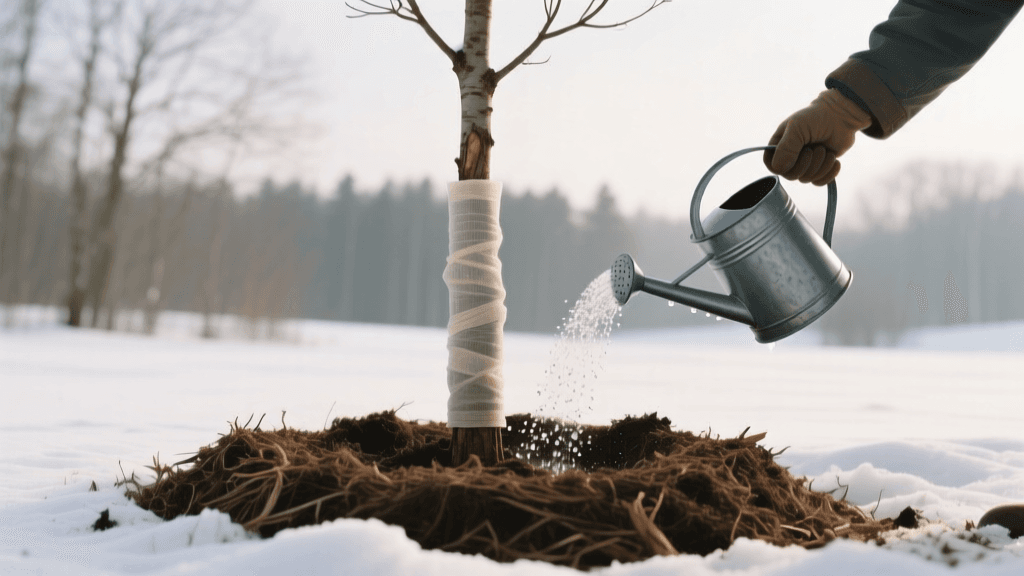
Winter Tree Care: Preventing Frost Cracks and Sunscald
The Silent Winter Killers: Sunscald and Frost Cracks
As autumn fades and the first hard freezes set in, most homeowners assume their landscape is safely dormant. However, for young and thin-barked trees, winter introduces severe environmental stressors that can cause irreversible structural damage. The two most insidious threats to seasonal tree health are sunscald and frost cracks. Both conditions compromise the cambium layer—the vital vascular tissue responsible for transporting water and nutrients—often leading to stunted growth, severe pest infestations, or total tree failure.
Young trees, specifically those with a trunk caliper of less than 4 inches, lack the thick, insulating corky bark of mature specimens. Without proactive seasonal maintenance, the extreme temperature fluctuations of winter can literally tear a tree apart from the inside out. This comprehensive guide will walk you through the science of winter bark injury and provide a highly specific, actionable protocol to winterize your trees effectively.
Understanding the Science of Winter Bark Injury
What is Sunscald (Southwest Injury)?
Sunscald occurs primarily on the south and southwest sides of a tree trunk. During bright, sunny winter days, solar radiation can heat the dark bark surface to temperatures significantly higher than the ambient air. This localized heating tricks the dormant cambium cells into 'waking up' and becoming active. When the sun sets or a cloud passes over, the bark temperature plummets rapidly. The newly active cells freeze and die, resulting in sunken, discolored, and eventually peeling bark. This dead tissue becomes an open invitation for fungal pathogens and wood-boring insects.
What are Frost Cracks?
While sunscald is a biological failure caused by cellular freezing, a frost crack is a mechanical failure. Frost cracks are deep, longitudinal splits in the wood and bark. They occur when the outer layers of the trunk cool and contract much faster than the inner wood core. The extreme thermal gradient creates immense tension, causing the trunk to split open with a loud, gunshot-like crack. These fissures can extend deep into the heartwood, compromising the tree's structural integrity and making it highly susceptible to windthrow during winter storms.
Most Vulnerable Tree Species
Not all trees require the same level of winter protection. Species with naturally thin bark or those that retain late-season growth are at the highest risk. Below is a susceptibility chart to help you prioritize your seasonal maintenance schedule.
| Tree Species | Bark Thickness | Sunscald Risk | Frost Crack Risk | Recommended Action |
|---|---|---|---|---|
| Maple (Red, Sugar, Norway) | Thin to Medium | High | High | Mandatory Wrapping |
| Linden (Basswood) | Thin | Very High | Medium | Mandatory Wrapping |
| Honeylocust | Thin | High | High | Mandatory Wrapping |
| Plum / Cherry (Ornamental) | Very Thin | Very High | Medium | Mandatory Wrapping |
| Ash (Green, White) | Medium | Medium | High | Recommended Wrapping |
| Oak (Red, White) | Thick | Low | Low | Monitor / Mulch Only |
Your Step-by-Step Winterization Action Plan
Protecting your trees requires a multi-layered approach addressing hydration, insulation, and wind protection. Follow this protocol between late October and early December, depending on your USDA Hardiness Zone.
Step 1: Late Fall Deep Hydration
Winter desiccation (drying out) exacerbates frost cracking. A well-hydrated tree has more cellular turgor pressure, making the wood more resilient to thermal contraction. Continue watering your trees until the ground freezes solid.
- Measurement: Apply 10 gallons of water per inch of trunk caliper (measured at knee height).
- Method: Use a soaker hose or a slow-drip tree watering bag (like the Treegator) placed over the root zone, not directly against the trunk.
- Timing: Water deeply once a week in autumn if rainfall is less than 1 inch per week. Stop entirely once the top 2 inches of soil freeze.
Step 2: Proper Trunk Wrapping Technique
Wrapping the trunk reflects solar radiation and insulates the cambium against rapid temperature drops. Never use plastic, vinyl, or dark-colored materials, as these trap moisture and heat, promoting fungal rot and defeating the purpose of the wrap.
- Materials: Use a commercial crepe-paper tree wrap (e.g., DeWitt Tree Wrap) or a white polypropylene fabric guard. Cost is typically $5 to $12 per roll.
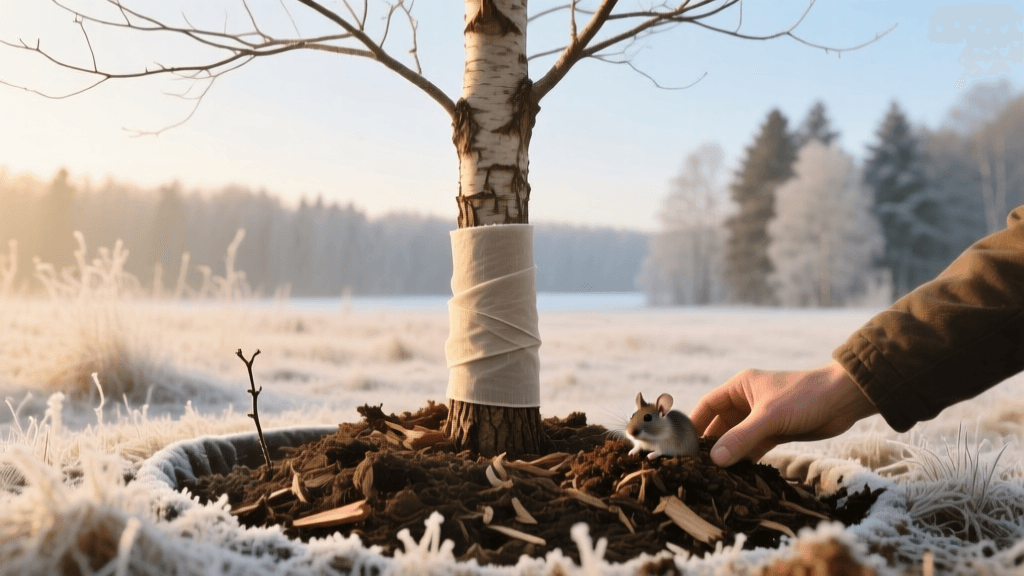
- Application: Start at the base of the trunk, slightly overlapping the soil line to prevent rodent entry. Wrap upward at a slight angle, overlapping each layer by one-third.
- Termination: Stop wrapping just above the first major scaffold branch. Secure the top with a piece of masking tape or natural twine. Never use wire or duct tape, which will girdle the tree as it grows.
- Crucial Spring Removal: You must remove the wrap in early spring (around the last frost date). Leaving it on year-round traps moisture, invites disease, and restricts trunk expansion.
Step 3: The 3-3-3 Mulching Rule
Mulch insulates the soil, preventing deep freezes that damage the root system and prolonging the availability of soil moisture. However, improper mulching is a leading cause of trunk rot.
- Depth: Apply exactly 3 inches of coarse arborist wood chips or shredded bark.
- Radius: Extend the mulch ring at least 3 feet outward from the trunk in all directions.
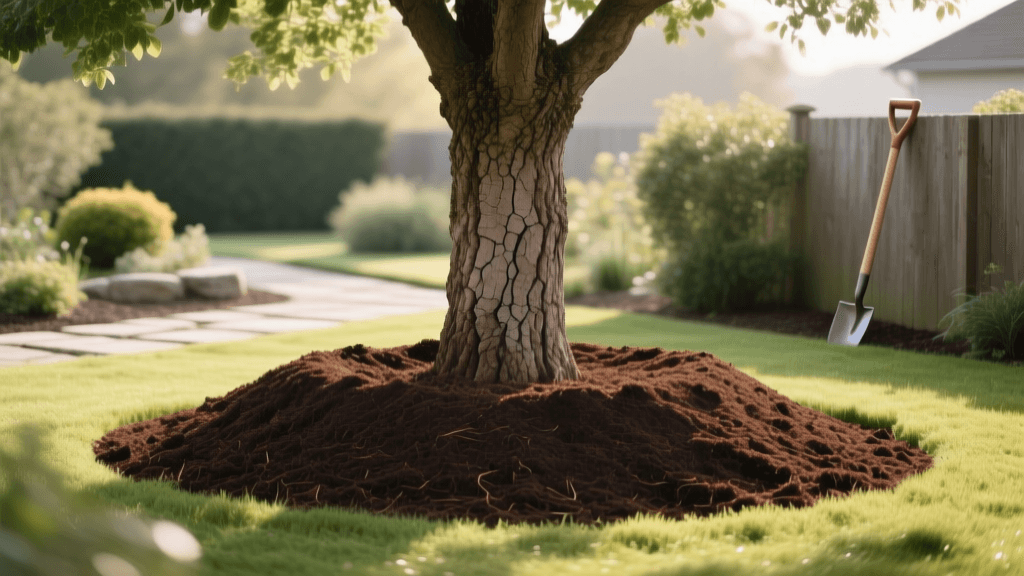
- Clearance: Keep the mulch 3 inches away from the actual trunk bark. Creating a 'mulch volcano' against the trunk keeps the bark damp, encouraging rot and providing a winter habitat for bark-gnawing voles.
Step 4: Anti-Desiccant Sprays for Evergreens
While deciduous trees lose their leaves, broadleaf evergreens (like Rhododendrons, Holly, and Magnolias) continue to lose moisture through their foliage all winter. When the ground is frozen, roots cannot replace this lost water, leading to severe leaf scorch.
- Products: Use a pine-oil or latex-based anti-transpirant like Wilt Pruf or Vapor Gard ($15-$25 per concentrate bottle).
- Application: Spray the foliage thoroughly until it drips. The product must be applied when daytime temperatures are above 40°F (4°C) and no freezing rain is expected for 24 hours to allow the polymer coating to dry and cure.
Winterizing Material and Cost Breakdown
Budgeting for seasonal tree care is an investment that prevents the massive cost of tree removal and replacement. Below is an estimated cost breakdown for winterizing a single young tree (under 4-inch caliper).
| Material / Service | Estimated Cost | Lifespan / Reusability |
|---|---|---|
| Crepe Paper Tree Wrap (1 roll) | $6.00 - $10.00 | Single Season (Biodegradable) |
| Corrugated Plastic Tree Guard | $8.00 - $15.00 | 3 to 5 Seasons |
| Arborist Wood Chips (2 cubic ft bag) | $4.00 - $6.00 | Single Season (Decomposes) |
| Anti-Desiccant Spray (Concentrate) | $15.00 - $25.00 | Multiple Trees / 1 Season |
| Burlap Screen (for windburn) | $12.00 - $20.00 | 2 to 3 Seasons |
Outdated Methods to Avoid: Whitewashing
In the past, orchardists and arborists often painted tree trunks with a mixture of white latex paint and water to reflect winter sun. While this technically reduces sunscald, modern arboriculture strongly discourages this practice. Paint can trap moisture against the bark, interfere with the tree's natural lenticels (breathing pores), and introduce harmful chemicals into the soil as it flakes off. Stick to breathable, commercial tree wraps or white polypropylene guards.
Spring Assessment and Damage Control
Even with meticulous care, extreme weather events can cause damage. In early spring, inspect your trees carefully as you remove the winter wraps.
- Identifying Damage: Look for vertical splits, sunken discolored patches on the southwest side, or loose, peeling bark.
- Do Not Use Wound Sealants: According to modern arboricultural science, applying tar, paint, or commercial 'pruning sealers' to a frost crack traps decay-causing fungi inside the wound and prevents the tree from forming protective callus tissue.
- Proper Remediation: If bark is peeling but still partially attached, do not rip it off. If it is completely loose and harboring pests, carefully use a sterilized, sharp pruning knife to trace-cut the damaged area. Create a clean, smooth, oval-shaped border around the wound, removing only the dead, detached bark to expose the healthy cambium edges. This promotes rapid callus formation (compartmentalization).
Expert Insight: According to the University of Minnesota Extension, "Sunscald is often called southwest injury because it typically occurs on the south or southwest side of the tree... Wrapping the trunk with a light-colored material reflects the sun's rays and keeps the bark temperature from fluctuating wildly, effectively preventing the cellular damage that leads to sunscald."
Conclusion
Winter tree care is not a passive activity; it requires deliberate, timely intervention. By understanding the mechanics of frost cracks and sunscald, and by implementing targeted hydration, proper wrapping, and strategic mulching, you can ensure your young trees survive the harshest months and emerge vigorous and healthy in the spring. Consistent seasonal maintenance is the cornerstone of long-term landscape health and structural tree safety.