Lawn Care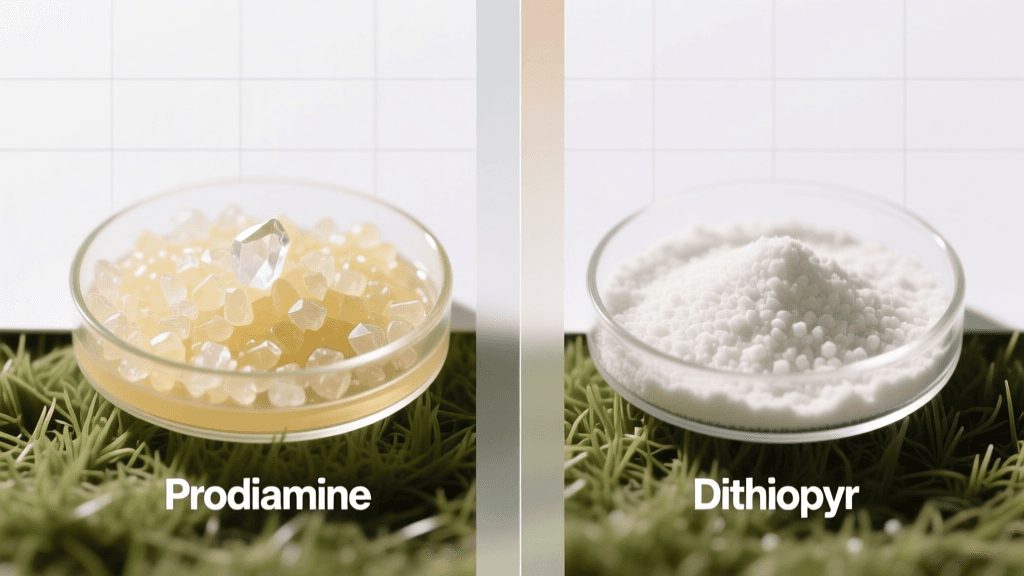
Prodiamine vs Dithiopyr: Best Pre-Emergent for Crabgrass
The Battle of the Pre-Emergent Herbicides
Every spring, lawn care enthusiasts and professionals alike face the same relentless nemesis: crabgrass. This aggressive, warm-season annual weed can quickly overtake a pristine cool-season lawn, choking out desirable turf and leaving behind a patchy, yellowing mess as temperatures drop in the fall. Because crabgrass reproduces exclusively by seed, the most effective defense is a robust pre-emergent herbicide strategy. But with dozens of products on the market, which active ingredient reigns supreme?
In the professional lawn care industry, the debate almost always narrows down to two heavyweight chemical compounds: Prodiamine and Dithiopyr. Both are highly effective at preventing crabgrass, but they operate with slightly different modes of action, application windows, and residual longevities. In this comprehensive guide, we will break down Prodiamine vs. Dithiopyr to help you decide which pre-emergent is the best fit for your specific lawn care routine, budget, and timing.
Understanding Prodiamine (Barricade)
Prodiamine is the active ingredient in several popular pre-emergent herbicides, most notably the professional-grade brand Barricade, as well as consumer-friendly options like Yard Mastery's Prodiamine WDG. Chemically, it belongs to the dinitroaniline family of herbicides.
Mode of Action
Prodiamine works as a root inhibitor. When applied to the soil surface and watered in, it creates a chemical barrier in the top one to two inches of the soil profile. As crabgrass seeds germinate and their emerging roots (radicles) push through this treated zone, the herbicide inhibits cell division. The seedling is effectively stopped in its tracks and dies before it ever breaches the soil surface.
Pros and Cons of Prodiamine
- Pros: Exceptional longevity. A single application can provide 3 to 5 months of residual control, depending on the application rate and local rainfall. It is also highly cost-effective, especially when purchased as a liquid concentrate (Water Dispersible Granule or WDG).
- Cons: It is strictly a pre-emergent. If a crabgrass seed has already germinated and sprouted above the soil, Prodiamine will not kill it. Additionally, liquid formulations of Prodiamine often contain a bright yellow dye that can temporarily stain concrete driveways and sidewalks if not rinsed immediately.
Understanding Dithiopyr (Dimension)
Dithiopyr is the active ingredient most famously sold under the brand name Dimension. It belongs to the pyridine chemical family and offers a unique dual-action capability that sets it apart from almost every other pre-emergent on the market.
Mode of Action
Like Prodiamine, Dithiopyr acts as a root inhibitor, disrupting cell division in germinating seeds. However, Dithiopyr also possesses early post-emergent properties. It can kill crabgrass seedlings that have already germinated and emerged, provided they are in the very early stages of growth (specifically, before they develop their first tiller, or side shoot).
Pros and Cons of Dithiopyr
- Pros: The early post-emergent control is a massive advantage for homeowners who miss the strict early-spring application window. It provides a wider margin of error. Furthermore, liquid Dimension formulations do not typically contain the heavy dyes found in Prodiamine, reducing the risk of staining hardscapes.
- Cons: Dithiopyr generally has a shorter residual lifespan in the soil compared to Prodiamine, typically lasting 2 to 4 months. It is also noticeably more expensive per square foot of coverage.
Head-to-Head Comparison Chart
To visualize the differences between these two industry-standard herbicides, review the comparison table below:
| Feature | Prodiamine (Barricade) | Dithiopyr (Dimension) |
|---|---|---|
| Chemical Family | Dinitroaniline | Pyridine |
| Primary Function | Pre-emergent only | Pre-emergent & Early Post-emergent |
| Application Window | Strictly before germination | Pre-emergence up to 1-tiller stage |
| Residual Longevity | 3 to 5 months | 2 to 4 months |
| Cost per 1,000 sq ft | ~$8.00 - $12.00 | ~$14.00 - $20.00 |
| Hardscape Staining | High (contains yellow dye) | Low (typically dye-free) |
Application Timing and Soil Temperature
The success of any pre-emergent herbicide relies entirely on timing. Applying too early means the chemical barrier may break down before the main crabgrass flush occurs. Applying too late means the seeds have already germinated, rendering a strictly pre-emergent product useless.
According to the turfgrass management resources provided by the University of Minnesota Extension, the ideal time to apply pre-emergent herbicides is when soil temperatures at a 2-inch depth reach 50 to 55 degrees Fahrenheit for three to five consecutive days. It is crucial to measure soil temperature, not air temperature, as the soil warms much more slowly in the spring.
Many lawn care professionals also rely on phenological indicators—natural signs in the environment. The blooming of Forsythia bushes and the swelling of lilac buds are classic indicators that soil temperatures are approaching the crabgrass germination threshold. If you are using Prodiamine, you must apply it before these biological markers peak.
The Early Post-Emergent Advantage
Life happens, and sometimes the spring season slips away before you can calibrate your spreader or pump sprayer. This is where Dithiopyr shines. If soil temperatures have already breached the 55-degree mark and you suspect crabgrass has begun to germinate, Prodiamine will no longer stop the current flush.
Dithiopyr, however, can still save your lawn. It is uniquely capable of controlling crabgrass in the 1-tiller stage. A tiller is a lateral shoot that grows from the base of the plant. Once a crabgrass plant develops its first tiller, it transitions out of the seedling phase and becomes highly resistant to Dithiopyr. At that point, a selective post-emergent herbicide like Quinclorac is required. But for those who are just a week or two late, Dithiopyr provides an invaluable safety net that Prodiamine simply cannot offer.
Cost, Coverage, and Value
When budgeting for annual lawn care, the cost of materials is a significant factor. Prodiamine is widely considered the most economical pre-emergent on the market, particularly when purchased in granular or WDG liquid forms. A single application in early spring is often enough to carry a lawn through the peak summer germination period.
Dithiopyr commands a premium price. However, researchers at the Rutgers Center for Turfgrass Science frequently highlight the benefits of split applications for extended summer weed control. Because Dithiopyr's residual breaks down faster, professionals often apply a half-rate of Prodiamine in early spring, followed by a half-rate of Dithiopyr in late spring. This 'split-app' strategy maximizes the longevity of the cheaper product while utilizing the late-season post-emergent cleanup capabilities of the more expensive product.
Best Practices for Safe and Effective Application
Regardless of whether you choose Prodiamine or Dithiopyr, proper application technique is non-negotiable. The Environmental Protection Agency (EPA) emphasizes the importance of following all label instructions regarding personal protective equipment (PPE), mixing rates, and environmental safety.
Step-by-Step Application Guide
- Calibrate Your Equipment: Whether using a broadcast spreader for granular products or a backpack sprayer for liquids, ensure your equipment is calibrated to deliver the exact amount of product per 1,000 square feet as dictated by the manufacturer's label.
- Ensure Even Coverage: Apply the product in two perpendicular passes (e.g., north-to-south, then east-to-west) to prevent streaking and missed strips where crabgrass will inevitably breakthrough.
- Water It In: Pre-emergents must be activated. You need to apply approximately 0.5 inches of irrigation or rely on a steady rainfall within 48 hours of application to wash the chemical off the grass blades and into the top inch of the soil profile.
- Clean Hardscapes: If using a liquid Prodiamine product, immediately blow or wash off any overspray from driveways, sidewalks, and curbs to prevent severe yellow staining.
Final Verdict: Which is Right for Your Lawn?
Choosing between Prodiamine and Dithiopyr ultimately comes down to your schedule, budget, and local climate.
Choose Prodiamine if: You are highly organized, proactive, and confident in your ability to apply the product before soil temperatures reach 50 degrees Fahrenheit. It is the undisputed king of longevity and cost-efficiency, making it the perfect choice for homeowners who want to apply their pre-emergent once in early spring and forget about crabgrass for the rest of the year.
Choose Dithiopyr if: You tend to procrastinate, have a busy spring schedule, or live in a region with highly unpredictable spring temperatures. The early post-emergent capability provides a crucial buffer, allowing you to kill young crabgrass seedlings even if you miss the optimal pre-emergent window by a week or two.
For the ultimate, bulletproof lawn care program, consider utilizing both. Start the season with a foundational application of Prodiamine to establish a long-lasting barrier, and keep a bottle of liquid Dithiopyr on hand for late-spring spot treatments or as a secondary split-application to ensure your lawn remains thick, green, and entirely crabgrass-free from spring until the first frost of autumn.