Lawn Care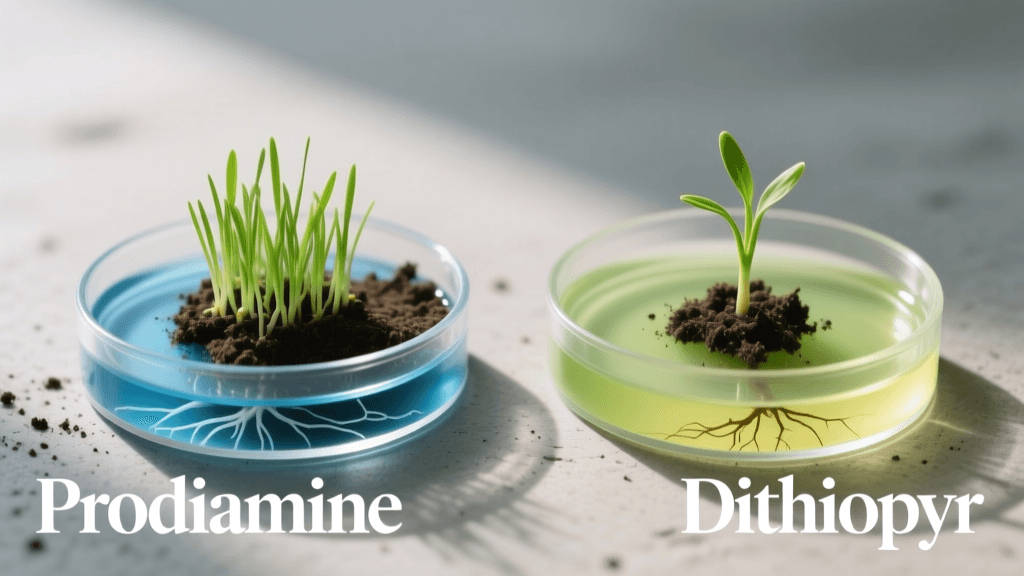
Prodiamine vs Dithiopyr: Which Pre-Emergent Herbicide is Best?
The Science of Pre-Emergent Herbicides
When it comes to maintaining a pristine, weed-free lawn, preventing weeds before they sprout is vastly superior to fighting them once they have established. Pre-emergent herbicides are the cornerstone of any professional turf management program. However, a common misconception is that these chemicals prevent seeds from germinating. In reality, the seeds still germinate, but the herbicide creates a chemical barrier in the top inch of the soil that stops the newly sprouted seedling from developing a viable root system. When the radicle (the first root) touches this barrier, cell division is halted, and the weed dies before it ever breaches the surface.
According to turfgrass experts at Penn State Extension, establishing a uniform, unbroken chemical barrier is the single most critical factor in preventing annual grassy weeds like crabgrass, goosegrass, and poa annua. Two of the most popular and effective active ingredients on the market are Prodiamine and Dithiopyr. But which one is right for your specific lawn care needs?
Prodiamine (Barricade): The Long-Lasting Root Pruner
Prodiamine, most commonly sold under the brand name Barricade, is a dinitroaniline herbicide that has been a staple in the lawn care industry for decades. It works by inhibiting microtubule formation in dividing plant cells, effectively halting root growth. Because it binds tightly to soil organic matter and is highly resistant to microbial breakdown, Prodiamine is renowned for its exceptional longevity.
Available primarily as a water-dispersible granule (WDG), such as Prodiamine 65 WDG, this product is mixed with water and sprayed onto the lawn. A single application at the maximum labeled rate can provide up to six to eight months of continuous crabgrass control. However, this extreme longevity is a double-edged sword. If you plan to overseed your lawn in the early fall, a heavy spring application of Prodiamine will likely prevent your new grass seed from germinating, as it cannot distinguish between weed seeds and desirable turfgrass seeds.
Dithiopyr (Dimension): The Versatile Early Post-Emergent
Dithiopyr, widely known by the brand name Dimension, belongs to the pyridine chemical family. While it acts as a pre-emergent by inhibiting root development similarly to Prodiamine, it possesses a unique and highly valuable secondary trait: early post-emergent control. Dimension is the only pre-emergent herbicide that can kill crabgrass after it has already sprouted, provided the weed is still in its early growth stages (up to the 1-tiller stage).
Typically sold as an emulsifiable liquid (Dimension 2EW), it is incredibly easy to mix and apply. This early post-emergent capability gives homeowners and lawn care professionals a much wider window of application in the spring. If you miss the ideal pre-emergent window and notice a few crabgrass seedlings emerging, Dimension can still save your lawn without requiring a separate post-emergent chemical application. However, its residual soil life is slightly shorter than Prodiamine, usually lasting around three to four months at standard application rates.
Head-to-Head Comparison Chart
| Feature | Prodiamine (Barricade) | Dithiopyr (Dimension) |
|---|---|---|
| Active Ingredient Class | Dinitroaniline | Pyridine |
| Primary Formulation | 65% WDG (Granule) | 2 lbs/gal EW (Liquid) |
| Pre-Emergent Control | Excellent | Excellent |
| Early Post-Emergent Control | None | Yes (up to 1-tiller crabgrass) |
| Longevity in Soil | 6 to 8 months | 3 to 4 months |
| Overseeding Wait Time | 4 months minimum | 3 to 4 months |
| Staining Potential | High (stains concrete yellow) | Low |
Application Timing and Soil Temperature Thresholds
Timing is everything when applying pre-emergent herbicides. The general rule of thumb is to apply your product when soil temperatures at a two-inch depth reach 50 to 55 degrees Fahrenheit for three to five consecutive days. This is the exact threshold where crabgrass seeds begin to germinate.
Because Prodiamine lasts so long, applying it too early in the late winter can lead to the chemical barrier breaking down from UV exposure and heavy spring rains before the peak summer weed flush occurs. Conversely, Dithiopyr offers more flexibility. If spring arrives unexpectedly early and you are a few weeks late with your application, Dimension's early post-emergent properties will catch and kill any crabgrass that managed to sprout during your delay.
Cost Analysis and Coverage Rates
Budget is a major factor for DIY lawn care enthusiasts. When comparing the cost per 1,000 square feet, Prodiamine is generally the more economical choice, especially when purchased in bulk. A standard 5-pound jug of Prodiamine 65 WDG typically costs around $150 to $170. At the standard preventative rate of 1.15 pounds per acre (roughly 0.4 ounces per 1,000 square feet), that single jug can cover over 4 acres, bringing the cost down to less than $0.10 per 1,000 square feet.
Dimension 2EW, on the other hand, is significantly more expensive upfront. A 2.5-gallon jug can cost upwards of $250 to $300. At the standard application rate of 2 pints per acre (roughly 0.75 fluid ounces per 1,000 square feet), the cost averages out to about $0.35 to $0.45 per 1,000 square feet. While Dimension is roughly three to four times more expensive per application, the insurance it provides against late-spring weed breakthroughs is often worth the premium for high-end turf managers.
Overseeding Restrictions and Turf Safety
If you maintain a cool-season lawn (such as Kentucky Bluegrass, Tall Fescue, or Perennial Ryegrass), fall overseeding is a mandatory annual practice to keep your turf thick and healthy. This is where the extreme longevity of Prodiamine becomes a liability. Applying a full rate of Prodiamine in April means you cannot safely overseed until late August or September, depending on your local climate and the exact rate applied.
Dimension is slightly more forgiving. Because it breaks down faster in the soil and is subject to higher microbial degradation, a standard spring application of Dimension will usually allow for safe fall overseeding by late August. Always consult the product label for exact reseeding intervals, as applying too much of either product can result in complete seedling failure.
Split Application Strategies for Maximum Control
According to turfgrass research highlighted by Texas A&M AgriLife Extension, utilizing a split-application strategy is the most effective way to guarantee season-long weed control while managing costs and overseeding schedules. Instead of applying one massive dose of herbicide in early spring, professionals divide the total annual rate into two separate applications spaced 60 to 90 days apart.
For example, you might apply a half-rate of Prodiamine in early April when soil temperatures hit 50 degrees, followed by a half-rate of Dimension in late May. This strategy refreshes the chemical barrier just as the heavy summer heat triggers late-flushing weeds like goosegrass and spurge. It also ensures that the chemical residue breaks down sufficiently by early September, allowing for a successful fall overseeding operation.
Best Practices for Application
- Calibrate Your Sprayer: Whether using WDG or EW formulations, accurate calibration is vital. Applying too little will result in a broken barrier and weed breakthroughs; applying too much wastes money and damages the environment.
- Water It In: Pre-emergent herbicides must be watered into the top inch of soil to activate. Ensure your lawn receives at least 0.25 to 0.5 inches of irrigation or rainfall within 48 hours of application.
- Avoid Core Aeration: Core aerating your lawn after applying a pre-emergent will physically break the chemical barrier, allowing weed seeds to drop into the aeration holes and bypass the herbicide entirely. Always aerate before applying your spring pre-emergent.
- Clean Your Equipment: Prodiamine is notorious for staining concrete driveways and sidewalks a bright, lasting yellow. Always rinse your sprayer on the grass, never on hardscapes, and use a dedicated sprayer for herbicides to avoid damaging ornamental plants later.
Final Verdict: Which Product Should You Buy?
The choice between Prodiamine and Dithiopyr ultimately depends on your lawn care schedule, budget, and local climate. If you are highly disciplined, apply your products early, and want the most cost-effective, longest-lasting barrier available, Prodiamine is the undisputed champion. It is the workhorse of the lawn care industry for a reason.
However, if you struggle with timing, live in an area with unpredictable spring weather, or want the peace of mind that comes with early post-emergent crabgrass control, Dithiopyr (Dimension) is worth the premium. For the ultimate turf management program, consider keeping both in your arsenal: use Prodiamine for your early spring base application, and keep a bottle of Dimension on hand for late-spring touch-ups and boundary lines where weeds love to creep in.