Tree Care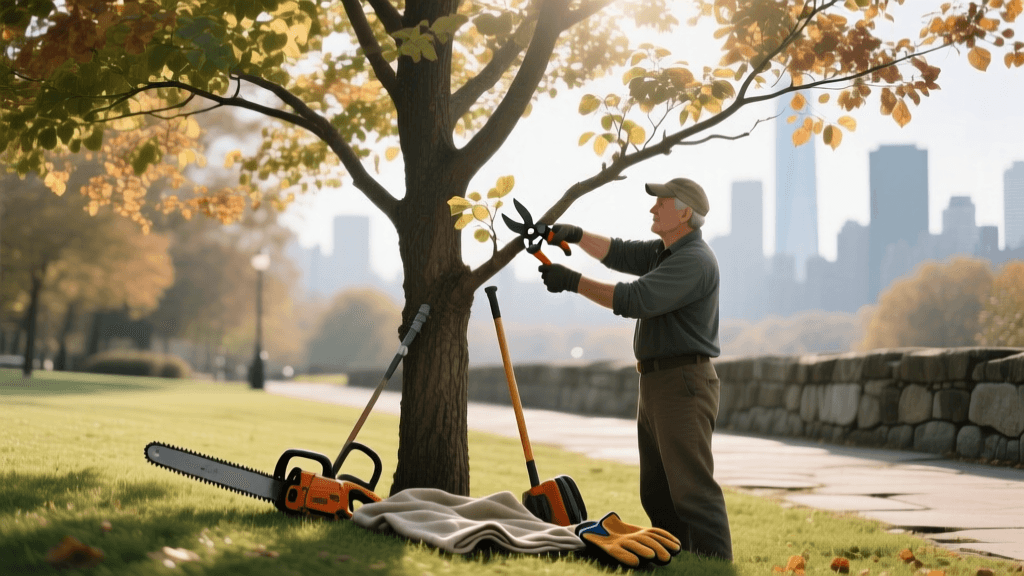
How to Prune Mature Shade Trees for Maximum Storm Resistance
Mature shade trees like oaks, maples, and elms are the crown jewels of any landscape. However, their massive canopies act like sails during high winds, making them vulnerable to catastrophic failure during severe storms. According to the International Society of Arboriculture (ISA), proper structural pruning can reduce wind resistance, eliminate weak branch unions, and significantly extend the lifespan of your trees. This practical how-to guide will walk you through the exact techniques, tools, and measurements needed to prune mature shade trees for maximum storm resistance.
Why Storm-Proof Pruning is Essential
When a mature tree fails, the costs are staggering. Emergency tree removal after a storm can cost between $1,500 and $5,000, not to mention the potential damage to your home, vehicles, or power lines. In contrast, proactive structural pruning by a professional typically costs $300 to $800 every three to five years. Even if you are tackling the lower canopy yourself, understanding the mechanics of wind-load distribution is critical.
Trees fail primarily at their weakest points: co-dominant stems with narrow, V-shaped crotches, deadwood that acts as a projectile, and overly dense canopies that do not allow wind to pass through. By selectively removing specific branches, you allow the wind to filter through the canopy rather than pushing against it like a solid wall.
When to Prune for Storm Resistance
Timing is everything. The ideal window for pruning mature shade trees is during the dormant season, typically late winter to early spring (February to March, depending on your hardiness zone). Pruning while the tree is dormant offers several advantages:
- Disease Prevention: Pathogens and wood-boring insects are inactive, reducing the risk of infection through fresh pruning wounds.
- Structural Visibility: Without leaves blocking your view, you can easily identify crossing branches, deadwood, and weak crotches.
- Energy Conservation: The tree has stored its energy in the root system, meaning it will not waste resources trying to push out new, weak growth immediately after being cut.
Avoid pruning in late summer or early fall, as this can stimulate tender new growth that will be killed by the first frost, creating more deadwood for the following storm season.
Essential Tools for the Job
You cannot safely or effectively prune a mature tree with inadequate equipment. Below is a comparison of the essential tools required for storm-proofing a shade tree, along with estimated costs and specifications.
| Tool | Best Use Case | Max Branch Diameter | Estimated Cost |
|---|---|---|---|
| Bypass Hand Pruner | Small twigs and suckers | Up to 3/4 inch | $30 - $60 |
| Long-Handled Lopper | Medium branches in lower canopy | Up to 2 inches | $40 - $90 |
| Pole Pruner (Manual) | High branches without a ladder | Up to 1.5 inches | $50 - $120 |
| Curved Pruning Saw | Thick structural limbs | Up to 6 inches | $35 - $80 |
| Gas/Electric Chainsaw | Major limb removal and stump work | 6+ inches | $150 - $400 |
| Climbing Harness and Helmet | Personal safety for elevated work | N/A | $150 - $300 |
Note: Never use a ladder while operating a chainsaw or pruning saw. If a branch is out of reach from the ground with a pole pruner, it is time to call a professional.
Step-by-Step Guide to Structural Pruning
Follow this systematic approach to reduce wind sail and eliminate structural hazards. The Arbor Day Foundation recommends never removing more than 25 percent of a live canopy in a single season, as this can severely stress the tree and trigger a panic response of weak, watersprout growth.
Step 1: Remove the 3 Ds
Begin by eliminating all Dead, Diseased, and Damaged wood. Dead branches are the most common projectiles during hurricanes and derechos. Cut these back to the branch collar. If a branch is diseased, sterilize your pruning saw with a 10 percent bleach solution or 70 percent isopropyl alcohol between every single cut to prevent spreading the pathogen to healthy tissue.
Step 2: Address Co-Dominant Stems
Look for Y-shaped junctions where two main trunks or large limbs compete for dominance. These V-shaped crotches often contain included bark (bark trapped inside the union), which acts as a wedge that forces the wood apart under wind load.
- If the tree is young, remove one of the competing stems entirely.
- If the tree is mature and both stems are massive, do not remove one entirely, as the resulting wound will invite decay. Instead, perform subordination pruning. Reduce the length and weight of the weaker competing stem by cutting back its lateral branches. This slows its growth and forces the stronger stem to become the dominant leader.
Step 3: Crown Thinning for Wind Flow
Crown thinning involves the selective removal of smaller, lateral branches throughout the canopy. The goal is to create a uniform density of foliage.
- Target branches that cross or rub against each other, as the friction creates open wounds.
- Remove inward-growing branches that clutter the interior of the canopy.
- Focus on the outer edges of the canopy to reduce the sail effect at the tips of the limbs, where leverage is greatest.
Step 4: Crown Raising and Clearance
Remove the lowest branches to provide clearance for structures, vehicles, and pedestrians. For storm resistance, ensure that heavy, low-sweeping limbs that could act as levers during high winds are shortened or removed. Maintain a minimum clearance of 8 feet over walkways and 12 feet over driveways.
Mastering the 3-Cut Method
When removing any branch larger than 2 inches in diameter, you must use the 3-cut method to prevent the weight of the falling limb from tearing the bark down the main trunk. Bark tearing destroys the cambium layer and creates a massive, unhealable wound that invites fatal fungal infections.
- The Undercut: About 12 to 18 inches away from the trunk, cut halfway through the bottom of the branch. This severs the bark and prevents it from tearing when the branch falls.
- The Top Cut: Move about 2 inches further out from your undercut (away from the trunk). Cut completely through the branch from the top down. The branch will snap off cleanly between the two cuts, leaving a manageable 12-to-18-inch stub.
- The Final Collar Cut: Remove the stub by cutting just outside the branch collar (the swollen, wrinkled area where the branch meets the trunk). Never cut flush with the trunk. Flush cutting removes the collar, which contains the chemical compounds necessary for the tree to seal the wound.
According to Clemson University Extension, proper collar cuts allow the tree to form wound wood that will eventually roll over and seal the pruning cut entirely within a few growing seasons.
Wound Dressings: To Paint or Not to Paint?
A common myth is that applying pruning paint, tar, or wound dressing to a fresh cut will protect the tree from decay and insects. Decades of arboricultural research have proven this false. In fact, wound dressings can trap moisture against the cut surface, accelerating fungal decay and preventing the formation of protective callus tissue. The best practice is to make a clean, precise cut and let the natural biological defenses of the tree handle the rest.
When to Call a Certified Arborist
While DIY pruning is excellent for lower branches and smaller ornamental trees, mature shade trees present severe safety hazards. You must hire an ISA Certified Arborist if:
- The branches are within 10 feet of overhead utility lines. Never attempt to prune near power lines yourself; it is illegal and deadly.
- The work requires climbing above 15 feet or using a chainsaw while off the ground.
- The tree shows signs of advanced root rot, fungal conks (mushrooms) on the trunk, or deep vertical cracks, which indicate the entire tree may need cabling or removal rather than simple pruning.
Investing $500 in a professional arborist assessment and selective pruning is a fraction of the cost of replacing a roof destroyed by a neglected, top-heavy oak tree. By understanding wind dynamics, respecting the branch collar, and adhering to the 25 percent canopy rule, you can ensure your majestic shade trees remain standing strong for generations to come.