Tree Care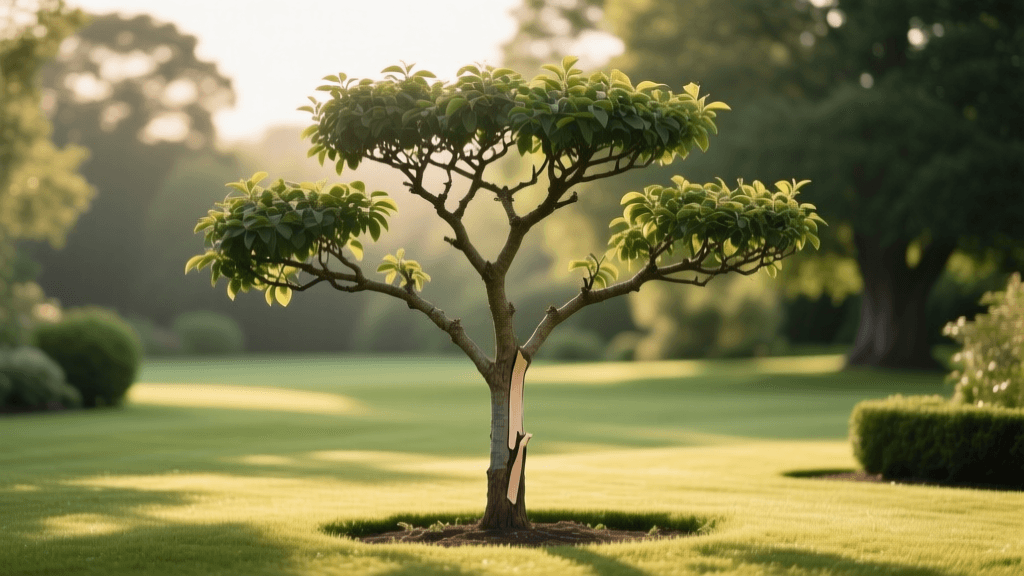
How to Structurally Prune Young Shade Trees for Health
Why Structural Pruning is Crucial for Young Trees
When you plant a young shade tree, such as an Oak, Maple, or Elm, you are making a long-term investment in your property's landscape. However, simply planting the tree and walking away is a recipe for future disaster. Without early intervention, young trees often develop weak branch unions, co-dominant leaders (multiple main trunks), and poor weight distribution. These structural defects might not be obvious in the first few years, but as the tree matures, they become severe liabilities. A mature tree with a compromised structure is highly susceptible to splitting during heavy winds, ice storms, or under the sheer weight of its own expanding canopy.
Consider the economics of proactive tree care: hiring a certified arborist to structurally prune a young tree typically costs between $150 and $300. In stark contrast, removing a mature, hazardous tree that has failed or requires extensive cabling and bracing can easily cost $1,500 to $3,500 or more. By dedicating a few hours to formative pruning during the tree's first decade, you dictate its architectural growth, ensuring a strong, resilient structure that will withstand severe weather and thrive for generations.
Essential Tools and Preparation
Before making a single cut, you must assemble the right equipment. Using dull or improper tools will crush the tree's vascular tissue, leaving jagged wounds that invite pathogens and decay fungi.
- Bypass Hand Pruners: For branches up to 1/2 inch in diameter. The Felco 2 Classic (approx. $65) is an industry standard, featuring a hardened steel blade that makes clean, precise cuts.
- Bypass Loppers: For branches between 1/2 inch and 1.5 inches. The Corona Compound Action Loppers (approx. $45) provide excellent leverage for thicker wood.
- Pruning Saw: For branches larger than 1.5 inches. A Silky Gomboy curved saw with a 210mm blade (approx. $55) cuts on the pull stroke, preventing the blade from binding in the wood.
- Sanitization Solution: Always keep a spray bottle of 70% isopropyl alcohol or a 10% bleach solution nearby. Wipe your blades between every single tree, and ideally between cuts if you are removing diseased wood, to prevent the spread of pathogens like Fire Blight or Oak Wilt.
Understanding Tree Architecture: Leaders and Scaffolds
To prune effectively, you must understand the anatomy of a strong tree. The goal of structural pruning is to establish a single, dominant central leader (the main upward-growing trunk) and well-spaced scaffold branches (the primary lateral branches that form the canopy).
A strong branch union features a prominent branch bark ridge and a swollen branch collar at the base of the branch. The collar contains specialized cells that seal off wounds and prevent decay from entering the main trunk. Conversely, weak unions often feature included bark—bark that grows inward between two closely spaced branches or co-dominant leaders, creating a wedge that acts as a splitting point under pressure. Ideally, scaffold branches should attach to the trunk at angles between 45 and 60 degrees, which provides the strongest mechanical support.
The 3-Cut Method for Larger Branches
When removing a branch larger than 1 inch in diameter, its weight will cause the bark to tear down the trunk if you attempt a single cut. To prevent this catastrophic damage, always use the 3-cut method.
- The Undercut: Make a small cut on the underside of the branch, about 6 to 12 inches away from the trunk. Cut about one-third of the way through the branch. This severs the bark and prevents it from tearing down the trunk when the branch falls.
- The Top Cut: Move an inch or two further out on the branch (away from the trunk) and cut completely through the branch from the top down. The branch will snap off cleanly at the undercut, removing the bulk of the weight safely.
- The Collar Cut: Finally, remove the remaining stub. Locate the branch collar and the branch bark ridge. Make your final cut just outside the collar, angling it parallel to the ridge. Never cut flush with the trunk, as this removes the collar and creates a massive, slow-healing wound.
Step-by-Step Guide to Formative Pruning
Follow this systematic approach when evaluating and pruning your young shade trees.
Step 1: The 3 Ds (Dead, Damaged, Diseased)
Begin by removing any dead, broken, or diseased wood. These branches offer no structural benefit and serve as entry points for insects and rot. Cut back to healthy, green tissue or the branch collar.
Step 2: Establish the Central Leader
Identify the straightest, most vigorous upward-growing stem. This will be your central leader. If there are competing leaders (co-dominant stems), you must subordinate them. Do not remove a large competing leader entirely if it makes up a significant portion of the canopy; instead, shorten it by cutting back to a smaller lateral branch. This slows its growth and forces the chosen central leader to dominate.
Step 3: Select and Space Scaffold Branches
Choose your primary scaffold branches. These should be spaced vertically at least 8 to 12 inches apart on the trunk and distributed radially around the tree like the spokes of a wheel. Avoid keeping multiple branches that originate from the exact same point on the trunk, as this creates a weak, crowded union.
Step 4: Remove Problematic Branches
Prune away branches that cross and rub against each other, branches that grow inward toward the center of the canopy, and branches with narrow, V-shaped crotches that contain included bark.
Step 5: Limit Canopy Removal
Never remove more than 15% to 20% of the live canopy in a single growing season. Over-pruning starves the tree of the foliage it needs to produce energy and triggers a stress response that results in weak, rapid water sprout growth.
Young Tree Pruning Schedule
Structural pruning is not a one-time event; it is a multi-year process. As the tree grows, your perspective on its architecture will change. Follow this timeline to ensure proper development.
| Tree Age | Pruning Focus | Canopy Removal Limit | Primary Action |
|---|---|---|---|
| Year 1 (Planting) | Root and trunk establishment | Max 10% | Remove only dead/broken branches; do not prune live lower limbs yet. |
| Year 2-3 | Leader selection | Max 15% | Identify central leader; subordinate competing stems; remove crossing branches. |
| Year 4-6 | Scaffold spacing | Max 20% | Select permanent scaffolds; ensure vertical and radial spacing; remove narrow crotches. |
| Year 7-10 | Canopy elevation | Max 20% | Gradually remove lowest temporary branches to raise the canopy for clearance. |
| Year 10+ | Maintenance | Max 15% | Transition to mature tree pruning; focus on deadwood, weight reduction, and clearance. |
Common Mistakes to Avoid
- Topping: Never chop off the top of a central leader to reduce height. This destroys the tree's natural apical dominance and forces the growth of weakly attached, hyper-vigorous shoots that are highly prone to breaking.
- Flush Cutting: Cutting flush against the trunk removes the branch collar, devastating the tree's natural compartmentalization process (known as CODIT, developed by Dr. Alex Shigo) and allowing decay to hollow out the main trunk.
- Lion's Tailing: Stripping all the inner lateral branches from a large limb, leaving foliage only at the very end. This shifts the weight to the tips, making the branch highly susceptible to sunscald and wind breakage.
Authoritative Guidelines and Citations
The techniques outlined in this guide are based on the rigorous research and standards established by leading arboricultural institutions. For further reading and scientific backing, consult the University of Florida IFAS Extension (specifically the extensive urban forestry research by Dr. Edward Gilman on tree structure and nursery production) and the International Society of Arboriculture (ISA), which publishes the definitive Best Management Practices for tree pruning. Adhering to these science-based guidelines ensures your trees remain safe, healthy, and structurally sound for decades to come.