Tree Care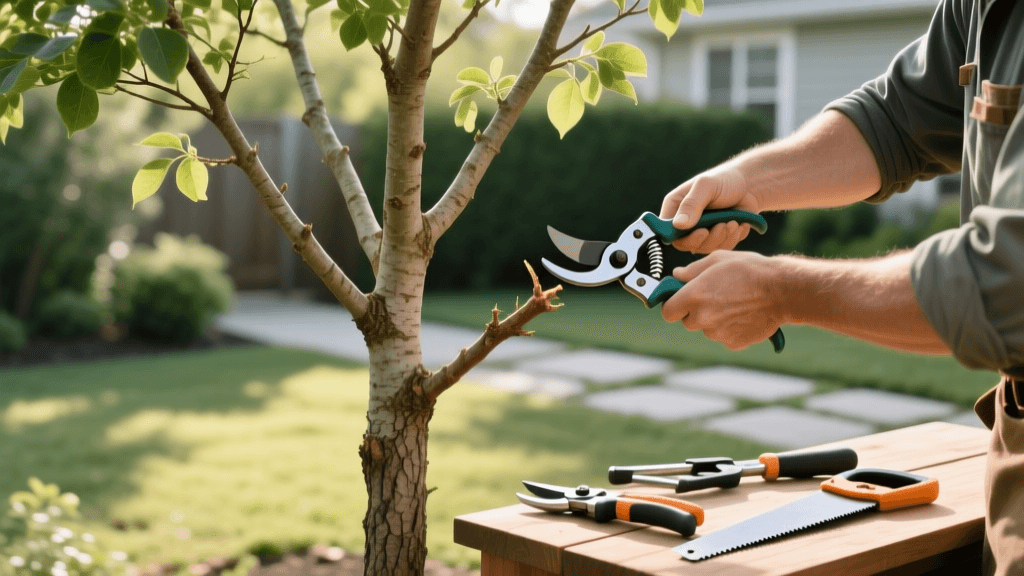
How to Structurally Prune Young Shade Trees Properly
Why Structural Pruning Matters for Young Trees
Planting a young shade tree is an investment in your property's future, but simply putting it in the ground is not enough. In the nursery trade, trees are often pruned to maximize height and canopy density for aesthetic appeal on the sales lot. This frequently results in low temporary branches, multiple competing leaders, and poor branch attachment angles. If left uncorrected, these nursery habits can lead to catastrophic limb failure, split trunks, and severe storm damage a decade later.
Structural pruning, also known as subordinate pruning, is the practice of selectively removing or reducing competing branches to establish a single, dominant central leader and well-spaced scaffold branches. According to Dr. Ed Gilman, a renowned environmental horticulturist at the University of Florida IFAS Extension, structural pruning in the first five years after planting is the single most effective practice for ensuring a tree's long-term structural integrity and reducing future maintenance costs. By correcting architectural flaws early, you guide the tree's growth pattern and prevent the need for expensive, large-diameter corrective pruning later in the tree's life.
Essential Tools for Pruning Young Trees
To make clean, precise cuts that heal quickly, you must use sharp, high-quality tools. Dull tools crush the cambium layer, inviting disease and slowing the compartmentalization of decay. Here is a breakdown of the essential gear and estimated costs:
- Bypass Hand Pruners: Ideal for branches up to 0.75 inches in diameter. The industry standard is the Felco F-2 Classic Pruner (approx. $65). Avoid anvil pruners, as they tend to crush live wood.
- Bypass Loppers: Used for branches between 0.75 and 1.5 inches. Look for a geared lopper like the Felco 200 (approx. $85) to reduce hand fatigue.
- Curved Pruning Saw: Necessary for branches over 1.5 inches. The Silky Gomboy 240 with a medium-tooth blade (approx. $55) provides incredibly smooth cuts that require minimal wound healing energy.
- Sanitizing Solution: A spray bottle filled with 70% isopropyl alcohol to sterilize blades between trees or after cutting diseased wood.
When to Prune: Timing Your Cuts
The optimal time for structural pruning is during the dormant season, typically late winter to early spring before bud break. Pruning while the tree is dormant offers several advantages: the branching structure is fully visible without leaves obscuring your view, the tree is not actively expending energy on canopy growth, and the risk of transmitting insect-borne diseases is significantly lower.
Important Exception: If you are pruning oak trees (Quercus species) in regions where Oak Wilt is prevalent, avoid pruning between April and July. Fresh cuts attract sap-feeding beetles that carry the fungal pathogen. Always check your local university extension guidelines for specific regional timing restrictions.
Step-by-Step Guide to Structural Pruning
Follow this systematic approach during the first five years after planting to build a resilient tree architecture.
Step 1: Remove the 'Three Ds'
Begin by removing any Dead, Damaged, or Diseased wood. These branches offer no structural benefit and drain the tree's resources or harbor pathogens. Make your cuts just outside the branch collar to allow the tree to seal the wound naturally.
Step 2: Identify and Establish the Central Leader
Identify the main trunk that will serve as the central leader. This should be the straightest, most vigorous stem. If the tree has forked into two or more competing leaders (codominant stems), you must select one to keep and subordinate or remove the others. A tree with a single central leader is vastly more resistant to wind and ice loads than a multi-leader tree.
Step 3: Subordinate Competing Leaders
Do not always remove a competing leader entirely, especially if it is large, as this creates a massive wound. Instead, use a 'reduction cut' to subordinate it. Find a lateral branch on the competing leader that is at least one-third the diameter of the leader itself, and cut the leader just above this lateral branch. This slows the vertical growth of the competitor while keeping the branch alive to photosynthesize and taper the trunk.
Step 4: Select and Space Scaffold Branches
Scaffold branches are the primary permanent limbs that will form the mature canopy. When selecting scaffolds, adhere to these rules:
- Angle of Attachment: Choose branches with wide crotch angles (between 45 and 90 degrees). Narrow, V-shaped unions often contain 'included bark,' which is a major structural weak point prone to splitting.
- Vertical Spacing: Space major scaffold branches at least 12 to 18 inches apart vertically along the trunk to prevent structural stress concentration in one area.
- Radial Spacing: Ensure branches are distributed evenly around the trunk like the spokes of a wheel, rather than all emerging from the same side.
Step 5: Execute the Proper Pruning Cut
Every cut must respect the tree's natural defense boundaries. Never make a 'flush cut' against the trunk. Instead, locate the branch collar (the swollen area where the branch meets the trunk) and the branch bark ridge (the raised line of bark in the crotch). Your cut should begin just outside the branch bark ridge and angle slightly away from the trunk, finishing just outside the branch collar. For branches larger than 1.5 inches, always use the three-cut method to prevent the heavy limb from tearing the bark down the trunk as it falls.
Structural Pruning Schedule and Cost Breakdown
Consistent, light pruning over several years is far cheaper and healthier for the tree than severe corrective pruning later. Below is a practical schedule and budget guide for a typical residential shade tree.
| Tree Age (Post-Plant) | Primary Pruning Objective | Est. DIY Tool Cost | Est. Pro Arborist Cost |
|---|---|---|---|
| Year 1 | Remove broken branches; retain lower temporary limbs for trunk taper. | $65 (Pruners) | $75 - $125 |
| Year 2 | Identify central leader; begin subordinating competing stems. | $120 (Add Loppers) | $100 - $150 |
| Year 3 | Select primary scaffold branches; remove low temporary branches. | $120 (Same tools) | $125 - $175 |
| Year 4 | Refine scaffold spacing; continue subordination of vigorous laterals. | $175 (Add Saw) | $150 - $225 |
| Year 5 | Finalize permanent canopy structure; clear trunk to desired height. | $175 (Same tools) | $200 - $300 |
Common Mistakes That Ruin Young Trees
Avoid these frequent errors that can permanently compromise your tree's health and structure:
- Lion-Tailing: This involves stripping all the inner lateral branches from a main limb, leaving foliage only at the very end. This shifts the weight to the tips, increasing the risk of branch breakage, and causes sunscald on the newly exposed bark.
- Topping: Cutting main branches back to arbitrary stubs destroys the tree's natural form, triggers the rapid growth of weakly attached 'water sprouts,' and introduces massive amounts of decay. Topping is considered malpractice by the International Society of Arboriculture (ISA).
- Using Wound Sealants: Decades of research have proven that pruning paints, tars, and sealants do not prevent decay. In fact, they often trap moisture and fungal spores against the wound, accelerating rot. Trees possess a highly effective natural defense system called Compartmentalization of Decay in Trees (CODIT); simply make a clean cut and let the tree do its job.
Post-Pruning Care and Mulching
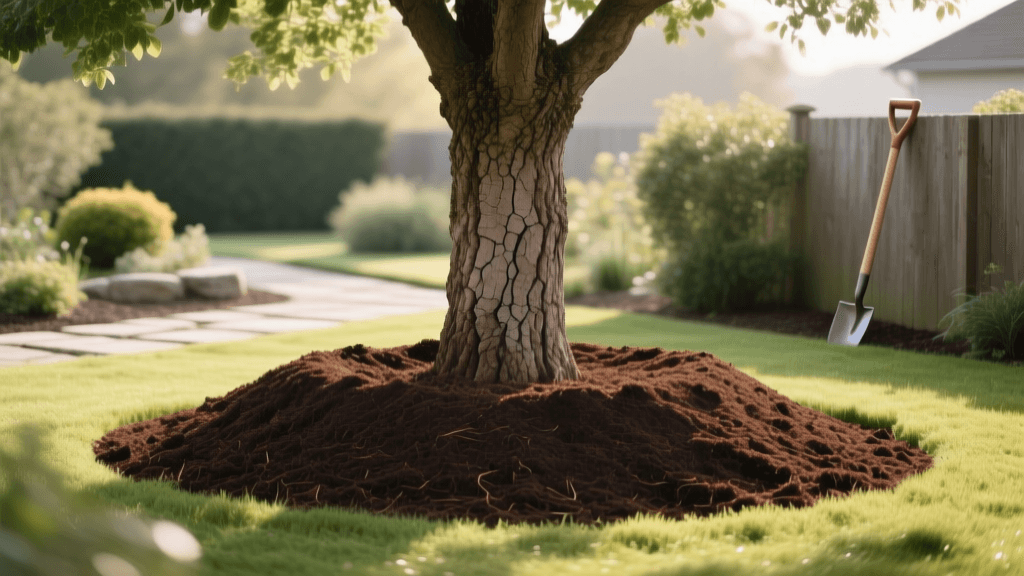
After completing your structural pruning session, ensure the tree has adequate resources to seal the wounds and push new growth. Water the tree deeply, applying roughly 10 gallons of water per inch of trunk diameter. Maintain a proper mulch ring around the base of the tree to retain soil moisture and regulate temperature. Apply 2 to 3 inches of organic wood chip mulch, extending out to the drip line if possible. Crucially, keep the mulch pulled back at least 3 inches from the trunk flare to prevent 'volcano mulching,' which promotes root girdling and trunk rot. By combining precise structural pruning with excellent cultural care, your young shade tree will develop the robust architecture needed to weather storms and thrive for generations.