Tree Care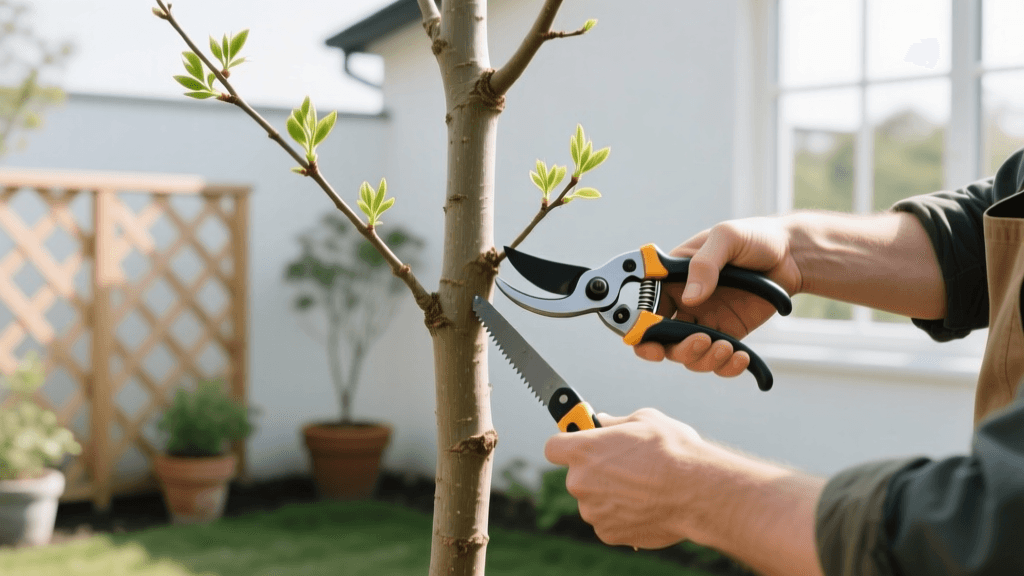
How to Prune Young Trees for Strong Structural Growth
Why Structural Pruning Matters for Young Trees
Planting a young tree is one of the most rewarding long-term investments you can make in your home landscape. However, a common misconception among homeowners is that trees should simply be planted and left alone to grow naturally. While this might work in a dense forest ecosystem, it is a recipe for disaster in an urban or suburban yard. In a forest, trees compete for sunlight, which naturally forces them to grow straight upward and shed their lower branches. In your yard, a young tree receives abundant sunlight from all directions, encouraging it to grow multiple wide, low branches and competing central leaders.
Without human intervention, these structural flaws can lead to weak branch unions, co-dominant stems, and a canopy that is highly susceptible to splitting during heavy winds, ice storms, or heavy snow loads. Structural pruning during the first three to five years of a tree's life is the most cost-effective and impactful maintenance practice you can perform. By guiding the tree's architecture early on, you prevent catastrophic failures decades later, saving thousands of dollars in emergency tree removal or cabling costs.
When to Prune: Timing is Everything
For the vast majority of deciduous trees, the optimal time to perform structural pruning is during the dormant season, typically late winter to early spring before the buds break. Pruning during dormancy offers several distinct advantages. First, without leaves obscuring your view, the tree's branching structure is fully visible, making it much easier to identify crossing branches, weak unions, and competing leaders. Second, the tree is not actively expending energy on foliage, meaning the stress of pruning is minimized. Finally, as the tree breaks dormancy in the spring, it will immediately direct its energy toward sealing the pruning wounds with new woundwood.
There are a few notable exceptions to this rule. Trees that are prone to specific diseases transmitted by seasonal insects should be pruned at different times. For example, oak trees should never be pruned in the spring or early summer in regions where Oak Wilt is prevalent, as the fresh cuts attract sap beetles that carry the deadly fungus. Similarly, elm trees should be pruned in deep winter to avoid Dutch Elm Disease vectors. Always research your specific tree species before making the first cut.
Essential Tools for the Job
Using the correct tool for the specific branch diameter is critical. Dull or improperly sized tools will crush the bark and tear the wood, creating ragged wounds that take years to heal and invite decay-causing pathogens. Always sanitize your tools between trees using a 10% bleach solution or 70% isopropyl alcohol to prevent the spread of disease.
| Tool | Branch Diameter | Best Use Case |
|---|---|---|
| Bypass Hand Pruners | Up to 3/4 inch | Small twigs, precise cuts, nursery training, removing small suckers |
| Bypass Loppers | 3/4 inch to 1.5 inches | Medium branches, thicker scaffold removal, heading cuts |
| Pruning Saw | 1.5 inches to 4 inches | Large limbs, structural reduction cuts, removing heavy competing leaders |
| Pole Pruner | Up to 1 inch | High branches requiring ground-level reach for safety |
Note: Always use bypass blades rather than anvil blades for live wood. Anvil pruners crush the plant tissue before cutting, which damages the cambium layer and delays the healing process.
Step-by-Step Guide to Structural Pruning
Follow this systematic approach every time you prune a young tree to ensure you are building a resilient, storm-proof framework.
Step 1: Identify the Central Leader
The central leader is the main, upright trunk that will dictate the tree's ultimate height and form. Most shade trees, such as maples, oaks, and ash, perform best with a single, dominant central leader. Stand back and observe the tree. Identify the straightest, most vigorous upright stem. This will be your keeper. Every subsequent pruning decision will be made in relation to this central leader.
Step 2: Remove the Three Ds
Before altering the tree's structure, clean it up. Remove any wood that is Dead, Damaged, or Diseased. These branches offer no structural benefit, drain the tree's resources, and serve as entry points for pests and fungi. Cut them back to the nearest healthy lateral branch or the main trunk, depending on their location.
Step 3: Eliminate or Subordinate Competing Leaders
If your young tree has two or more stems vying for the position of central leader (co-dominant stems), you must address them. These stems usually form a tight, V-shaped union with included bark, which is notoriously weak. If the competing leader is small, remove it entirely. If it is a substantial portion of the canopy, removing it completely might shock the tree or cause sunscald on the trunk. Instead, use a subordination cut: prune the competing leader back to a smaller lateral branch, reducing its vigor and allowing your chosen central leader to take over dominance.
Step 4: Select and Space Scaffold Branches
Scaffold branches are the primary permanent limbs that will form the mature canopy. When selecting scaffolds, look for branches that attach to the trunk at a wide angle, ideally between 45 and 90 degrees. Branches with narrow, V-shaped angles are structurally weak and prone to splitting. Furthermore, ensure proper spacing. Vertically, scaffold branches should be spaced 12 to 18 inches apart along the trunk. Radially, they should be distributed evenly around the trunk like the numbers on a clock face, so no two scaffolds emerge from the exact same height on the same side of the tree.
Step 5: Make the Proper Pruning Cuts
Understanding the anatomy of a branch union is crucial. Every branch has a branch bark ridge (the raised bark where the branch meets the trunk) and a branch collar (the swollen area at the base of the branch). Your cut must be made just outside the branch collar, without leaving a stub and without cutting flush into the trunk. Flush cuts destroy the tree's natural defense zone and invite trunk decay.
For branches larger than one inch in diameter, use the three-cut method to prevent the weight of the falling branch from tearing the bark down the trunk:
- Undercut: Make a small cut on the underside of the branch, about 6 inches away from the trunk.
- Top Cut: Cut completely through the branch from the top, an inch or two further out from the undercut. The branch will break cleanly at the undercut.
- Finish Cut: Carefully remove the remaining stub by cutting just outside the branch collar.
Common Mistakes to Avoid
Even with the best intentions, homeowners often make critical errors that compromise tree health. Never practice 'topping,' which involves indiscriminately cutting the tops off branches. Topping triggers a massive flush of weakly attached, fast-growing shoots that are highly prone to breaking. Another common error is 'lion-tailing,' where all the inner lateral branches are stripped away, leaving foliage only at the very tips of the branches. This shifts the weight to the ends of the limbs, acting like a lever in high winds and dramatically increasing the risk of branch failure. Finally, adhere to the 25% rule: never remove more than 25% of a tree's live foliage in a single season, as this severely restricts its ability to photosynthesize and generate energy for root and trunk growth.
Aftercare and Monitoring
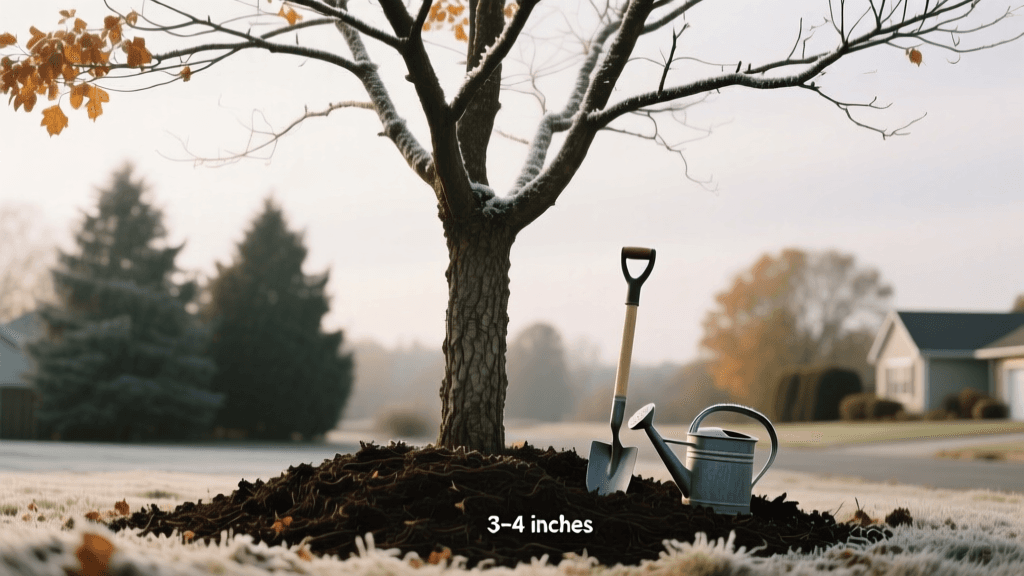
Pruning is a stressor, and proper aftercare helps the tree recover quickly. Apply a 2-to-3-inch layer of organic mulch in a wide ring around the base of the tree, keeping it a few inches away from the trunk to prevent rot and rodent damage. Water the tree deeply and consistently during the first growing season after pruning, especially during dry spells. Avoid applying high-nitrogen fertilizers immediately after heavy pruning, as this forces rapid, weak shoot growth rather than allowing the tree to focus on sealing its wounds.
Expert Insights and Further Reading
Proper pruning is an ongoing educational process. According to the Arbor Day Foundation, early structural training is the single most important factor in determining the longevity and safety of urban shade trees. Their guidelines emphasize that a few small cuts on a young tree are vastly superior to massive, damaging reductions required on a mature, poorly structured tree.
Furthermore, extensive research from the University of Florida IFAS Extension highlights the critical role of subordination cuts in managing co-dominant stems, proving that reducing the vigor of a competing leader is often safer and more effective than complete removal. For those looking to dive deeper into species-specific timing and wound biology, experts at Penn State Extension provide comprehensive resources on how different hardwoods and conifers compartmentalize decay following proper pruning cuts. By combining these expert methodologies with consistent annual observation, you will cultivate a majestic, resilient tree that enhances your property for generations.