Gardening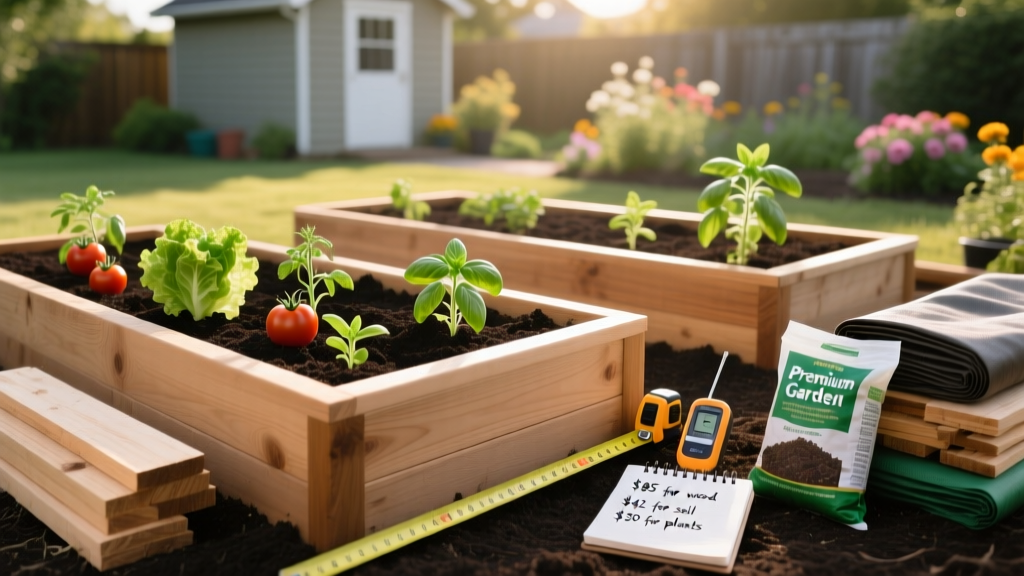
Raised Bed Garden Costs: The Ultimate Budgeting Guide
Lisa ThompsonPublished
Introduction: The True Cost of Growing Your Own Food
Starting a raised bed vegetable garden is one of the most rewarding investments you can make for your home, your health, and your grocery budget. However, many first-time gardeners are caught off guard by the initial startup costs. Between lumber prices, specialized soil blends, and irrigation supplies, a simple weekend project can quickly balloon into a significant financial undertaking if you do not plan accordingly.
According to Penn State Extension, raised beds offer superior drainage, warmer soil in the spring, and reduced weed pressure. But to reap these benefits, you must build and fill them correctly. This comprehensive budgeting guide breaks down the exact costs of building a standard 4-foot by 8-foot raised bed, filling it with high-quality soil, and planting your first season of vegetables. By understanding these expenses upfront, you can make strategic choices that fit your financial comfort zone without sacrificing the health of your future harvest.
Phase 1: Framing the Raised Bed (Material Costs)
The physical structure of your raised bed is your most visible expense. A standard 4x8-foot bed is the gold standard for home gardens because it allows you to reach the center from either side without stepping on and compacting the soil. The material you choose will dictate both your initial budget and the lifespan of your garden. According to the University of Wisconsin-Madison Extension, untreated wood, galvanized metal, and composite materials are the most common choices, each with distinct price points and longevity.
Below is a cost comparison for building a single 4x8-foot raised bed that is approximately 10 to 12 inches deep. Prices reflect average national retail costs at major home improvement stores.
| Material Type | Estimated Cost (per 4x8 bed) | Expected Lifespan | Pros & Cons |
|---|---|---|---|
| Untreated Pine | $45 - $65 | 3 - 5 years | Cheapest option, but rots quickly. Avoid pressure-treated wood due to chemical leaching concerns. |
| Cedar or Redwood | $130 - $180 | 10 - 15 years | Naturally rot-resistant and beautiful, but significantly more expensive upfront. |
| Galvanized Steel Kit | $80 - $130 | 15 - 20+ years | Easy assembly, modern look, and long-lasting. Can heat soil in extreme summer climates. |
| Composite / Recycled Plastic | $180 - $250 | 20+ years | Zero maintenance and will never rot. Highest upfront cost and can bow outward if not braced. |
Budgeting Tip: If you are on a strict budget, untreated pine or hemlock is the way to go. You can extend its lifespan to 7 or 8 years by lining the interior walls with heavy-duty landscaping fabric or food-safe plastic sheeting to prevent wet soil from resting directly against the wood.
Phase 2: Filling the Bed (Soil and Amendment Costs)
The most common mistake new gardeners make is underestimating the volume and cost of soil required. A 4x8-foot bed that is 10 inches deep holds roughly 26.5 cubic feet of soil, which is just slightly under one full cubic yard. You should never fill a raised bed with native dirt from your yard; it will compact into a concrete-like brick, suffocating plant roots.
According to University of Minnesota Extension, a loose, well-draining, and nutrient-rich medium is essential for the confined space of a raised bed. You have two primary budgeting routes for soil:
Option A: The Bagged 'Mel's Mix' Approach
Popularized by Square Foot Gardening, this recipe calls for equal parts compost, peat moss (or coconut coir), and coarse vermiculite.
- Compost (9 cubic feet): $45 - $60 (Buying bulk bags of blended compost)
- Coconut Coir (9 cubic feet): $70 - $90 (Purchased in compressed bricks and expanded)
- Coarse Vermiculite (9 cubic feet): $110 - $140 (Vermiculite is notoriously expensive by the bag)
- Total Bagged Cost: $225 - $290 per bed
Option B: The Bulk Topsoil and Compost Blend
For a much more economical approach, order a bulk delivery from a local landscape supply yard. A standard raised bed mix is 50% high-quality screened topsoil and 50% organic compost.
- 1 Cubic Yard of Premium Garden Mix (Delivered): $70 - $120
- Extra Bagged Compost for Top-Dressing: $20
- Total Bulk Cost: $90 - $140 per bed
Always call local landscape supply yards rather than big-box stores for bulk soil. Delivery fees can sometimes be waived if you order more than one yard, and the quality of local, screened topsoil blends is vastly superior to bagged alternatives.
Phase 3: Seeds vs. Transplants (Plant Budgeting)
Once your bed is built and filled, it is time to plant. Budgeting for seeds and transplants requires a strategic approach. Not every vegetable should be started from seed in your garden, and not every vegetable should be bought as a nursery transplant.
Direct Sow Seeds (High ROI, Low Cost)
Root vegetables and fast-growing crops hate having their roots disturbed and should be sown directly into the soil. A single $3.00 packet of seeds can yield dozens of pounds of food.
- Carrots, Radishes, and Beets: $3 - $5 per packet
- Bush Beans and Peas: $4 - $6 per packet
- Lettuce and Spinach: $3 - $5 per packet
Nursery Transplants (Higher Cost, Time-Saving)
Crops with long growing seasons, like tomatoes, peppers, and eggplants, should be purchased as 4-inch or 1-gallon nursery starts unless you have indoor grow lights and the space to start seeds 8 weeks before your last frost.
- Tomato Starts (3 plants): $15 - $25
- Pepper Starts (3 plants): $15 - $20
- Herb Starts (Basil, Rosemary, Thyme): $12 - $18
Total First-Year Plant Budget: Expect to spend between $50 and $80 to fully stock a 4x8 bed with a diverse mix of seeds and nursery transplants.
Phase 4: Irrigation, Tools, and Hidden Expenses
A thriving garden requires consistent moisture and the right tools. Hand-watering with a hose is free but time-consuming, and it often leads to fungal diseases if water splashes onto the leaves of crops like tomatoes. Investing in a basic drip irrigation or soaker hose system is a budget-friendly way to automate this chore.
- 100-foot Soaker Hose: $25 - $35
- Basic Digital Hose Timer: $25 - $40
- Essential Hand Tools (Trowel, Pruners, Garden Fork): $40 - $60
- Organic Mulch (Straw or Shredded Leaves): $10 - $15 per bale
Do not forget trellising! Vining crops like indeterminate tomatoes, cucumbers, and pole beans require vertical support. A heavy-duty steel trellis or cattle panel will cost between $25 and $50, but it will last for decades, making it a one-time capital expense rather than an annual cost.
Year Two and Beyond: Ongoing Maintenance Costs
The startup costs for a raised bed garden are front-loaded. By Year Two, your framing, tools, and irrigation are already paid for. Your ongoing budget will shrink dramatically, allowing your garden's ROI to compound. Annual maintenance costs generally include:
- Soil Replenishment: Adding 2 to 3 inches of fresh compost to the top of the bed each spring ($30 - $50).
- Organic Fertilizers: Tomato-tone, fish emulsion, or kelp meal ($15 - $25 per season).
- Seeds and Transplants: $40 - $60 per season.
This means after your first year, the cost to maintain a highly productive 4x8 raised bed drops to roughly $85 to $135 annually.
The ROI: When Does Your Garden Pay for Itself?
So, is the initial $400 to $600 investment worth it? The National Gardening Association (NGA) has historically reported that a well-maintained home food garden yields an average return of $530 per year after factoring in the cost of seeds, soil, and supplies. While a single 4x8 bed will not produce $530 in food, it can easily yield 100 to 150 pounds of high-value organic produce in a single summer.
Consider the retail cost of organic cherry tomatoes ($5 per pint), fresh basil ($3 per clamshell), and organic bell peppers ($2 each). A single healthy tomato plant can produce 15 to 20 pounds of fruit over a season. When you grow high-value, perishable crops that are expensive at the grocery store, your garden pays for its soil and seeds by mid-August.
Ultimately, budgeting for a raised bed garden is about balancing immediate capital with long-term sustainability. By opting for bulk soil mixes, direct-sowing root crops, and investing in durable galvanized or cedar framing, you can build a beautiful, high-yielding garden that respects your wallet and feeds your family for years to come.
