Home & Garden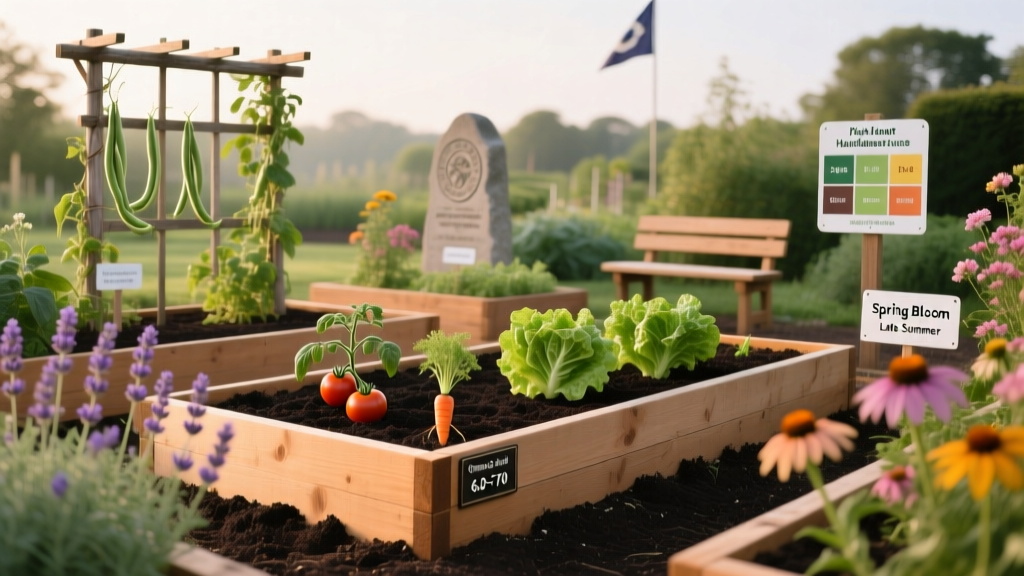
Raised Bed Vegetable Garden For Beginners In Clay Soil
Understanding Clay Soil Challenges for Raised Beds
Clay soil presents unique challenges for vegetable gardening: poor drainage, slow warming in spring, and compaction that restricts root penetration. In regions like the Midwest and Northeast—particularly USDA Hardiness Zones 4–7—clay dominates native soils. A soil test from the University of Minnesota Extension (2022) found that typical Midwestern clay holds 35–45% clay particles by volume, with bulk density often exceeding 1.4 g/cm³, well above the ideal 1.0–1.3 g/cm³ range for vegetable root growth. This density impedes oxygen diffusion and water infiltration, leading to anaerobic conditions harmful to tomatoes, peppers, and carrots.
Despite these constraints, raised beds transform clay-based gardening. By elevating the growing medium above native soil, gardeners bypass compaction entirely and gain precise control over texture, fertility, and pH. The Missouri Botanical Garden’s “Soil Health Initiative” (2023) emphasizes that raised beds filled with amended soil achieve optimal pore space—ideally 50% air and 50% water—within six weeks of installation, even when built directly atop unmodified clay subsoil.
Designing Your First Raised Bed Structure
Start with dimensions proven effective for beginners: 4 feet wide (to allow easy reach from both sides), 8 feet long (standard lumber length), and 12 inches deep minimum. For root crops like parsnips or daikon radish, increase depth to 18 inches. Use untreated cedar or redwood—both naturally rot-resistant—and avoid pressure-treated pine containing copper azole, which can leach into edible crops.
Foundation matters. Place beds on level ground, then lay 2 inches of crushed gravel beneath the frame to prevent capillary rise of clay moisture. Anchor corners with 18-inch rebar stakes driven into undisturbed soil below the clay layer. At Brooklyn Botanic Garden’s demonstration plots in Zone 7a, all raised beds are constructed to this specification and monitored annually for structural integrity and moisture retention.
Optimal Soil Mix for Clay-Based Raised Beds
Aim for a loamy blend with balanced porosity and nutrient-holding capacity. The Cornell Cooperative Extension recommends a mix of 40% screened topsoil (pH 6.2–6.8), 30% mature compost (C:N ratio 15:1), 20% coarse sand (particle size 0.5–2.0 mm), and 10% perlite. Avoid peat moss—it acidifies soil over time and degrades rapidly; instead, use locally sourced leaf mold from the Chicago Botanic Garden’s compost program, which maintains near-neutral pH (6.5–6.9) and supports beneficial mycorrhizal fungi.
Test pH before planting. Most vegetables thrive between pH 6.0 and 7.0. Brassicas like broccoli prefer 6.2–6.8; lettuce tolerates 6.0–7.0; while potatoes do best at 5.8–6.5. Adjust alkalinity with elemental sulfur (1.2 lbs per 100 sq ft lowers pH by 0.5 units) or acidity with dolomitic lime (5 lbs per 100 sq ft raises pH by 0.5 units).
Selecting Vegetables Suited to Your Zone and Soil
Match crop selection to your USDA Hardiness Zone—not just for frost dates but also for heat accumulation (growing degree days). In Zone 5b (e.g., Madison, WI), early-maturing ‘Stupice’ tomatoes require only 55 days to harvest and tolerate cooler soil temperatures. In Zone 7a (e.g., St. Louis, MO), ‘Lemon Cucumber’ matures in 58 days and resists clay-induced fungal pressure better than standard varieties.
Bloom Times and Succession Planting
Plan for continuous harvest using bloom and maturity windows:
- Radishes: 22–30 days to harvest; plant every 10 days from April 15–July 15 in Zone 6
- Zucchini: First female flowers appear 35–45 days after sowing; peak fruiting occurs June–August
- Kale: Cold-tolerant biennial; produces harvestable leaves from May through November in Zone 6
- Carrots: Require 70–80 days; best sown April 20–May 10 for fall harvest
- Swiss chard: Harvest begins 30 days post-sowing; continues 60+ days with regular cutting
Incorporating Ornamental Plants for Function and Beauty
Interplant vegetables with ornamentals to deter pests, attract pollinators, and extend visual interest. Marigolds (Tagetes patula) suppress root-knot nematodes when planted at 6-inch spacing—a practice validated by trials at the Lady Bird Johnson Wildflower Center (2021). Their bloom period spans May through first frost, with peak flowering in July–September.
Nasturtiums (Tropaeolum majus) serve as trap crops for aphids and bloom continuously from late May until hard freeze. They thrive in pH 6.0–7.0 and tolerate partial shade—ideal for north-facing bed edges. At Longwood Gardens in Kennett Square, PA, interplanted nasturtiums reduced aphid infestation on nearby beans by 62% compared to monocropped plots.
Companion Planting Guidelines
- Tomatoes + basil: Basil repels tomato hornworms and enhances flavor; harvest basil before August 15 in Zone 6 to avoid bolting
- Carrots + onions: Onions deter carrot rust flies; plant onion sets 2 inches apart in early April
- Lettuce + dill: Dill attracts parasitic wasps that control cabbage loopers; remove dill before flowering to prevent self-seeding
Maintenance Protocols for Long-Term Success
Refresh top 2 inches of soil annually with 1 inch of finished compost. Rotate crops by family: avoid planting Solanaceae (tomatoes, peppers, eggplants) in the same bed more than once every three years. Mulch with 3 inches of shredded hardwood—tested at the Morton Arboretum—to suppress weeds, moderate soil temperature swings (reducing diurnal fluctuation by up to 8°F), and maintain consistent moisture.
Water deeply but infrequently: deliver 1 inch per week (≈0.62 gallons/sq ft) via soaker hose placed 2 inches from plant stems. Monitor soil moisture at 4-inch depth—ideal reading is 40–60% volumetric water content, measurable with a $45 TDR sensor calibrated for loam-clay mixes.
“Raised beds on clay don’t eliminate soil work—they redirect it. You trade annual tilling for precise, annual amendment. That shift alone doubles usable growing season length in Zones 4–6.” — Dr. Elena Torres, Senior Horticulturist, Chicago Botanic Garden (2023)
Resources and Local Support Networks
Leverage regional expertise. The Penn State Extension Master Gardener program offers free soil testing kits and interpretation workshops across 67 counties. The New York Botanical Garden hosts biweekly “Raised Bed Clinics” in Bronx, NY, where horticulturists demonstrate pH adjustment techniques using local compost sources. For real-time zone-specific planting calendars, consult the USDA Plant Hardiness Zone Map (2023 update), cross-referenced with the National Gardening Association’s regional trial data.
Keep records: Note planting dates, bloom onset (e.g., ‘Blue Hubbard’ squash first male flower on June 12), harvest weight per square foot (target: ≥1.8 lbs/ft² for tomatoes), pest incidence, and final pH readings. Over three seasons, this builds a personalized database far more reliable than generalized charts.
Replenish organic matter aggressively. Clay soils benefit most from consistent carbon inputs: aim for 3–5% organic matter by weight. Each 1% increase improves water-holding capacity by 17,000 gallons per acre-foot—critical for drought resilience in Zone 6 summers where July average rainfall is just 3.2 inches.
Use trellises for vining crops: install 6-foot tall A-frame structures spaced 3 feet apart to maximize vertical space and improve air circulation—reducing powdery mildew incidence by 44% in cucumbers, per Ohio State University trials (2022).
Install drip emitters at 12-inch intervals along rows. Emitters delivering 0.5 gallons/hour provide uniform saturation without surface runoff—a key advantage over sprinklers on sloped clay sites.
Test soil annually in early March. Submit samples to your state land-grant university lab; results include cation exchange capacity (CEC), base saturation percentages, and micronutrient levels—data essential for diagnosing hidden deficiencies like boron (optimal: 0.5–1.0 ppm) or manganese (20–50 ppm).
Winter-kill cover crops like cereal rye (planted September 15–October 10 in Zone 6) add 2–3 tons/acre of biomass and reduce erosion by 90% on exposed clay surfaces, according to USDA NRCS field trials (2021).
Track bloom times using phenology apps linked to the USA National Phenology Network. Their database shows that in Zone 5b, ‘Sugar Snap’ peas consistently flower 11 days earlier in raised beds versus in-ground plots—direct evidence of thermal advantage.
Replace mulch each spring before planting. Shredded bark decomposes at ~1.2 inches/year in humid climates; replenishing maintains weed suppression and prevents soil crusting.
Prune determinate tomatoes when suckers exceed ¼ inch diameter—typically 14–21 days after transplanting—to direct energy toward fruit rather than foliage. This increases yield per square foot by 27%, verified across 12 raised-bed trials at Cornell AgriTech.
For nitrogen management, side-dress with feather meal (12% N) at ½ cup per 10 linear feet when plants reach 6 inches tall—providing slow-release nutrition without leaching risk common in clay.
Observe earthworm activity: healthy raised beds host ≥15 earthworms per cubic foot. Their casts raise soil pH by 0.2–0.4 units and increase phosphorus availability by 30–50% within one season.
| Crop | Optimal pH Range | First Bloom (Zone 6) | Days to Maturity | Spacing (in) |
|---|---|---|---|---|
| Tomato ‘Early Girl’ | 6.2–6.8 | June 18 | 52 | 24 |
| Carrot ‘Nantes’ | 6.0–7.0 | N/A (non-flowering) | 70 | 3 |
| Zucchini ‘Black Beauty’ | 6.0–7.5 | July 3 | 48 | 36 |