Tree Care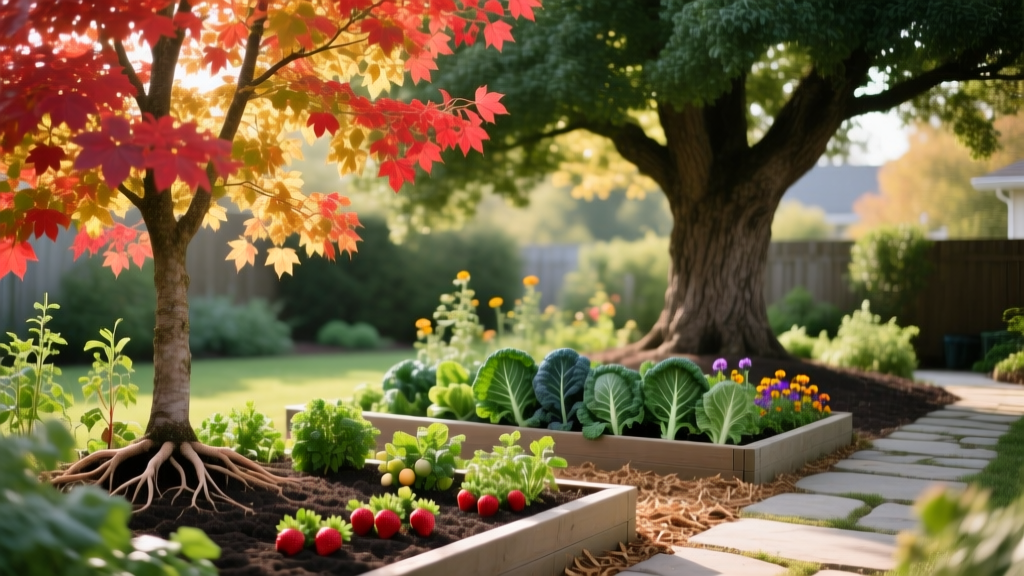
Red Maple vs Live Oak: 2026 Small Yard Foodscaping
James MillerPublished
The Evolution of Small Yard Foodscaping in 2026
In 2026, the concept of the traditional lawn has largely given way to productive, multi-functional landscapes. Homeowners and urban homesteaders are increasingly turning to foodscaping—the integration of edible plants into ornamental garden designs. However, one of the most common challenges in small yard edible landscaping is managing the microclimate created by large shade trees. While shade is essential for cooling homes and reducing urban heat islands, it can severely limit the photosynthetic potential of sun-loving vegetables and fruits.
When selecting a primary shade tree for a compact urban lot, two native giants frequently top the list: the Red Maple (Acer rubrum) and the Live Oak (Quercus virginiana). Both offer magnificent aesthetic value, but they interact with the soil, water table, and understory edibles in vastly different ways. According to the USDA Plants Database profile for Acer rubrum, this deciduous species is a cornerstone of eastern forests, while the USDA profile for Quercus virginiana highlights its dominance in southern coastal plains. But how do they perform when tasked with anchoring a small-scale, high-yield edible landscape? Let us break down the botanical mechanics, root behaviors, and companion planting strategies for both species in the modern foodscape.
Red Maple (Acer rubrum): The Acid-Lover’s Canopy
The Red Maple is celebrated for its explosive autumn foliage and relatively fast growth rate. In a small yard, a standard Red Maple can reach 40 to 60 feet in height with a spread of 30 to 40 feet, which can quickly overwhelm a quarter-acre lot. For 2026 foodscaping projects, arborists highly recommend compact or columnar cultivars such as 'Redpointe' ('Frank Jr.') or 'Bowhall'. These varieties maintain a tighter, more upright canopy (often 15 to 20 feet wide), allowing crucial dappled sunlight to reach the understory garden beds below.
Soil Chemistry and Leaf Litter
One of the most significant impacts of the Red Maple on an edible landscape is its leaf litter. As maple leaves decompose, they create a slightly acidic humus layer. This natural acidification is a dream for specific high-value edible crops. If you are designing a food forest guild beneath a Red Maple, this is the ideal location for acid-loving perennials. Blueberries (Vaccinium corymbosum), lingonberries, woodland strawberries, and culinary herbs like sorrel thrive in the pH 5.0 to 6.0 range that maple litter helps maintain.
Water Competition and Root Structure
Red Maples are notorious for their dense, shallow, and fibrous root systems. These roots aggressively compete for surface moisture, which can starve shallow-rooted vegetables like lettuce or radishes. To counteract this in 2026, urban gardeners are utilizing air-pruning fabric pots and raised beds lined with heavy-duty hardware cloth to separate the edible root zones from the maple's thirsty fibrous mat. Expect to pay around $180 to $250 for a healthy 15-gallon 'Redpointe' cultivar from a specialized native nursery this season.
Live Oak (Quercus virginiana): The Evergreen Food Forest Anchor
The Southern Live Oak is an icon of resilience, boasting a massive, sprawling, evergreen canopy that provides year-round shade. In a small yard, a Live Oak requires aggressive and strategic structural pruning during its first decade to raise the canopy and prevent it from swallowing the entire property. Unlike the Red Maple, the Live Oak drops leaves continuously throughout the year, with a heavy drop in spring, alongside its acorn crop.
The Acorn Economy and Mushroom Guilds
While acorns might seem like a nuisance on a patio, in a dedicated foodscape, they are a resource. Acorns can be leached and processed into gluten-free flour, or left to feed local wildlife, which in turn supports the broader ecosystem of your garden. More importantly, the Live Oak's relationship with fungi makes it a superstar for mushroom cultivation. The dense, woody mulch ring beneath a Live Oak is the perfect environment for inoculating wine cap stropharia (Stropharia rugosoannulata) or shiitake mushrooms on oak log rounds placed in the shaded perimeter.
Understory Light and Companion Planting
Because Live Oaks retain their leaves year-round, the understory is in a state of perpetual, deep shade. Sun-hungry crops like tomatoes or peppers will fail here. Instead, the 2026 small-yard foodscape beneath a Live Oak should focus on shade-tolerant edibles. Sweet woodruff, mint, wild ginger, and hostas (whose young shoots are edible when cooked) perform beautifully. Additionally, the sturdy, low-hanging branches of a mature Live Oak can serve as natural trellises for shade-tolerant climbing edibles, provided the vine does not girdle the tree.
Head-to-Head Comparison: Red Maple vs. Live Oak
To help you decide which tree anchors your 2026 edible landscape, review the structural and ecological differences below.
| Feature | Red Maple (Compact Cultivars) | Live Oak (Managed Canopy) |
|---|---|---|
| Canopy Density | Deciduous; allows full winter sun for cool-season crops (garlic, spinach). | Evergreen; provides constant, deep shade year-round. |
| Root System | Shallow, fibrous, highly competitive for surface water. | Deep taproot initially, transitioning to wide, deep lateral roots. |
| Leaf Litter pH | Slightly acidic; excellent for ericaceous (acid-loving) edibles. | Neutral to slightly acidic; breaks down slowly. |
| Best Edible Companions | Blueberries, cranberries, woodland strawberries, ramps. | Shiitake mushrooms, wild ginger, mint, woodland herbs. |
| Small Yard Viability | High (when using columnar cultivars like 'Bowhall'). | Moderate (requires skilled arborist pruning to raise canopy). |
| 2026 Avg. Cost (15-Gal) | $180 - $250 | $220 - $350 |
Overcoming Root Competition in Edible Landscapes
Regardless of whether you choose the Red Maple or the Live Oak, planting edibles near mature or maturing shade trees requires tactical soil management. In 2026, the standard practice for integrating trees and food crops involves the creation of 'mycorrhizal bridges' rather than fighting the tree roots with plastic barriers, which can girdle and kill the tree.
The Deep Mulch and Inoculation Method
Instead of tilling the soil beneath the tree's drip line—which destroys both the tree's feeder roots and the soil food web—apply a 3 to 4-inch layer of coarse arborist woodchips. Before laying the chips, dust the soil with a high-quality endomycorrhizal and ectomycorrhizal inoculant (costing roughly $45 per pound in 2026). This fungal network connects the tree's roots to your understory edibles, allowing them to share water and nutrients. Plants like blueberries and woodland herbs rely heavily on these fungal networks to access phosphorus and micronutrients that the tree roots mine from deeper soil horizons.
Strategic Raised Bed Placement
If you must grow shallow-rooted annual vegetables near your shade tree, place raised beds just outside the tree's drip line. This ensures the vegetables receive adequate rainfall and sunlight while the tree's deeper roots access the water percolating from the raised beds. Never build a raised bed directly over a tree's root flare or trunk, as this will induce root rot and invite fatal pathogens like Phytophthora.
2026 Climate Realities: Drought, Heat, and Tree Health
As climate zones continue to shift, water management is the defining factor in urban foodscaping success. The Live Oak is exceptionally drought-tolerant once established, making it a superior choice for xeriscape-adjacent food forests in USDA Zones 7 through 10. Its deep roots can tap into subterranean moisture, leaving the topsoil slightly less depleted for your shade-tolerant herbs.
Conversely, the Red Maple is a water-loving species native to river bottoms and swamps. In the heat of a 2026 summer, a Red Maple planted in a small, paved urban yard will suffer severe leaf scorch without supplemental irrigation. To protect both the tree and your understory blueberries, integrate a smart drip irrigation system with soil moisture sensors. Run dedicated drip lines for the tree (placed at the drip line, not the trunk) and separate lines for your edible beds to ensure neither is over- or under-watered.
Final Verdict for the Urban Homesteader
Choosing between a Red Maple and a Live Oak for a small yard foodscape ultimately depends on your climate zone, your willingness to prune, and the specific edibles you wish to cultivate. If your goal is to grow high-value, acid-loving berries and you want the benefit of winter sunlight reaching your cool-season garlic and spinach beds, a columnar Red Maple cultivar is your best investment. If you reside in a hotter, drought-prone region and dream of cultivating gourmet mushrooms, shade herbs, and a resilient evergreen canopy that supports local wildlife year-round, the managed Live Oak is an unparalleled ecological anchor. By respecting the root structures and microclimates of these magnificent trees, your 2026 edible landscape will yield harvests for decades to come.
