Tree Care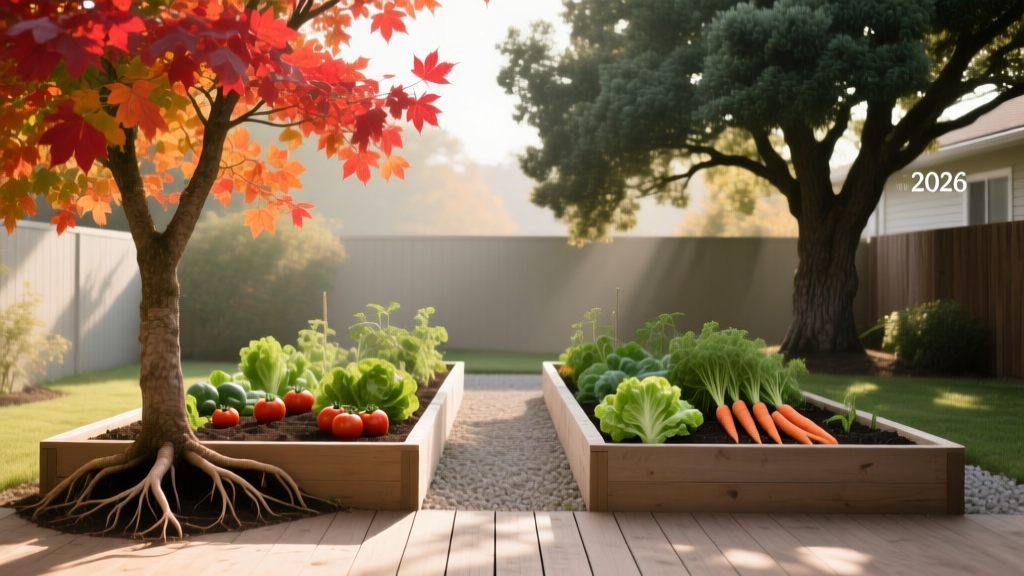
Red Maple vs Live Oak 2026: Shade Trees for Raised Beds
Lisa ThompsonPublished
The Small Yard Dilemma: Trees vs. Raised Beds in 2026
As urban homesteading and small-yard gardening continue to surge in 2026, homeowners are increasingly tasked with balancing the desire for a lush, shaded oasis with the need for a productive, sun-drenched raised bed vegetable garden. When space is limited, selecting the right shade tree is no longer just about aesthetics or property value; it is a critical decision that directly impacts your soil health, water management, and crop yields. Two of the most popular shade trees in North America—the Red Maple (Acer rubrum) and the Live Oak (Quercus virginiana)—frequently top the lists of landscaping professionals. But how do they fare when planted in close proximity to your prized raised beds?
To understand why tree selection matters for raised bed vegetable gardening, we must look beneath the soil. A standard 4x8-foot raised bed filled with premium organic mix and compost requires consistent moisture and nutrients. Trees, by nature, are aggressive competitors. Their root systems actively seek out the nutrient-rich, well-aerated soil found in and around raised beds. Furthermore, the canopy of a mature shade tree can block the 8 to 10 hours of direct sunlight required by heavy-feeding summer crops like tomatoes, peppers, and squash. In 2026, with organic fertilizers and quality topsoil costing more than ever, protecting your raised bed investment from tree root infiltration and excessive shade is paramount.
Red Maple Profile for the Vegetable Gardener
The Red Maple is celebrated for its breathtaking fall foliage and relatively fast growth rate. According to the NC State Extension, this deciduous tree can reach heights of 40 to 60 feet with a spread of up to 40 feet. For the raised bed gardener, the Red Maple presents a mixed bag of benefits and challenges.
On the positive side, its deciduous nature means that during the early spring, when you are starting cool-weather crops like peas, spinach, and radishes, the bare branches allow valuable sunlight to penetrate the garden. By the time the heat of summer arrives and your warm-weather crops need a slight reprieve from the scorching afternoon sun, the dense canopy provides dappled shade that can prevent bolting and sunscald. Furthermore, the autumn leaf drop provides an abundant, free source of carbon-rich "brown" material for your compost bins, which you can later use to amend your raised beds.
However, the Red Maple is notorious for its shallow, fibrous root system. These surface roots are highly opportunistic. If your raised beds lack a proper bottom barrier, Red Maple roots will quickly infiltrate the loose, nutrient-dense soil, stealing water and making it difficult to turn your soil between planting seasons.
Live Oak Profile for the Vegetable Gardener
In contrast, the Southern Live Oak is an iconic, sprawling evergreen that exudes permanence and majesty. The University of Florida IFAS Extension notes that Live Oaks can grow to 40 to 80 feet tall but boast a massive canopy spread of 60 to 100 feet. For small yards, the Live Oak’s sheer horizontal footprint is often its biggest drawback.
The sprawling branches require significant clearance, and the dense, year-round shade can severely limit the types of vegetables you can grow. Unlike the Red Maple, the Live Oak does not drop its leaves in the spring, meaning your raised beds will be subjected to heavy shade year-round. This makes it incredibly difficult to grow sun-loving summer vegetables anywhere near the tree's dripline. Additionally, Live Oaks produce heavy acorn drops and leaf litter throughout the year. While acorns can be managed, the constant debris can smother low-growing raised bed crops and alter the soil pH as the leaves decompose. The root system of a Live Oak is deep but features extensive lateral roots that can heave nearby hardscaping and invade the perimeters of wooden or composite raised beds.
Head-to-Head Comparison Chart
When planning your 2026 garden layout, use this comparison chart to evaluate how each tree interacts with a raised bed environment:
| Feature | Red Maple (Acer rubrum) | Live Oak (Quercus virginiana) |
|---|---|---|
| Mature Canopy Spread | 30 to 40 feet | 60 to 100 feet |
| Root Aggressiveness | High (Shallow, fibrous surface roots) | Moderate-High (Deep but wide lateral roots) |
| Shade Density | Moderate (Dappled in summer, bare in spring) | Heavy (Dense, year-round evergreen shade) |
| Leaf Litter / Debris | Heavy autumn drop (Excellent for compost) | Continuous drop + Acorns (Can smother crops) |
| Impact on Raised Beds | Roots invade quickly; great seasonal light balance | Year-round shade limits crop options; roots heave beds |
Strategic Placement and Root Management in 2026
If you are committed to integrating one of these trees into a small yard with raised beds, proper placement and physical barriers are non-negotiable. The University of Minnesota Extension emphasizes that understanding a tree's mature dripline is crucial for protecting nearby structures and garden beds. For small yards, you should aim to plant your tree at least 15 to 20 feet away from the edge of your raised beds. This distance helps ensure that the bulk of the feeder roots remain outside your primary growing zones.
When constructing new raised beds in 2026, always line the bottom with 1/2-inch galvanized hardware cloth. This not only keeps out burrowing pests like voles and gophers but also serves as a formidable deterrent against the shallow, probing roots of a Red Maple. For existing beds, consider trenching a narrow line between the tree and the garden and installing a high-density polyethylene (HDPE) root barrier that extends at least 24 inches deep. This forces the tree's roots to grow downward rather than laterally into your carefully curated vegetable soil.
Crop Selection Based on Canopy Shade
If your yard is so small that your raised beds inevitably fall within the tree's dripline, you must adapt your planting strategy to the light conditions. If you choose the Live Oak, the heavy year-round shade means you will need to abandon traditional summer staples like beefsteak tomatoes, bell peppers, and cucumbers. Instead, pivot to shade-tolerant crops that thrive with only 3 to 4 hours of direct sunlight. Leafy greens such as Swiss chard, kale, arugula, and mustard greens will flourish in the cool, shaded microclimate created by the Live Oak. Root vegetables like carrots and beets can also perform adequately, though they may take slightly longer to mature.
If you opt for the Red Maple, you can enjoy the best of both worlds. Plant your sun-loving tomatoes and peppers in the beds that receive full sun during the spring and early summer. As the Red Maple's canopy fills out in late July and August, the resulting dappled afternoon shade will actually extend the harvest window of your cool-season crops like lettuce and cilantro, preventing them from bolting in the peak summer heat.
Final Verdict for Small Yard Homesteads
When forced to choose between a Red Maple and a Live Oak for a small yard featuring raised bed vegetable gardens, the Red Maple is the superior choice for most homesteaders in 2026. Its more compact canopy spread, manageable seasonal shade, and the incredible benefit of autumn leaves for composting make it a highly functional partner for the vegetable gardener. While its shallow roots require proactive management via hardware cloth and root barriers, the seasonal light dynamics it offers far outweigh the heavy, year-round shade and massive footprint of the Live Oak. By planning your layout carefully and utilizing modern root-deterrent construction methods, you can successfully cultivate both a majestic shade tree and a bountiful vegetable harvest in the same small backyard.