Tree Care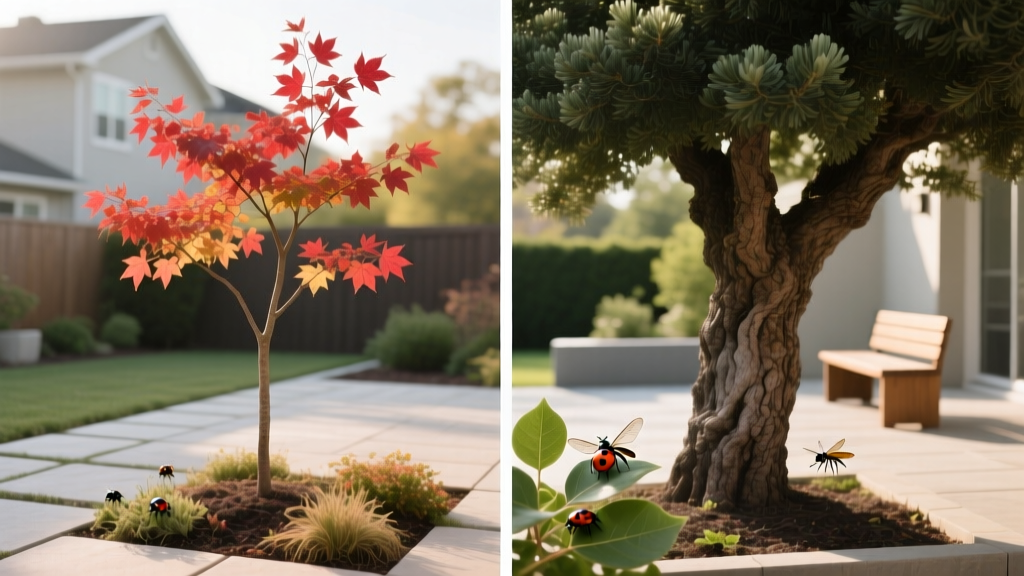
Red Maple vs Live Oak 2026: Small Yard Bio-Control Guide
Anna KowalskiPublished
The 2026 Ecological Landscaping Shift
As we navigate the landscaping trends of 2026, homeowners are increasingly moving away from sterile, purely ornamental yards toward functional, ecologically vibrant spaces. In small urban and suburban lots, every square foot matters. When selecting a primary shade tree, the choice often narrows down to two beloved North American natives: the Red Maple (Acer rubrum) and the Live Oak (Quercus virginiana). However, modern arboriculture and integrated pest management (IPM) demand that we look beyond mere aesthetics and canopy spread. We must evaluate these trees through the lens of beneficial insects and natural bio-control. Which tree acts as a better insectary? Which provides superior overwintering habitat for predatory beetles and parasitoid wasps? This guide breaks down the Red Maple vs. Live Oak debate specifically for small yards, focusing on their ecological utility in fostering a self-regulating, pest-resistant garden ecosystem.
Trees as Insectaries: The Foundation of Urban Bio-Control
An insectary is a habitat that attracts, sustains, and breeds beneficial insects. In a small yard, a single large shade tree can serve as the primary insectary, anchoring the local food web. Native trees have co-evolved with local insect populations, meaning they support the specific herbivorous caterpillars and sap-suckers that, in turn, serve as food for predatory and parasitoid insects. According to the ecological frameworks championed by Homegrown National Park, planting native keystone trees is the single most effective way to restore urban biodiversity. By supporting a robust population of native herbivores, your shade tree naturally attracts green lacewings, lady beetles, hoverflies, and parasitic wasps. These beneficial agents provide free, year-round bio-control, keeping potential pest outbreaks in check without the need for disruptive chemical interventions.
Red Maple (Acer rubrum): The Deciduous Spring Catalyst
For small yards, standard Red Maples can be too broad, but upright cultivars like 'Red Sunset' or 'October Glory' are perfectly suited for narrow spaces, offering brilliant autumn color and a manageable footprint. From a bio-control perspective, the Red Maple is a powerhouse of early-season ecological activity.
Beneficial Insect Support
Red Maples produce early spring flowers that provide crucial nectar and pollen for emerging beneficial insects, including early-season hoverflies and native solitary bees. As the foliage develops, the tree naturally hosts populations of maple aphids. While the word 'aphid' sounds alarming to the uninitiated, these small sap-suckers are rarely a threat to a healthy, established maple. Instead, they act as a vital food source. The presence of aphids signals Chrysoperla (green lacewings) and Coccinellidae (lady beetles) to lay their eggs nearby. A single lacewing larva can consume hundreds of aphids, establishing a strong predator population that will subsequently patrol your adjacent garden beds for other soft-bodied pests.
Petiole Borers and Parasitoids
The maple petiole borer is a native sawfly that causes leaves to drop in late spring. While this may look like a disease to an untrained eye, it is a natural occurrence that supports a complex web of parasitoid wasps. Furthermore, the Morton Arboretum notes that Red Maples are highly adaptable to varying soil conditions, meaning they establish quickly and begin supporting local food webs faster than slower-growing species.
Live Oak (Quercus virginiana): The Evergreen Overwintering Sanctuary
Live Oaks are legendary for their sprawling, majestic canopies, which poses a challenge for small yards. A standard Live Oak can easily exceed 60 feet in width. However, in 2026, arborists frequently recommend narrower, upright cultivars like 'SDLN' (Cathedral Live Oak) or 'QFTA' (Taylor Live Oak) for confined spaces. These cultivars retain the ecological benefits of the species while respecting property lines and small patios.
The Ultimate Keystone Species
Oaks are undisputed champions of biodiversity. As detailed by the University of Florida IFAS Extension, Live Oaks support hundreds of species of caterpillars, far exceeding the capacity of most other shade trees. This massive biomass of caterpillars is the primary food source for insectivorous birds and a wide array of predatory insects.
Gall Wasps and Year-Round Habitat
Live Oaks are famous for their intricate insect galls—small, abnormal growths on leaves and twigs caused by tiny cynipid wasps. While galls might seem like a pest issue, they are actually a fascinating hub for bio-control. Many galls are subsequently parasitized by secondary wasps (such as Eulophidae and Torymidae), which are highly effective parasitoids that help regulate other insect populations in your yard. Because Live Oaks are evergreen, they provide critical, year-round overwintering habitat. The dense, persistent foliage offers shelter for predatory spiders, ground beetles, and overwintering ladybugs, ensuring that your yard's bio-control agents are already in place when spring pests emerge.
2026 Head-to-Head Comparison Chart
| Feature | Red Maple (Upright Cultivars) | Live Oak (Upright Cultivars) |
|---|---|---|
| Small Yard Suitability | Excellent (Narrow, upright growth) | Good (Requires specific upright cultivars) |
| Caterpillar Species Supported | Moderate (approx. 300 species) | Exceptional (500+ species) |
| Primary Bio-Control Agents | Lacewings, Lady Beetles, Hoverflies | Parasitoid Wasps, Predatory Beetles, Spiders |
| Overwintering Habitat | Low (Deciduous, relies on bark crevices) | High (Evergreen foliage provides dense cover) |
| Spring Nectar/Pollen | High (Early blooming flowers) | Low (Wind-pollinated catkins) |
| Root System Impact | Moderate surface rooting | Aggressive surface rooting (needs careful placement) |
Implementing Bio-Control in Small Spaces: 2026 Best Practices
Selecting the right tree is only the first step. To maximize the bio-control potential of your Red Maple or Live Oak in a small yard, you must adopt modern, ecologically sound maintenance practices.
Avoid Broad-Spectrum and Systemic Insecticides
In 2026, the use of systemic neonicotinoids (like imidacloprid) on landscape trees is heavily discouraged and restricted in many municipalities. These chemicals persist in the tree's tissues, killing the very caterpillars and aphids that your beneficial insects rely on for food. If your Live Oak develops a heavy scale infestation, opt for targeted, dormant-season horticultural oils rather than systemic poisons. This preserves the internal food web and allows parasitoid wasps to continue their natural regulation.
Foster Soil Biology for Tree Immunity
A tree's ability to withstand pest pressure is directly tied to its soil health. Small yards often suffer from compacted, nutrient-poor soil. Apply a 2-to-3-inch layer of organic wood chip mulch around the root zone (keeping it away from the trunk flare) to encourage mycorrhizal fungi. These fungi enhance the tree's natural immune responses, making it less susceptible to devastating borers and reducing the need for external interventions.
Complementary Plantings
Maximize your tree's insectary value by underplanting with native herbaceous perennials. For a Red Maple, plant shade-tolerant natives like Wild Geranium or Foamflower to provide continuous nectar for the adult stages of the predatory insects living in the canopy. For a Live Oak, use drought-tolerant groundcovers that thrive in the dense shade and compete with weeds without requiring chemical herbicides.
Final Verdict for Small Yards
Choosing between a Red Maple and a Live Oak for a small yard ultimately depends on your specific microclimate, soil conditions, and bio-control goals. If your priority is early-season nectar, rapid establishment, and attracting soft-bodied predators like lacewings and hoverflies, an upright Red Maple cultivar is an outstanding, low-maintenance choice. Its deciduous nature also allows winter sunlight to warm your small yard during colder months.
However, if your primary goal is to maximize overall biodiversity, support the highest number of caterpillar species, and provide crucial year-round overwintering habitat for parasitoid wasps and predatory beetles, an upright Live Oak cultivar is the superior keystone species. Just be prepared to manage its aggressive root system and ensure you select a cultivar specifically bred for narrow, confined spaces. Whichever you choose, embracing the tree's role as an insectary will transform your small yard into a thriving, self-regulating ecosystem in 2026 and beyond.