Tree Care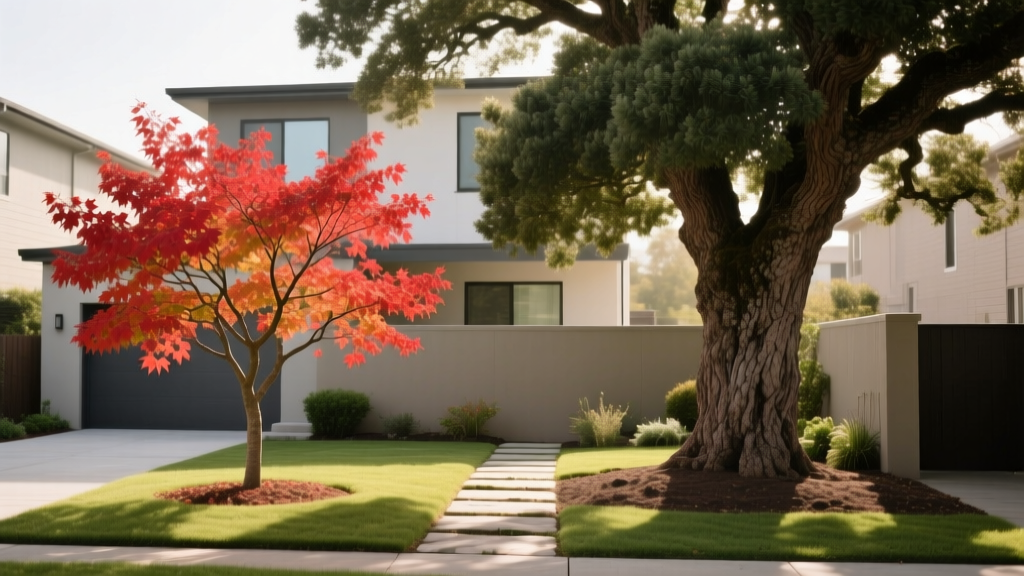
Red Maple vs Live Oak: Best Shade Trees for Small Yards in 2026
David ParkPublished
Introduction to Small Yard Shade Trees in 2026
As urban lots become more compact and the 2026 USDA Plant Hardiness Zone Map continues to shift growing regions, selecting the right shade tree for a small yard has never been more critical. Homeowners are increasingly looking for trees that provide maximum canopy coverage without destroying foundations, uplifting driveways, or tangling with overhead utility lines. Two of the most frequently debated species in North American landscaping are the Red Maple (Acer rubrum) and the Southern Live Oak (Quercus virginiana). While both are spectacular shade providers, their growth habits, root structures, and climate preferences make them vastly different choices for confined spaces.
In this comprehensive 2026 selection and planting guide, we will break down the architectural differences, soil requirements, and long-term maintenance needs of both species. By the end of this article, you will know exactly which tree is the right fit for your specific property dimensions and local microclimate, ensuring a thriving landscape for decades to come.
Red Maple (Acer rubrum): The Vibrant, Upright Choice
The Red Maple is a deciduous powerhouse celebrated for its brilliant fall foliage and relatively upright, oval growth habit. For small yards, cultivars like 'Red Sunset' and 'October Glory' remain the top nursery picks in 2026 due to their predictable branching structures and stunning seasonal color transitions. According to the Penn State Extension, Red Maples are highly adaptable to a variety of soil types, though they prefer slightly acidic, moist environments.
Pros for Small Yards
- Vertical Growth Habit: Red Maples typically grow taller than they are wide. A mature canopy spread of 30 to 40 feet is much easier to accommodate in a narrow suburban lot compared to sprawling species.
- Fast Establishment: With a medium-to-fast growth rate of 1 to 2 feet per year, you will not have to wait decades to see meaningful shade over your patio or driveway.
- Aesthetic Appeal: The vibrant crimson and orange fall colors provide a massive visual upgrade to compact landscapes.
Cons for Small Yards
- Surface Roots: As they mature, Red Maples are notorious for developing shallow surface roots, which can make mowing difficult and occasionally lift lightweight pavers.
- Moisture Demands: They are not particularly drought-tolerant and will require supplemental irrigation during the increasingly erratic summer dry spells we are seeing in 2026.
Live Oak (Quercus virginiana): The Southern Classic
The Southern Live Oak is an iconic, broadleaf evergreen tree synonymous with historic southern landscapes. Draped in Spanish moss, its massive, sweeping branches create an unparalleled, cathedral-like canopy. The Clemson University Home & Garden Information Center highlights the Live Oak's incredible resilience, noting its high tolerance for salt spray, wind, and compacted urban soils.
Pros for Small Yards
- Unmatched Durability: Live Oaks are incredibly tough, wind-resistant, and drought-tolerant once established, making them a low-maintenance option in southern climates.
- Year-Round Shade: As a broadleaf evergreen, it retains its leaves through the winter, providing continuous shade and privacy screening.
- Wildlife Value: The acorns and dense branching provide excellent habitat for local birds and pollinators.
Cons for Small Yards
- Massive Lateral Spread: This is the biggest hurdle. A mature Live Oak can easily span 60 to 100 feet wide. In a true 'small yard' (under a quarter-acre), a Live Oak will quickly overwhelm the space, encroach on neighboring properties, and shade out your lawn and garden beds entirely.
- Slow Initial Growth: While they eventually become giants, young Live Oaks grow relatively slowly, meaning your shade timeline will be significantly delayed compared to a maple.
- Heavy Limb Drop: The sprawling horizontal limbs require regular, professional pruning to prevent them from dropping onto roofs or fences.
Head-to-Head Comparison Chart
To help you visualize how these two trees stack up against each other for confined spaces, review the data table below based on 2026 nursery and arborist standards.
| Feature | Red Maple (Acer rubrum) | Live Oak (Quercus virginiana) |
|---|---|---|
| Mature Height | 40 - 60 feet | 40 - 80 feet |
| Mature Spread | 30 - 40 feet | 60 - 100 feet |
| Growth Rate | Medium to Fast (1-2 ft/yr) | Slow to Medium (1-1.5 ft/yr) |
| Hardiness Zones | 3 - 9 | 7 - 10 |
| Root System | Shallow, surface-level | Deep taproot initially, widespread lateral |
| Drought Tolerance | Low to Moderate | High (once established) |
| Best For | Northern/Central small yards | Southern large estates/parks |
Site Assessment: Which Tree Fits Your Space?
When dealing with a small yard, the ultimate deciding factor between these two species is horizontal space. If your property is less than 5,000 square feet, the Live Oak is almost always the wrong choice. Its sprawling architecture requires a minimum clearance of 30 feet from any structure just to allow for basic limb development. Planting a Live Oak in a tight courtyard or narrow side yard will result in a stressed, misshapen tree that requires aggressive, unhealthy pruning to keep it off your roof.
The Red Maple, with its more upright and pyramidal silhouette, is vastly superior for small suburban lots. You can comfortably plant a Red Maple 15 to 20 feet from your home, allowing it to shade your house in the summer without the branches physically scraping your siding. However, if you live in the Deep South (Zones 8-10) and have a slightly larger corner lot where the tree can be planted near the property line, a Live Oak can serve as a magnificent anchor tree, provided you install root barriers to protect your driveway.
2026 Planting Guide and First-Year Care
Regardless of which species you choose, proper planting technique is non-negotiable. The Arbor Day Foundation emphasizes that the majority of tree failures in the first three years are due to improper planting depth and poor watering habits. Here is your step-by-step guide for planting success in 2026.
1. Digging the Hole
Dig a hole that is two to three times wider than the root ball, but no deeper. The most critical mistake homeowners make is planting the tree too deep. The root flare (where the trunk widens at the base) must be slightly above the surrounding soil grade. In heavy clay soils, which are common in many new residential developments, consider roughening the sides of the hole to prevent glazing, which can trap water and drown the roots.
2. Backfilling and Soil Amendments
Avoid the outdated practice of amending the backfill soil with heavy compost or peat moss. This creates a 'bathtub effect' where water pools in the loose amended soil rather than draining into the native earth. Instead, backfill with the exact native soil you dug out, breaking up any large clods. If your soil is exceptionally poor, apply a slow-release, organic mycorrhizal inoculant directly to the root ball to encourage rapid fungal network establishment.
3. Mulching Done Right
Apply a 2 to 4-inch layer of organic hardwood mulch in a wide ring around the tree. Never let the mulch touch the trunk. 'Volcano mulching' traps moisture against the bark, leading to rot, fungal infections, and rodent damage. Keep the mulch pulled back at least 3 inches from the base of the trunk.
4. Smart Irrigation for the First Year
Newly planted trees require consistent, deep watering to establish their root systems. In 2026, relying on a standard sprinkler system is insufficient for deep root hydration. Invest in a slow-release drip irrigation ring or a tree watering bag (like the Treegator) that delivers 15 to 20 gallons of water slowly over several hours. Connect this to a smart irrigation controller, such as the latest Rachio or Orbit B-hyve models, which adjust watering schedules based on real-time local weather data and evapotranspiration rates, ensuring you never overwater or underwater your new investment.
Conclusion
Choosing between a Red Maple and a Live Oak for a small yard ultimately comes down to understanding the physical limitations of your landscape and your regional climate. For the vast majority of compact, modern suburban yards, the Red Maple's upright growth habit, manageable root spread, and spectacular fall color make it the undisputed champion. The Live Oak, while undeniably majestic and resilient, is a tree that demands vast horizontal space to truly thrive and should be reserved for larger properties or expansive estate lines. By selecting the right tree for your specific footprint and following modern, science-backed planting protocols, you will secure a beautiful, cooling canopy that adds immense value and ecological benefit to your home for generations.