Tree Care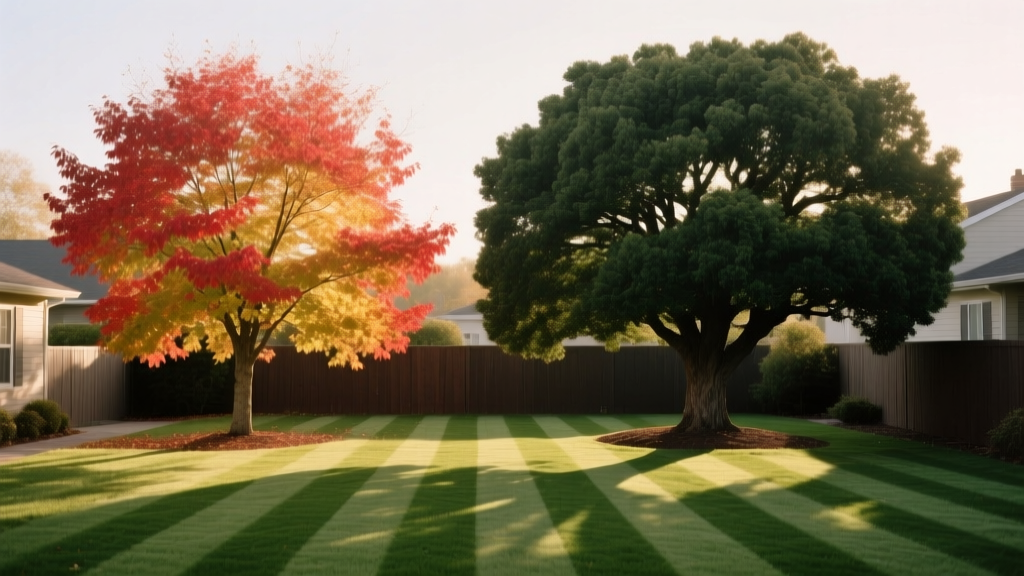
Red Maple vs Live Oak 2026: Best Shade Trees for Striped Lawns
Mike RodriguezPublished
The Intersection of Arboriculture and Lawn Aesthetics
For the dedicated lawn care enthusiast, achieving pristine, stadium-quality striping is the ultimate badge of honor. However, when working with a small yard, introducing a shade tree is a double-edged sword. You need the aesthetic verticality and cooling benefits of a tree, but you also risk destroying the very turf density required for crisp lawn patterns. As we navigate the 2026 landscaping season, the debate between planting a Red Maple (Acer rubrum) and a Southern Live Oak (Quercus virginiana) remains a focal point for homeowners trying to balance arboreal beauty with turfgrass perfection.
Selecting the right shade tree is not just about leaf color or drought tolerance; it is about understanding how canopy architecture, root systems, and light penetration interact with modern turfgrasses and advanced mowing equipment. If your primary goal is maintaining high-contrast aesthetic patterns in a confined space, the biological differences between these two iconic species will dictate your success.
The Physics of Lawn Striping Under Shade
To understand why tree selection matters, we must first look at the physics of lawn striping. Striping is an optical illusion created by bending grass blades in opposite directions. When grass is bent away from you, the light reflects off the waxy, glossy top of the blade, appearing light. When bent toward you, you see the matte underside, appearing dark. This contrast requires a dense, healthy, and highly reflective turf canopy.
Heavy, unfiltered shade fundamentally alters turfgrass morphology. Grass grown in deep shade develops longer, weaker internodes, thinner leaf blades, and a reduced chlorophyll density that makes it appear pale and washed out. Thin grass cannot hold a bend, meaning your striping kit will simply drag over it without creating the necessary light refraction. Therefore, the ideal shade tree for a striped lawn must provide dappled light rather than impenetrable darkness.
Red Maple (Acer rubrum): The Striper’s Ally
The Red Maple has surged in popularity for small-to-medium yards, and for good reason. Its natural growth habit is upright and oval, which translates to a smaller footprint at the base while still providing a stunning autumn display. According to the Clemson Home & Garden Information Center, Red Maples are highly adaptable to various soil types, making them a versatile choice for residential landscapes.
From a lawn striping perspective, the Red Maple is vastly superior. Its canopy structure allows for significant light penetration, especially during the early morning and late afternoon when the sun angle is low. This dappled sunlight is exactly what shade-tolerant turfgrasses need to maintain the cellular density required for tight striping. Furthermore, while Red Maples can develop surface roots in poorly drained soils, they are generally less aggressive than oaks, allowing for a cleaner interface with the lawn and fewer obstacles for low-clearance robotic mowers or zero-turn decks.
Southern Live Oak (Quercus virginiana): The Aesthetic Heavyweight
The Southern Live Oak is a botanical masterpiece, renowned for its sweeping, horizontal branches and Spanish moss-draped majesty. However, in the context of a small yard dedicated to lawn aesthetics, it is a logistical nightmare. As detailed by the University of Florida IFAS Extension, Live Oaks possess a massive, spreading canopy that can easily exceed 100 feet in width, casting deep, dense shade over a significant portion of a small property.
This dense shade severely limits the types of turfgrass that can survive beneath it, often resulting in thin, mossy patches that refuse to stripe. More problematic is the Live Oak's root system. It is notorious for producing massive surface roots that heave the soil, creating an uneven terrain. Not only does this scalp your mower deck and ruin the smooth pass required for straight stripes, but it also poses a severe hazard to the delicate navigation and blade systems of 2026's advanced robotic mowers. A Live Oak demands a large, mulched island that eats into your limited striping canvas.
2026 Head-to-Head Comparison Chart
| Feature | Red Maple (Acer rubrum) | Southern Live Oak (Quercus virginiana) |
|---|---|---|
| Canopy Architecture | Upright, oval, allows dappled light | Massive, spreading, creates deep shade |
| Striping Impact | High (maintains turf density) | Low (thins turf, reduces contrast) |
| Root System | Moderate, manageable with mulch rings | Aggressive surface roots, heaves soil |
| Mower Clearance | Excellent for zero-turns and robotics | Poor, surface roots cause scalping |
| Ideal Yard Size | Small to Medium | Large to Estate |
| Fall Aesthetics | Vibrant red/orange foliage | Evergreen (minimal color change) |
Strategic Placement for Small Yards
If you are committed to planting a tree in a small yard without sacrificing your lawn patterns, placement is everything. You must map the sun's trajectory across your property. Planting a Red Maple on the northern edge of your yard ensures that the tree casts its shadow away from your primary lawn canvas for most of the day. Conversely, planting any tree on the southern edge will plunge your yard into shade during the peak photosynthetic hours of midday.
For small yards, we recommend establishing a strict 'hardscape buffer' between the tree base and the turf. Using a steel landscape edging ring in 2026's modern Corten steel designs not only looks incredibly sharp against a striped lawn but also prevents the tree's surface roots from invading the turf zone and disrupting your mowing lines.
Crown Raising: The Secret to Sunlit Stripes
To maximize light penetration for lawn striping, you must actively manage the tree's canopy through a technique known as crown raising. This involves the selective removal of the lower branches to elevate the bottom of the canopy. For a Red Maple in a small yard, raising the crown to a height of 8 to 10 feet allows the low-angle morning and evening sun to slide underneath the branches, illuminating the lawn and enhancing the visual depth of your stripes.
Always hire an ISA-Certified Arborist for this task. Improper pruning, such as flush cuts or 'lion's tailing,' will stress the tree, invite disease, and ruin its natural aesthetic form. The goal is to create a clean, architectural trunk that complements the geometric lines of your lawn stripes, rather than a chaotic mess of water sprouts.
Turfgrass and Soil Management in 2026
Even with a well-placed Red Maple, the soil beneath the canopy will face challenges. The University of Minnesota Extension notes that trees and turfgrass are fierce competitors for water and nutrients. To maintain the thick turf required for striping, you must adapt your lawn care regimen.
In 2026, the use of advanced Plant Growth Regulators (PGRs) like Trinexapac-ethyl has become a standard practice for lawn striping enthusiasts. Applying a PGR to the turf beneath the dappled shade of a Red Maple shortens the vertical internode length of the grass, forcing it to grow laterally. This results in a denser, darker, and more reflective turf canopy that holds a stripe beautifully, even in less-than-ideal light conditions. Pair this with a premium shade-tolerant fine fescue blend or a modern 'Shadow Turf' Zoysia cultivar, and you will maintain a lush, strippable carpet right up to the tree's mulch ring.
Final Verdict for the Small Yard Enthusiast
When the primary objective is maintaining pristine lawn striping and aesthetic patterns in a small yard, the Red Maple is the undisputed champion over the Southern Live Oak. The Live Oak is a magnificent specimen, but its aggressive surface roots and light-blocking canopy are fundamentally incompatible with the demands of a high-contrast, meticulously manicured lawn in a confined space.
By selecting a Red Maple, positioning it strategically along the northern property line, raising the crown to allow low-angle sun penetration, and utilizing modern turf management techniques like PGRs, you can enjoy the best of both worlds. You will have a stunning, vibrant shade tree that anchors your landscape, and a dense, healthy lawn that serves as the perfect canvas for your striping artistry throughout the 2026 season and beyond.