Gardening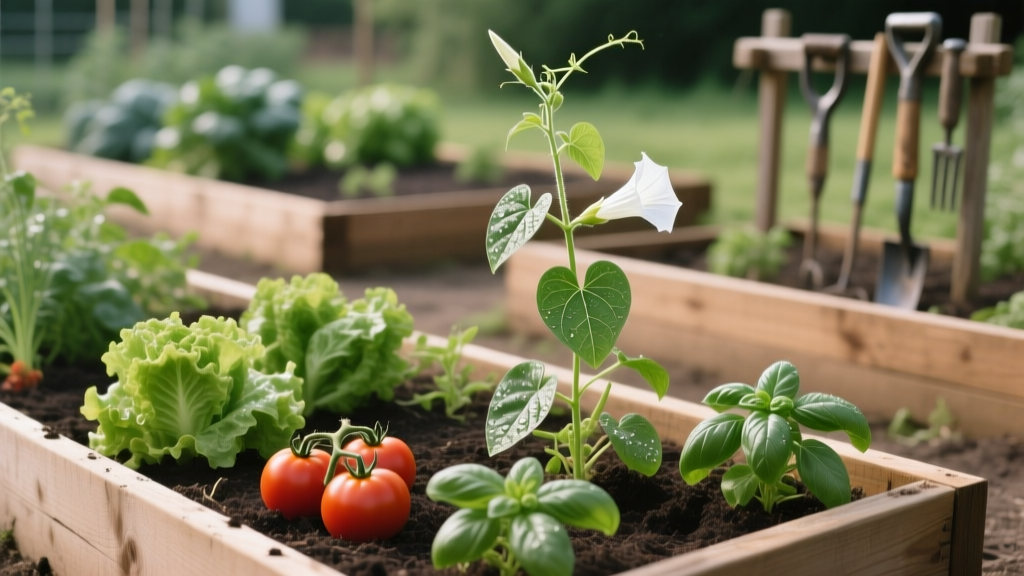
How to Identify and Remove Bindweed in Raised Beds
Robert HayesPublished
The Nemesis of the Vegetable Garden
For home gardeners, few weeds inspire as much dread as field bindweed (Convolvulus arvensis). Often mistaken for its harmless and beautiful cousin, the annual morning glory, field bindweed is a relentless, deep-rooted perennial vine that can quickly overtake raised beds, choke out vegetable crops, and ruin soil structure. Unlike annual weeds that can be managed with a simple layer of mulch or a quick hoeing, bindweed requires a strategic, multi-season eradication plan. If you are cultivating a vegetable garden or maintaining raised beds, understanding the biology of this weed is the first step toward reclaiming your soil.
In this comprehensive guide, we will cover exactly how to identify field bindweed, why it thrives in the loose soil of raised beds, and the most effective organic removal strategies to starve and eradicate the root system without resorting to harsh synthetic herbicides like glyphosate.
Botanical Identification: Spotting Convolvulus arvensis
Accurate identification is critical. Misidentifying bindweed can lead to ineffective removal strategies. Field bindweed is a low-growing, twining vine that spreads horizontally across the soil surface before climbing up any available support, including your tomato cages, bean trellises, and corn stalks.
Key Identifying Features
- Leaves: The leaves are distinctively arrowhead-shaped (sagittate) or triangular, typically measuring 1 to 2 inches long. They have a smooth edge and a prominent central vein.
- Flowers: The blooms are trumpet-shaped, usually white or pale pink with a darker pink or yellow throat. They measure about 1 inch in diameter and open in the morning, closing by the afternoon or on cloudy days.
- Stems: The stems are slender, twining, and lack the fine hairs found on many other garden vines. They will wrap tightly around plant stems and trellis netting.
- Root System: This is the most formidable feature. According to Penn State Extension, a mature bindweed plant can develop a taproot that plunges up to 20 feet deep, with lateral roots spreading 30 feet or more. These roots are brittle, white, and capable of generating new shoots from tiny fragments left in the soil.
A single field bindweed plant can produce a root system that extends up to 20 feet deep and 30 feet laterally, making complete physical extraction nearly impossible in a single season. Eradication relies on exhausting the root's carbohydrate reserves.
Field Bindweed vs. Annual Morning Glory: A Comparison Chart
Gardeners often hesitate to pull bindweed, fearing they are destroying a beneficial or ornamental morning glory. Use the table below to confidently tell them apart.
| Feature | Field Bindweed (Convolvulus arvensis) | Annual Morning Glory (Ipomoea spp.) |
|---|---|---|
| Lifespan | Perennial (returns yearly from deep roots) | Annual (grows from seed, dies in frost) |
| Leaf Shape | Arrowhead or triangular, smooth edges | Heart-shaped or deeply lobed |
| Flower Size | Small (approx. 1 inch across) | Large (2 to 4 inches across) |
| Flower Color | White or pale pink only | Blue, purple, red, pink, or white |
| Seed Pods | Small, round capsules hidden in bracts | Large, visible, papery brown capsules |
| Root System | Massive, deep, white, brittle taproots | Shallow, fibrous annual root system |
Why Bindweed is Uniquely Destructive in Raised Beds
Raised beds are designed to provide loose, well-draining, and nutrient-rich soil—unfortunately, this is the exact environment where field bindweed thrives. The loose soil allows the bindweed's rhizomes to spread laterally with zero resistance. Furthermore, when gardeners till or turn the soil in their raised beds during spring preparation, they inadvertently chop the bindweed's brittle white roots into dozens of pieces. According to Colorado State University's PlantTalk program, every single root fragment that contains a node can generate a brand-new, aggressive plant. Tilling is one of the worst things you can do if your raised bed is already infested.
The 4-Step Organic Eradication Protocol
Eradicating bindweed organically requires patience and consistency. You are not just killing the top growth; you are engaging in a war of attrition against the root system's energy reserves. Here is a proven, step-by-step protocol.
Step 1: The "Starvation" Pulling Technique
Because you cannot dig out the entire 20-foot root system, your goal is to repeatedly remove the top growth before it can photosynthesize and send energy back down to the roots.
- Timing: Pull or snip the vines at the soil line every 7 to 10 days. Do not wait for the plant to flower or produce large leaves.
- Method: Use a pair of sharp hori-hori knives or pruning shears to cut the vine exactly at the soil surface. Avoid pulling hard, which can disturb the soil and bring dormant root fragments closer to the surface.
- Duration: This process can take 1 to 3 years of consistent snipping. Eventually, the root will exhaust its stored carbohydrates and die.
Step 2: Soil Solarization for Empty Beds
If you have a raised bed that is heavily infested and you can afford to leave it fallow for a season, soil solarization is highly effective. This method uses the sun's heat to cook the top layers of the root system and destroy weed seeds.
- Preparation: Clear the bed of all plant matter. Water the soil deeply (moist soil conducts heat better than dry soil).
- Materials: Purchase 6-mil clear, UV-resistant polyethylene plastic. Do not use black plastic, as clear plastic creates a greenhouse effect that traps more heat.
- Application: Lay the plastic tightly over the soil surface and bury the edges 6 inches deep in a trench around the perimeter of the bed to seal in the heat.
- Timing: Leave the plastic in place for 4 to 6 weeks during the hottest part of the summer (July and August). The cost for materials is typically around $30 to $50 for a standard 4x8 foot raised bed.
Step 3: Targeted Application of Horticultural Vinegar
For spot treatment of bindweed shoots that emerge near the base of your desired vegetables, horticultural vinegar can be used to rapidly burn back the foliage.
- Product Selection: Standard kitchen vinegar (5% acetic acid) will not work. You need a horticultural vinegar containing 20% to 30% acetic acid (such as Green Gobbler or Energen Carolina). These products typically cost between $25 and $40 per gallon.
- Application: Apply using a shielded spray bottle or a paintbrush to avoid drifting onto your vegetable crops. Apply on a hot, sunny day when temperatures exceed 80°F for maximum burn-down.
- Warning: The Royal Horticultural Society (RHS) warns that repeated use of high-acidity solutions can alter your soil pH and harm beneficial soil microbes. Use this method sparingly and only as a supplement to manual starvation.
Step 4: Smothering with Heavy-Duty Barriers
Standard organic mulches like straw, pine bark, or shredded leaves are completely useless against bindweed. The vine will easily pierce through 4 inches of bark mulch in search of sunlight. If you must mulch an infested bed, you need physical barriers.
- Cardboard Method: Lay down overlapping sheets of heavy-duty, uncoated cardboard (remove all tape and staples). Ensure there are no gaps. Top with 4 to 6 inches of arborist wood chips. You will still need to monitor and snip any shoots that find the seams.
- Geotextile Fabric: For permanent pathways between raised beds or heavily infested fallow areas, use a woven, heavy-duty geotextile landscape fabric. Non-woven fabrics will eventually be penetrated by bindweed's sharp growing tips.
Crucial Preventative Measures
Once you have gained the upper hand, preventing reintroduction is vital. Bindweed frequently enters raised beds through contaminated inputs.
- Inspect Topsoil and Compost: Only purchase soil and compost from reputable suppliers who use high-heat composting methods. If you see white, brittle root fragments in a bag of soil or a delivery of bulk compost, reject it immediately.
- Clean Your Tools: If you have been weeding an infested area, thoroughly wash your shovels, trowels, and tiller tines with a stiff brush and water before moving to a clean raised bed. A single inch of root left on a shovel blade can start a new infestation.
- Manage Perimeter Weeds: Bindweed will happily creep under the wooden borders of your raised beds from the surrounding lawn or fence lines. Maintain a 2-foot weed-free buffer zone around the exterior of your garden beds by using a string trimmer or laying down heavy mulch.
Conclusion
Field bindweed is undoubtedly one of the most challenging weeds a home gardener can face, but it is not invincible. By correctly identifying the weed, refusing to till the soil, and committing to a rigorous regimen of foliage starvation, solarization, and targeted organic treatments, you can successfully reclaim your raised beds. Patience and persistence are your greatest tools in this battle. Stick to the protocol, protect your soil structure, and your vegetable garden will eventually be free of this relentless vine.
