
Landscaping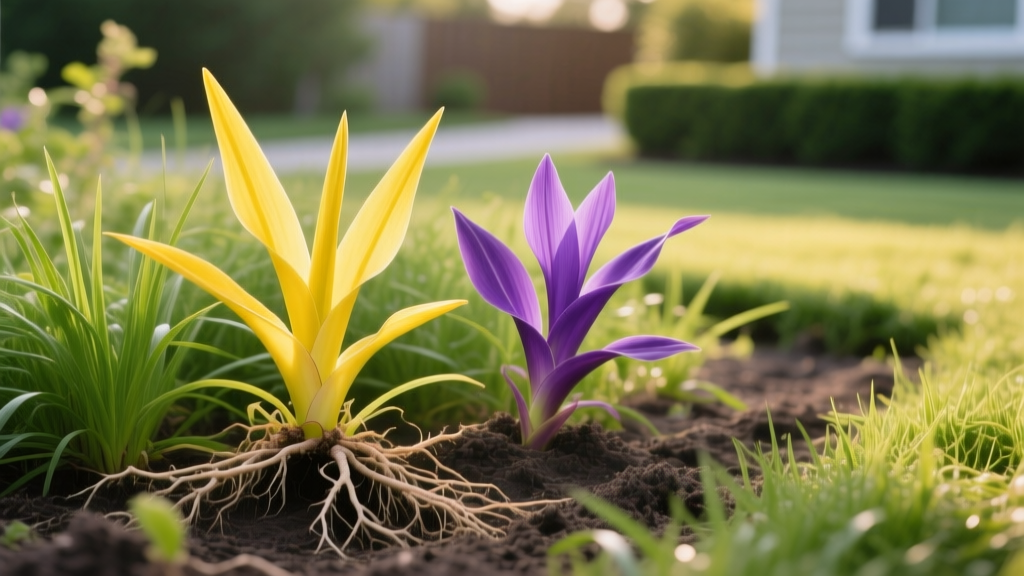
How to Identify and Remove Nutsedge in Landscape Beds
Sarah ChenPublished
The Landscaper's Nemesis: Understanding Nutsedge
Designing and maintaining a pristine landscape requires a careful balance of horticultural knowledge, aesthetic vision, and relentless maintenance. Among the most formidable adversaries to landscape beds, hardscape borders, and ornamental gardens is nutsedge. Often mistaken for a grass by novice gardeners, nutsedge is actually a sedge. A common mnemonic used by horticulturists and turf professionals is, "Sedges have edges, rushes are round, grasses have nodes from their heads to the ground." If you run your fingers along the stem of a nutsedge plant, you will immediately feel its distinct triangular shape.
Nutsedge is notoriously aggressive. It grows significantly faster than most ornamental plants and turfgrasses, allowing it to quickly tower over landscape beds and steal vital sunlight, water, and soil nutrients. According to the University of Minnesota Extension, nutsedge thrives in moist, poorly drained soils, making over-irrigated landscape beds and low-lying garden borders prime real estate for an infestation. To effectively manage this weed, homeowners and landscape professionals must first understand the specific species they are dealing with, the complex subterranean anatomy that makes it so difficult to kill, and the integrated pest management (IPM) strategies required for long-term eradication.
Yellow vs. Purple Nutsedge: Identification Guide
Before reaching for an herbicide or a trowel, accurate identification is critical. The two most common species invading North American landscapes are Yellow Nutsedge (Cyperus esculentus) and Purple Nutsedge (Cyperus rotundus). While they look similar during their early vegetative stages, their mature seed heads, tuber characteristics, and hardiness zones differ. The NC State Extension notes that yellow nutsedge is far more widespread across cooler northern climates, while purple nutsedge dominates the deep South and tropical regions.
| Characteristic | Yellow Nutsedge (C. esculentus) | Purple Nutsedge (C. rotundus) |
|---|---|---|
| Seed Head Color | Golden / Yellow-Brown | Dark Purple / Reddish-Brown |
| Stem Height | Taller (up to 3 feet) | Shorter (usually under 2 feet) |
| Leaf Tips | Gradually tapering to a long point | Abruptly tapered, blunt tip |
| Tuber Appearance | Round, smooth, single at rhizome end | Oblong, scaly, forms in chains |
| Tuber Taste | Sweet, almond-like (edible) | Bitter, pungent |
| Climate Preference | Widespread, tolerates cooler zones | Subtropical, Southern US zones |
The Subterranean Nightmare: Tubers and Rhizomes
The primary reason nutsedge is so difficult to eradicate from landscape beds lies beneath the soil surface. Nutsedge reproduces primarily through an extensive underground network of rhizomes and tubers, commonly referred to as "nutlets." A single mature yellow nutsedge plant can produce hundreds of these tubers in a single growing season. These tubers can remain dormant in the soil profile for up to three years, waiting for the right moisture and temperature conditions to germinate.
When a homeowner attempts to hand-pull mature nutsedge, the brittle rhizome almost always snaps off just below the soil line. The visible plant is removed, but the "mother tuber" and a network of "daughter tubers" remain safely underground. In fact, pulling the main shoot often breaks the dormancy of the remaining tubers, triggering multiple new shoots to emerge where there was previously only one. This is why mechanical removal often inadvertently multiplies the infestation.
Cultural and Mechanical Removal Strategies
Because of the tuber system, cultural and mechanical controls must be persistent and strategic. If you are maintaining an organic landscape bed or working near highly sensitive ornamental plants where chemical herbicides are not an option, you must rely on exhaustion and exclusion.
The Exhaustion Method
If you choose to hand-pull, timing is everything. You must remove the shoots before they reach the 5-leaf stage. At the 5-leaf stage, the plant begins photosynthesizing enough energy to send it back down into the root system, creating new tubers. By consistently pulling or hoeing the shoots every 3 to 5 days, you force the underground tubers to expend their stored energy reserves to push up new shoots. Over the course of a season, this repeated defoliation can starve and deplete the tuber bank.
Mulching and Exclusion
Standard landscape fabric is virtually useless against nutsedge. The sharp, needle-like tip of a germinating nutsedge shoot will easily pierce woven geotextile fabrics. To smother nutsedge organically in a new landscape bed, use the "cardboard and chip" method:
- Remove existing top-growth with a string trimmer.
- Lay down overlapping layers of thick, uncoated corrugated cardboard directly over the soil.
- Wet the cardboard thoroughly to initiate breakdown and conform to the soil grade.
- Apply a heavy layer (4 to 6 inches) of arborist wood chips or coarse bark mulch on top.
Even with this heavy suppression, some persistent shoots may find the seams in the cardboard. Monitor the bed weekly and spot-pull any breakthroughs immediately.
Chemical Control: Herbicides That Actually Work
For severe infestations in established landscape beds, chemical intervention is often necessary. Standard broadleaf weed killers (like 2,4-D or Dicamba) and standard grass herbicides (like Fluazifop) have absolutely no effect on sedges. You must use herbicides specifically formulated to target the unique biology of nutsedge.
Halosulfuron-methyl (SedgeHammer)
Halosulfuron-methyl is an ALS-inhibitor herbicide that is widely considered the gold standard for nutsedge control in both turf and landscape beds. Products like SedgeHammer are absorbed through the foliage and translocated down into the rhizomes and tubers, effectively killing the entire root system.
Application Tips: It must be mixed with a non-ionic surfactant (NIS) to penetrate the thick, waxy cuticle of the sedge leaf. It is a slow-acting herbicide; you will not see visible browning for 7 to 14 days. Cost is typically around $25 to $35 per 13.5g packet, which treats up to one acre, making it highly cost-effective for large properties.
Sulfentrazone (Dismiss)
Sulfentrazone is a PPO-inhibitor that causes rapid cell membrane disruption. Products like Dismiss NXT offer a much faster visual burndown, often showing necrosis within 24 to 48 hours. It is excellent for spot-treating nutsedge in hardscape cracks or around the base of mature, woody ornamentals. However, because it acts so quickly, it may not always translocate fully to the deepest tubers, occasionally requiring a follow-up application 30 days later.
Warning: When applying post-emergent herbicides in landscape beds, always use a shielded sprayer or a paintbrush applicator near the foliage of desirable ornamentals to prevent drift and phytotoxicity. According to Penn State Extension, careful directed spraying is paramount to protecting the aesthetic value of your landscape design.
Managing Nutsedge in Hardscapes and Paver Joints
Hardscaping elements like patios, walkways, and retaining walls are not immune to nutsedge. The weed frequently exploits the micro-environments found in paver joints, where moisture accumulates and traditional mulching is impossible. The sharp shoots can even displace standard jointing sand, compromising the structural integrity of the paver base over time.
To manage nutsedge in hardscapes:
- Clear the Joints: Use a specialized paver joint knife or a stiff wire brush to remove the top inch of infested sand and organic debris.
- Spot Treat: Apply a targeted dose of Sulfentrazone or a non-selective herbicide like Glyphosate directly into the joint using a precision weeding wand.
- Seal with Polymeric Sand: Once the weed is dead and the joint is dry, sweep in high-quality polymeric sand. When activated with a fine mist of water, polymeric sand binds together into a flexible, concrete-like barrier that blocks sunlight and physically prevents nutsedge shoots from penetrating the joint.
Professional hardscape sealing and polymeric sand installation typically costs between $1.50 and $3.00 per square foot, a worthwhile investment to protect your outdoor living spaces from biological degradation.
Long-Term Prevention and Soil Health
Ultimately, nutsedge is an indicator plant. It is nature's way of telling you that your soil is compacted, poorly drained, or chronically over-irrigated. To prevent future outbreaks in your landscape beds, focus on soil health and water management. Amend heavy clay soils with organic compost to improve percolation. Ensure that downspouts and French drains are directing water away from ornamental beds. Transitioning from overhead spray irrigation to targeted drip irrigation will keep the surface soil dry, depriving nutsedge seeds and tubers of the surface moisture they require to initiate germination. By combining precise identification, targeted chemical controls, and long-term cultural adjustments, you can reclaim your landscape beds and maintain a pristine, weed-free outdoor environment.

