
Landscaping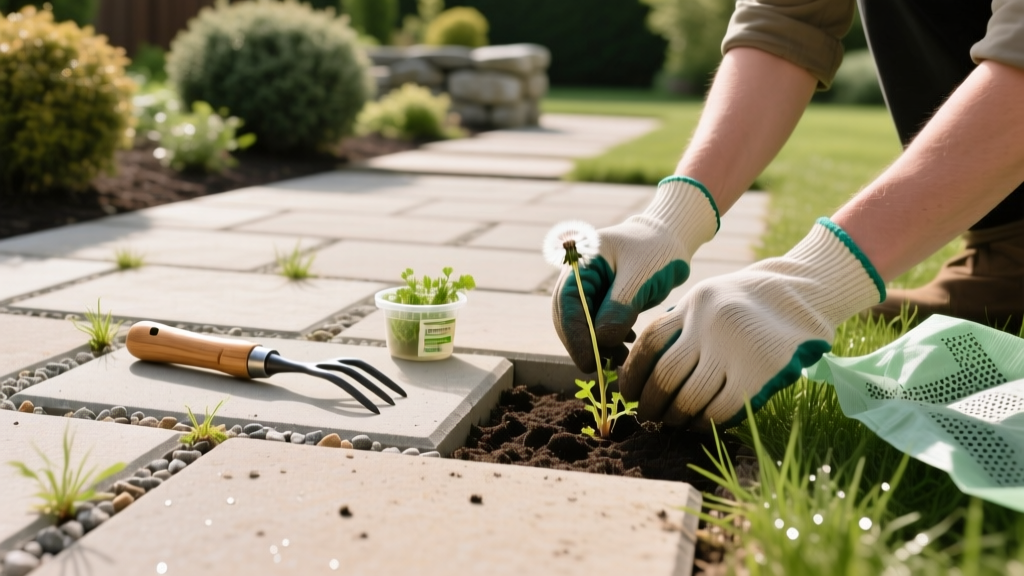
How to Remove Weeds From Paver Patios and Hardscapes
Mike RodriguezPublished
The Landscaping Nightmare: Weeds in Hardscape Joints
Hardscaping elements like paver patios, retaining walls, and stone walkways are foundational to premium landscape design. They provide structure, define outdoor living spaces, and dramatically boost curb appeal. However, the joints between these hardscape materials are highly susceptible to weed infiltration. When wind-blown soil, organic debris, and moisture accumulate in the gaps between pavers, they create an ideal microenvironment for weed seeds to germinate.
Ignoring weeds in hardscape joints is not merely an aesthetic issue; it is a structural threat to your landscaping investment. Deep taproots can penetrate the compacted gravel base, causing pavers to shift, heave during freeze-thaw cycles, and eventually crack. Furthermore, aggressive root systems wash away the foundational jointing sand, leading to uneven settling and water pooling. To maintain the integrity and beauty of your outdoor living spaces, you must implement a comprehensive weed identification, removal, and prevention strategy.
Identifying Common Hardscape Weeds
Before selecting a removal method, accurate identification is crucial. Different weeds require different eradication strategies based on their root structures and life cycles. For reliable identification, landscaping professionals frequently consult the USDA Plants Database, which offers comprehensive morphological data on invasive and common regional weeds.
Dandelions (Taraxacum officinale)
Dandelions are perennial broadleaf weeds notorious for their deep, brittle taproots. In hardscape joints, a dandelion taproot can grow several inches deep into the base material. If the root snaps during manual removal, the weed will rapidly regenerate. They are easily identified by their rosette of deeply lobed basal leaves and bright yellow flower heads that mature into wind-dispersed seed puffballs.
Prostrate Spurge (Euphorbia maculata)
This summer annual weed forms a dense, low-growing mat that spreads horizontally over paver surfaces. It thrives in the compacted, poor-quality soil found in hardscape cracks. When the stem is broken, it exudes a milky white sap that can cause skin irritation. Spurge is highly prolific, capable of producing thousands of seeds per plant, making early removal essential.
Crabgrass (Digitaria spp.)
Crabgrass is an annual grassy weed that germinates in late spring when soil temperatures consistently reach 55°F to 60°F. It features wide, pale green blades and a sprawling growth habit. In hardscapes, crabgrass often roots at the nodes along its stems, allowing it to anchor tightly into narrow joints and spread aggressively across adjacent patio areas.
Moss and Algae
While not technically weeds, moss and algae frequently colonize shaded, damp hardscape joints. They create slippery, hazardous surfaces and retain moisture against the pavers, which can accelerate the degradation of certain natural stones and concrete products.
Manual and Mechanical Removal Techniques
For small patios or isolated weed outbreaks, manual removal is the most environmentally friendly approach. The key to success is extracting the entire root system before the plant reaches maturity and drops seed.
Essential Tools for Hardscape Weeding
- Paver Patio Weeder: Tools like the Fiskars Patio Weeder feature a specialized serrated blade and a fulcrum base designed to slide deep into narrow joints and lever out deep taproots without damaging the paver edges.
- Stiff Bristle Sweeping Brush: Ideal for dislodging shallow-rooted annuals and clearing away loose organic debris before it decomposes into weed-growing soil.
- Hardscape Scraper/Knife: A narrow, rigid blade used to manually cut through dense mats of spurge or moss clinging to the surface of the stones.
Timing and Technique: Manual removal is most effective when the jointing sand is slightly damp, such as the day after a light rain. Moisture softens the soil, allowing the taproot to slide out intact. Expect to spend $15 to $35 on high-quality manual weeding tools, a one-time investment that pays off in preserved hardscape integrity.
Chemical and Organic Herbicide Options
When weeds have overtaken large hardscape areas or established deep root networks, manual removal becomes impractical. In these scenarios, targeted herbicide applications offer a highly effective solution. It is critical to choose the right active ingredient for the specific weed type and to follow all safety guidelines.
| Method | Active Ingredient | Effectiveness | Best Use Case | Estimated Cost |
|---|---|---|---|---|
| Horticultural Vinegar | 20-30% Acetic Acid | High (Contact) | Broadleaf weeds in joints | $25-$40 / gallon |
| Systemic Herbicide | Glyphosate | Very High | Deep taproots (Dandelion) | $15-$25 / bottle |
| Flame Weeding | Extreme Heat | Medium | Dry joints, moss control | $50-$100 (Torch kit) |
| Boiling Water | Thermal Shock | Medium | Isolated, young weeds | Free |
Organic Contact Herbicides: Horticultural Vinegar
Standard 5% household vinegar is largely ineffective on mature weeds. However, horticultural vinegar containing 20% to 30% acetic acid acts as a powerful, non-selective contact herbicide. It works by rapidly destroying the cell membranes of the plant's foliage, causing it to desiccate and die within hours. According to the National Pesticide Information Center (NPIC), high-concentration acetic acid is highly effective on young, broadleaf weeds but may require multiple applications for established perennials, as it does not translocate to the roots. Safety Warning: 20%+ acetic acid is a severe eye and skin irritant. Always wear chemical-resistant gloves, long sleeves, and splash-proof goggles when applying.
Systemic Herbicides: Glyphosate
For stubborn perennial weeds with deep taproots, such as dandelions or thistles, a systemic herbicide like glyphosate is often necessary. Systemic herbicides are absorbed through the foliage and translocated down into the root system, killing the entire plant. The NPIC Glyphosate Fact Sheet notes that it is highly effective on actively growing plants. Apply using a shielded sprayer or a sponge applicator to avoid drift onto desirable landscaping plants adjacent to the patio.
Long-Term Prevention: Polymeric Sand and Sealers
Eradicating existing weeds is only half the battle. To permanently protect your hardscape, you must eliminate the environment that allows weeds to germinate. The industry standard for long-term hardscape weed prevention is the use of polymeric sand combined with a high-quality paver sealer.
What is Polymeric Sand?
Polymeric sand is a specialized jointing material composed of fine silica sand mixed with water-activated binding polymers. Unlike traditional masonry sand, which easily washes out and leaves voids for weed seeds to settle, polymeric sand hardens into a dense, flexible matrix when activated with water. This barrier physically blocks weed germination and deters insects, such as ants, from excavating the joints.
Step-by-Step Application Guide
- Excavate Old Joints: Use a pressure washer or a specialized joint-raking tool to remove existing sand, soil, and weeds to a depth of at least 1 inch. The joints must be completely clean.
- Dry the Surface: This is the most critical step. The pavers and the base sand must be bone-dry. Any residual moisture will prematurely activate the polymers, causing the sand to clump on the surface of the pavers (a phenomenon known as 'poly-haze').
- Sweep and Compact: Sweep the polymeric sand deeply into the joints. Use a plate compactor with a urethane pad to vibrate the sand down, ensuring a tight, void-free fill.
- Mist with Water: Using a hose with a gentle shower nozzle, lightly mist the patio. The water activates the polymers, binding the sand particles together. Allow 24 to 48 hours for the sand to fully cure before allowing foot traffic.
Cost Analysis: A 50-pound bag of premium polymeric sand typically costs between $30 and $50 and covers approximately 80 to 120 square feet of paver surface, depending on joint width. While the upfront cost is higher than standard sand, the 5-to-10-year lifespan of polymeric sand makes it vastly more cost-effective than annual weeding and re-sanding.
Seasonal Maintenance Schedule for Hardscapes
Even with polymeric sand, a proactive maintenance schedule ensures your hardscape remains pristine and structurally sound year-round.
- Early Spring: Inspect all hardscape joints for signs of frost heave or sand erosion. Spot-treat any early-germinating weeds with boiling water or horticultural vinegar before they establish deep roots. Apply a pre-emergent herbicide to adjacent garden beds to prevent seeds from blowing onto the patio.
- Mid-Summer: Sweep the patio weekly to remove wind-blown soil and organic debris. If polymeric sand has cracked or eroded in high-traffic areas, scrape out the damaged section and apply a fresh layer of polymeric sand to maintain the weed barrier.
- Late Fall: Thoroughly clean the patio before winter. Remove all fallen leaves, as decaying leaf matter creates a rich, acidic topsoil layer in the joints that is perfect for winter annual weeds. Ensure drainage pathways are clear to prevent water from pooling and freezing in the joints.
By combining precise weed identification, targeted removal techniques, and modern structural solutions like polymeric sand, you can maintain a flawless, weed-free hardscape that enhances your landscape design for decades.

