
Landscaping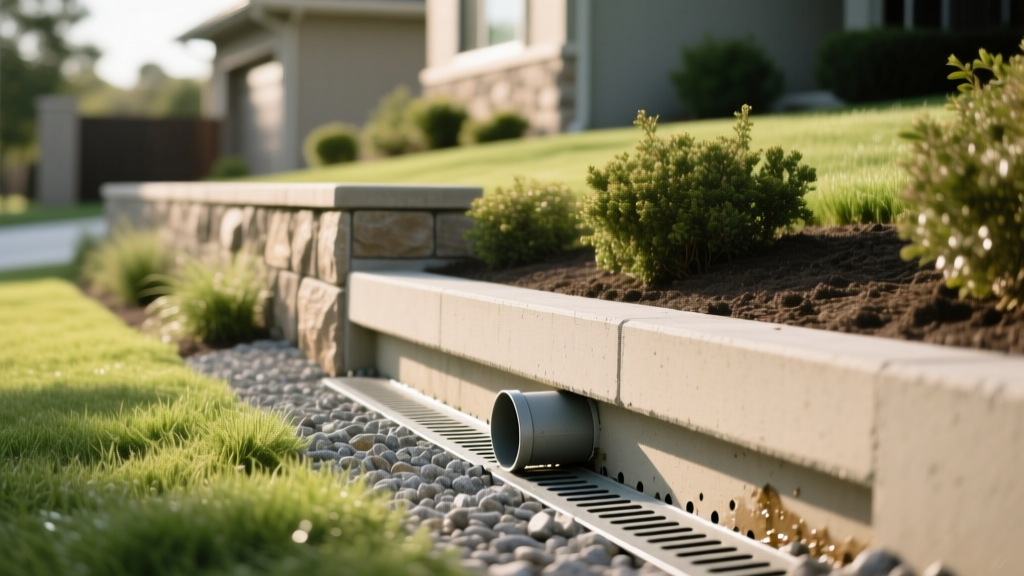
Top Retaining Wall Mistakes: Base and Drainage Fixes
Lisa ThompsonPublished
Introduction to Retaining Wall Failures
Building a segmental retaining wall (SRW) transforms a sloped yard into usable, flat outdoor living space while preventing soil erosion. However, a retaining wall is essentially a dam holding back thousands of pounds of earth and water. When these structures fail—resulting in bulging, leaning, or total collapse—the blame rarely falls on the concrete blocks themselves. According to the National Concrete Masonry Association (NCMA), the vast majority of retaining wall failures stem from improper base preparation and inadequate drainage.
Whether you are a DIY homeowner or a landscaping professional, understanding the physics of soil and water is critical. Below, we break down the most common retaining wall mistakes and provide actionable, step-by-step fixes to ensure your hardscaping project stands the test of time.
Mistake 1: Inadequate Base Preparation
The Mistake: Building on Topsoil or Sand
The most frequent and catastrophic mistake in retaining wall construction is failing to excavate down to stable, undisturbed mineral soil. Topsoil is highly organic, acts like a sponge, and compresses under weight. Building your base course directly on topsoil, or using masonry sand as a leveling agent, guarantees that the wall will settle unevenly as the organic matter decomposes or shifts during freeze-thaw cycles.
The Fix: The Compacted Gravel Trench
Your retaining wall must rest on a compacted, angular gravel base. Follow these exact specifications for a structurally sound foundation:
- Excavation Depth: Dig a trench that is a minimum of 6 inches deep, plus 1 inch for every 8 inches of wall height. For a 4-foot wall, your base gravel layer should be at least 12 inches thick.
- Trench Width: The trench should be the depth of the retaining wall block plus 6 inches to the front and 6 inches to the back to allow room for a plate compactor.
- Material Selection: Use 3/4-inch minus crushed angular gravel (often called crusher run or road base). The "minus" refers to the inclusion of stone dust and fines, which lock together tightly when compacted, creating a concrete-like sub-base.
- Compaction: Lay the gravel in 4-inch lifts (layers). Use a mechanical plate compactor (renting one costs roughly $75 to $90 per day) to compact each layer until it is completely rigid. Do not use a hand tamper for this step.
For more detailed engineering specifications on base prep, refer to the Allan Block Base Preparation Guidelines.
Mistake 2: Ignoring Hydrostatic Pressure
The Mistake: Trapping Water Behind the Wall
Water is the ultimate enemy of retaining walls. When soil becomes saturated, it creates hydrostatic pressure. Water weighs 62.4 pounds per cubic foot; if that water cannot escape, the immense lateral pressure will push the wall outward, causing it to bulge or blow out entirely. Failing to install a drainage pipe or backfilling directly against the blocks with native clay soil are guaranteed ways to trap water.
The Fix: Washed Gravel and Perforated Pipe
To relieve hydrostatic pressure, you must create a clear path for water to exit the soil mass behind the wall.
- Drainage Pipe: Lay a 4-inch perforated PVC pipe (SDR-35 or corrugated flexible drain pipe) directly behind the base course of blocks. Ensure the pipe is wrapped in a geotextile fabric sock to prevent soil from clogging the perforations. The pipe must have a slight downward slope (1/8 inch per foot) and daylight (exit to the surface) or tie into a storm drain every 30 to 50 feet.
- Drainage Backfill: Immediately behind the wall blocks, backfill with a minimum of 12 inches of 3/4-inch washed gravel. Unlike the base material, washed gravel has no fines or stone dust, allowing water to flow freely down to the drainage pipe.
- Weeep Holes: If you are using solid blocks without built-in drainage gaps, you must install weep holes in the first course of blocks every 4 to 6 feet to allow water to escape.
Mistake 3: Using Native Soil as Backfill
The Mistake: Shoveling Excavated Clay Back into the Trench
It is tempting to save money and hauling fees by using the heavy clay soil you just excavated to backfill behind the drainage gravel. Clay retains water and expands when wet (a phenomenon known as soil swelling), which exponentially increases the lateral load on your retaining wall blocks.
The Fix: Geotextile Separation Fabric
You must separate your free-draining washed gravel from the native soil. Use a high-quality, non-woven geotextile landscape fabric (such as Mirafi 500X or US Fabrics 4oz). Drape the fabric against the back of the washed gravel zone, folding it up and over the top of the final grade. This acts as a French drain filter, allowing water to pass through while preventing fine clay particles from migrating into the gravel and clogging your drainage system over time.
Comparison Chart: Backfill and Base Materials
Choosing the right aggregate is critical for both structural integrity and drainage. Use the table below to ensure you are ordering the correct materials from your local landscape supply yard.
| Material Type | Primary Use | Drainage Rate | Est. Cost per Ton | Pros and Cons |
|---|---|---|---|---|
| 3/4" Minus Crushed Stone | Base Trench | Low-Medium | $30 - $45 | Compacts tightly like concrete; poor drainage if used as backfill. |
| 3/4" Washed Gravel | Wall Backfill | High | $40 - $60 | Excellent water flow; cannot be compacted for a leveling base. |
| Masonry Sand | Bedding (Avoid) | Medium | $25 - $40 | Easy to level by hand; washes out easily and shifts under heavy loads. |
| Native Clay Soil | Top Fill Only | Very Low | Free (Excavated) | Never use directly behind retaining wall blocks; traps hydrostatic pressure. |
Mistake 4: Skipping Geogrid on Tall Walls
The Mistake: Relying Solely on Block Weight for Walls Over 3 Feet
Gravity walls (which rely entirely on their own mass and batter/lean to hold back soil) are generally only safe up to 3 or 4 feet in height. Building a 5-foot wall without soil reinforcement is a massive safety hazard and violates most municipal building codes.
The Fix: Geogrid Soil Reinforcement
For any wall exceeding 3 feet in height, you must use geogrid—a synthetic mesh material that layers into the compacted soil behind the wall. The geogrid ties the wall face to the soil mass, essentially turning the soil itself into the retaining structure. Install layers of geogrid every two courses (approximately every 16 inches of height), extending the grid back into the compacted soil a distance equal to 60% to 100% of the wall's total height. Always check local building codes and consult the University of Minnesota Extension guidelines on retaining walls for regional frost-depth and engineering requirements.
Essential Tools and Timing for the Job
To execute these fixes properly, you need the right equipment. Do not attempt to build a retaining wall without the following:
- Laser Level or Transit: Essential for ensuring the base trench and subsequent block courses are perfectly level from side to side and front to back.
- Plate Compactor: Mandatory for base gravel and geogrid soil layers. (Budget $85/day for rental).
- Masonry Saw with Diamond Blade: For clean, precise cuts on concrete blocks. A wet saw is preferred to minimize hazardous silica dust.
- Dead Blow Hammer: Used for tapping blocks into perfect alignment without chipping the concrete edges.
Timing: A properly built 20-foot long, 3-foot high retaining wall will typically take a professional crew of three about 3 to 4 days to complete, accounting for excavation, base compaction, block laying, backfilling, and cleanup. DIYers should budget at least two full weekends. Never rush the base compaction phase; spending an extra three hours on the foundation will save your wall from collapsing in three years.

