
Landscaping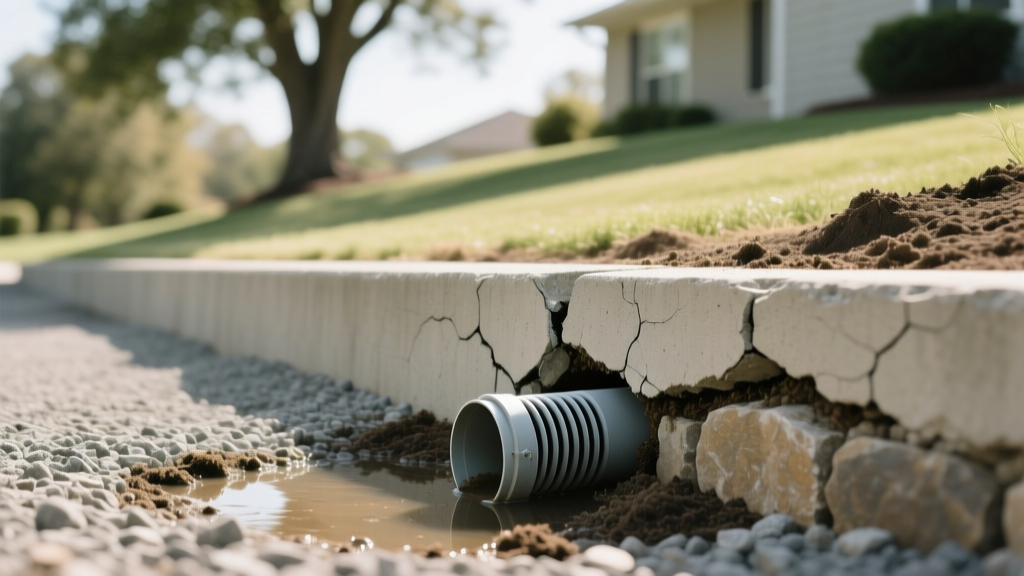
Avoid These Retaining Wall Base and Drainage Mistakes
Mike RodriguezPublished
The Hidden Costs of Retaining Wall Failures
Building a segmental retaining wall (SRW) is one of the most popular and impactful landscaping projects a homeowner can undertake. Whether you are terracing a steep slope, creating a level patio space, or managing erosion, a well-built retaining wall adds immense structural and aesthetic value to your property. However, retaining walls are also among the most frequently botched DIY hardscape projects. When a retaining wall fails, it doesn't just look bad; it can cause thousands of dollars in property damage, destroy existing landscaping, and pose severe safety hazards.
The vast majority of retaining wall failures are not caused by the blocks themselves, but by two critical oversights: improper base preparation and inadequate drainage. Water is the ultimate enemy of hardscaping. When hydrostatic pressure builds up behind a wall, or when the foundation shifts due to frost heave and poor compaction, even the most expensive stone veneer will bulge, crack, or collapse entirely. According to design guidelines from the National Concrete Masonry Association (NCMA), proper soil mechanics and water management are the foundational pillars of any successful SRW installation. Below, we break down the five most common retaining wall base and drainage mistakes and provide actionable, professional-grade fixes to ensure your wall stands the test of time.
Mistake 1: Skimping on the Base Trench Depth and Compaction
The most common mistake DIYers make is placing the first course of retaining wall blocks directly on top of the topsoil or in a shallow, uncompacted trench. Soil expands and contracts with moisture and temperature changes. If your base is not below the frost line or properly compacted, the wall will settle unevenly, leading to a wavy, structurally compromised profile.
The Fix: The 10% Burial Rule and Mechanical Compaction
As noted in the Allan Block Design Basics manual, you must bury at least 10% of the total wall height, plus an additional 6 inches for the base gravel layer. For a 4-foot (48-inch) wall, you need to bury at least 4.8 inches of the block, plus the 6-inch gravel base, meaning your trench must be roughly 11 inches deep.
- Excavation: Dig a trench that is twice as wide as the wall block (typically 18 to 24 inches wide).
- Base Material: Fill the trench with 6 inches of 3/4-inch minus crushed stone (also known as road base or crusher run). This material contains fine dust that locks together when compacted.
- Compaction: Use a mechanical plate compactor (rentable for about $60-$80 per day) to compact the base in 2-inch lifts. Do not skip this step; hand-tamping is insufficient for structural hardscaping.
- Leveling: Use a 4-foot carpenter's level to ensure the base is perfectly level from side-to-side and front-to-back before laying the first course.
Mistake 2: Failing to Install a Perforated Drain Pipe
Many builders assume that the gaps between the retaining wall blocks are enough to let water escape. While this handles minor surface runoff, it does nothing to relieve the hydrostatic pressure that builds up in the soil mass behind the wall during heavy rains. When soil becomes saturated, it can weigh up to 100 pounds per cubic foot, exerting massive lateral force that pushes the wall outward.
The Fix: Strategic Perforated Pipe Placement
You must install a continuous perforated drain pipe behind the first course of blocks to intercept groundwater and channel it away from the wall.
- Pipe Selection: Use a 4-inch rigid PVC perforated pipe or heavy-duty corrugated drain pipe. Rigid PVC is preferred as it is less likely to crush under the weight of the backfill stone.
- Placement: Lay the pipe directly behind the base course of blocks, resting on the compacted base stone. Ensure the holes in the pipe are facing downward (a common myth is that holes should face up, but facing down allows water to enter the pipe from the saturated stone bed below without pulling in sediment from above).
- Daylighting: The pipe must "daylight" or exit to a lower elevation at the ends of the wall or tie into a solid PVC pipe that routes water to a storm drain or dry well. A pipe that doesn't drain to daylight is essentially an underground bathtub.
Mistake 3: Backfilling with Native Soil
After placing a few courses of block, it is tempting to shovel the native clay or topsoil you just excavated back into the gap behind the wall to save time and money. This is a catastrophic mistake. Native soils, especially clay-heavy varieties, retain water like a sponge and expand when frozen, pushing the wall forward.
The Fix: Use Clean, Washed Drainage Stone
You must create a dedicated drainage zone immediately behind the wall blocks. Landscaping experts at Belgard emphasize using clean, washed gravel for this zone to ensure rapid water percolation down to the drain pipe.
Backfill Material Comparison Chart
| Material | Drainage Rate | Avg. Cost (Per Ton) | Verdict |
|---|---|---|---|
| Native Soil / Clay | Very Poor (Holds Water) | Free (Excavated) | Never Use behind the wall. Causes hydrostatic pressure and frost heave. |
| 3/4-inch Minus Gravel | Moderate (Fines clog over time) | $25 - $40 | Use for Base Trench only. Contains stone dust that compacts hard but impedes drainage. |
| Washed #57 Stone | Excellent (Free-draining) | $35 - $55 | Required for Backfill. Clean, angular stone that locks together while allowing water to pass freely. |
| Coarse Mason Sand | Good | $20 - $30 | Avoid. Can wash out through block gaps and lacks the structural friction of angular gravel. |
Installation Spec: Fill the space immediately behind the wall blocks (at least 12 inches wide) with washed #57 stone. Compact this stone in 8-inch lifts using a plate compactor or hand tamper to ensure the wall is fully supported laterally.
Mistake 4: Omitting Geogrid for Walls Over 3 Feet
Gravity alone is not enough to hold back tons of earth. For retaining walls that exceed 3 to 4 feet in height (depending on local building codes and soil types), the sheer mass of the soil will eventually overcome the weight of the blocks, causing a rotational failure where the wall tips forward.
The Fix: Integrate Geogrid Soil Reinforcement
Geogrid is a synthetic, grid-like mesh material that is layered between courses of blocks and extended back into the compacted soil. It creates a cohesive, reinforced soil mass that acts as a single, massive gravity structure.
- When to Use: Any wall over 3 feet high, or shorter walls supporting heavy surcharge loads (like a driveway, patio, or pool).
- Placement: Lay the geogrid directly on top of the block courses (usually every 2 to 3 courses, or roughly every 16-24 inches of height).
- Length: The geogrid should extend back into the soil a distance equal to at least 60% of the wall's height. For a 5-foot wall, the geogrid must reach at least 3 feet back into the hillside.
- Backfilling: Backfill over the geogrid with native soil or drainage stone, compacting carefully so you do not tear the mesh with the compactor plate.
Mistake 5: Skipping the Non-Woven Geotextile Fabric
Even if you use the correct washed drainage stone, over time, the fine particles from the native soil behind the drainage zone will migrate into the gravel. This process, known as soil piping, eventually clogs the drainage stone and the perforated pipe, turning your high-tech drainage system into a solid, water-logged dam.
The Fix: Install a Separation Layer
You must separate the native soil from the clean drainage stone using a geotextile fabric.
- Material Selection: Use a non-woven geotextile fabric (often resembling felt). Do not use cheap woven weed-barrier fabric from the garden center, as it lacks the tensile strength and proper filtration properties required for structural hardscaping.
- Installation: Line the back of the excavated trench and drape the fabric up the back of the soil bank. The fabric should act like a coffee filter, allowing water to pass through while blocking fine soil particles.
- Wrapping: Once the 12-inch drainage stone zone is filled and compacted, fold the excess fabric over the top of the stone before adding the final layer of topsoil or capstone. This completely encapsulates the drainage zone, protecting it from surface silt runoff.
Conclusion: Measure Twice, Build Once
Retaining walls are structural engineering projects disguised as landscaping features. While the upfront costs of renting a plate compactor, purchasing washed #57 stone, and buying geogrid and geotextile fabrics might add $500 to $1,500 to your project budget, it is a fraction of the cost of rebuilding a collapsed wall or repairing a flooded patio. By respecting the principles of base compaction, hydrostatic pressure relief, and soil separation, you can build a retaining wall that not only transforms your landscape but endures for decades. Always check with your local municipal building department before starting, as walls over a certain height (typically 3 to 4 feet) require a permit and a stamped engineering plan.

