
Landscaping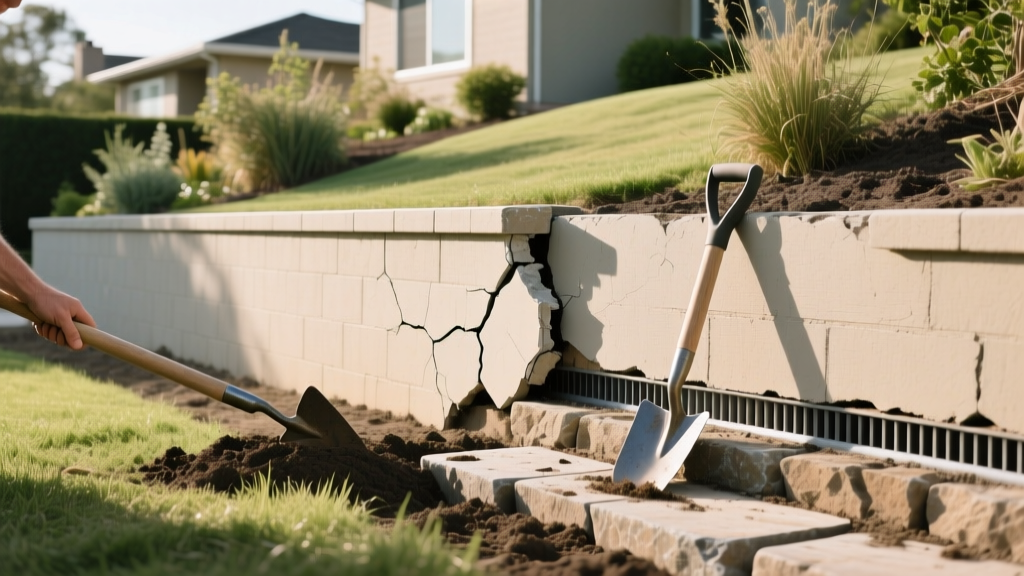
Retaining Wall Mistakes: How to Fix Drainage and Base Issues
Mike RodriguezPublished
The High Cost of Retaining Wall Failure
Building a segmental retaining wall (SRW) is one of the most popular landscaping projects for homeowners looking to reclaim sloped yards, create flat patio spaces, or prevent soil erosion. However, a poorly constructed retaining wall is a liability waiting to collapse. According to the National Concrete Masonry Association (NCMA), the vast majority of retaining wall failures are not due to the structural weakness of the concrete blocks themselves, but rather to improper base preparation, inadequate drainage, and ignored engineering principles.
When a retaining wall bulges, leans, or completely blows out, the repair costs can easily triple the original budget. In this guide, we will break down the most common DIY retaining wall mistakes and provide actionable, professional-grade fixes to ensure your hardscaping project stands the test of time.
Mistake 1: Inadequate Base Preparation
The Mistake: Building Directly on Soil or Using the Wrong Gravel
Many DIYers attempt to save time and money by laying their first course of retaining wall blocks directly on the native soil, or by using a shallow bed of loose sand. Native soil—especially clay-heavy soils—expands and contracts with moisture and freeze-thaw cycles. This movement causes frost heave, which will push the base blocks out of level, leading to a domino effect of structural failure up the entire wall.
The Fix: Excavate, Fill, and Compact
A retaining wall is only as strong as its foundation. You must create a stable, load-bearing base that extends below the frost line or, at a minimum, provides enough mass to resist shifting.
- Excavation Depth: Dig a trench that is at least 6 to 8 inches deep and twice as wide as your retaining wall blocks. For larger walls, bury the first course completely to provide a mechanical lock against the earth.
- Base Material: Fill the trench with 3/4-inch minus crushed stone (also known as crusher run or dense grade aggregate). The 'minus' refers to the stone dust and smaller particles that fill the voids between the larger rocks, allowing it to lock together like concrete when compacted.
- Compaction: Do not rely on a hand tamper. Rent a vibratory plate compactor (typically $80 to $100 per day) and compact the base in 2-inch lifts (layers) until you achieve a rock-hard, perfectly level surface. Use a 4-foot carpenter's level to verify the grade before laying the first block.
- High Water Table Fix: If you are working in an area with a high water table or heavy clay soil, consider increasing your base trench depth to 12 inches and installing a secondary perforated drain pipe directly beneath the compacted base gravel to intercept rising groundwater before it can cause frost heave.
Mistake 2: Ignoring Drainage and Backfill
The Mistake: Trapping Water Behind the Wall
Hydrostatic pressure is the silent killer of retaining walls. When rain or groundwater saturates the soil behind the wall, the water has nowhere to go. The trapped water exerts thousands of pounds of outward pressure, eventually pushing the wall over or forcing water to weep through the block faces, leaving ugly mineral stains.
The Fix: Install a French Drain and Clear Washed Gravel
Proper drainage is non-negotiable. According to landscaping experts at This Old House, managing water behind the wall is just as important as the structural blocks themselves.
- Perforated Drain Pipe: Lay a 4-inch corrugated or PVC perforated drain pipe directly behind the first course of blocks. Ensure the pipe is wrapped in a landscape fabric sock to prevent silt clogging. The pipe must have a slight downward slope (1/8 inch per foot) and 'daylight' (exit to the surface) at one or both ends of the wall to allow water to escape.
- Backfill Material: Never use native soil or gravel with 'fines' (stone dust) immediately behind the wall. Use 3/4-inch clear washed gravel. This stone has no dust, creating massive voids that allow water to flow freely down to the drain pipe.
- Geotextile Fabric: Line the back of the gravel trench with non-woven geotextile landscape fabric before adding the stone. Fold the excess fabric over the top of the gravel before adding the final topsoil cap. This prevents fine dirt from migrating into the gravel and clogging your drainage system.
Mistake 3: Forgetting the 'Batter' and Geogrid
The Mistake: Building Plumb and Skipping Soil Reinforcement
Gravity is constantly pulling your wall down and out. Building a wall perfectly plumb (straight up and down) guarantees it will eventually lean outward. Furthermore, any wall over 3 feet tall requires mechanical soil reinforcement to tie the wall face to the earth behind it.
The Fix: Set the Batter and Install Geogrid
- The Batter: Retaining walls must lean into the retained soil. The industry standard is a 1-inch 'batter' (setback) for every 1 foot of wall height. Many modern SRW blocks have a built-in lip or pin system that automatically creates this setback. Always verify the lean with a level.
- Geogrid Installation: For walls exceeding 3 feet, you must install geogrid—a synthetic mesh material that acts like rebar in concrete. Lay the geogrid on top of the block courses every 2 to 3 layers, extending it back into the compacted backfill soil. As the soil is compacted over the grid, it interlocks, creating a single, massive reinforced earth structure that cannot be pushed over.
- Tensioning the Grid: When installing geogrid, ensure it is pulled taut before backfilling. A slack grid will not engage with the soil until the wall has already begun to move, defeating its purpose. Use landscape pins or temporary stakes to hold the grid tight against the block face while you spread and compact the backfill soil in 4-inch layers.
Cost Comparison: Proactive Fixes vs. Reactive Rebuilds
Many homeowners skip base prep and drainage to save money upfront. However, the cost of fixing a failed wall far exceeds the cost of doing it right the first time. Below is a cost breakdown based on a standard 20-foot long, 3-foot high retaining wall.
| Project Phase | Proactive Fix (Done Right) | Reactive Repair (After Failure) |
|---|---|---|
| Base Excavation & Gravel | $150 - $250 (Materials & Tool Rental) | $800+ (Demolition, disposal, and re-excavation) |
| Drainage System & Backfill | $200 - $300 (Pipe, washed stone, fabric) | $1,200+ (Removing mud, replacing ruined materials) |
| Geogrid & Compaction | $150 - $200 (Geogrid rolls, plate compactor) | $2,500+ (Complete wall rebuild and engineering consult) |
| Total Estimated Cost | $500 - $750 | $4,500 - $6,000+ |
Mistake 4: Using the Wrong Capstone Adhesive
The Mistake: Standard Mortar or No Adhesive
The capstones are the finishing touch that protects the core of the wall from water intrusion. A common mistake is using standard masonry mortar, which is rigid and will crack under the freeze-thaw cycle and slight wall settlement, causing caps to pop off.
The Fix: Polyurethane Landscape Block Adhesive
Use a high-quality, flexible polyurethane landscape block adhesive (such as Loctite PL Landscape Block Adhesive or SRW Block Bond). These adhesives are specifically formulated to remain slightly flexible, accommodating the natural micro-movements and thermal expansion of the wall without losing their grip. Apply a thick, continuous zigzag bead to the top course, press the capstones down firmly, and allow 24 to 48 hours for a full cure before backfilling the top edge.
Final Thoughts on Sustainable Hardscaping
A retaining wall is a permanent fixture in your landscape. By respecting the physics of soil and water, you can build a structure that lasts for decades. Always check with your local municipality regarding building codes and permits; most towns require a stamped engineering plan for any retaining wall exceeding 4 feet in height. For further reading on structural requirements and sustainable soil management, consult the guidelines published by the National Concrete Masonry Association before breaking ground on your next hardscaping project.
Pro Tip: Always call 811 before you dig. Having your underground utility lines marked is a free service that prevents catastrophic damage to water, gas, and electrical lines during your base excavation phase.

