Lawn Care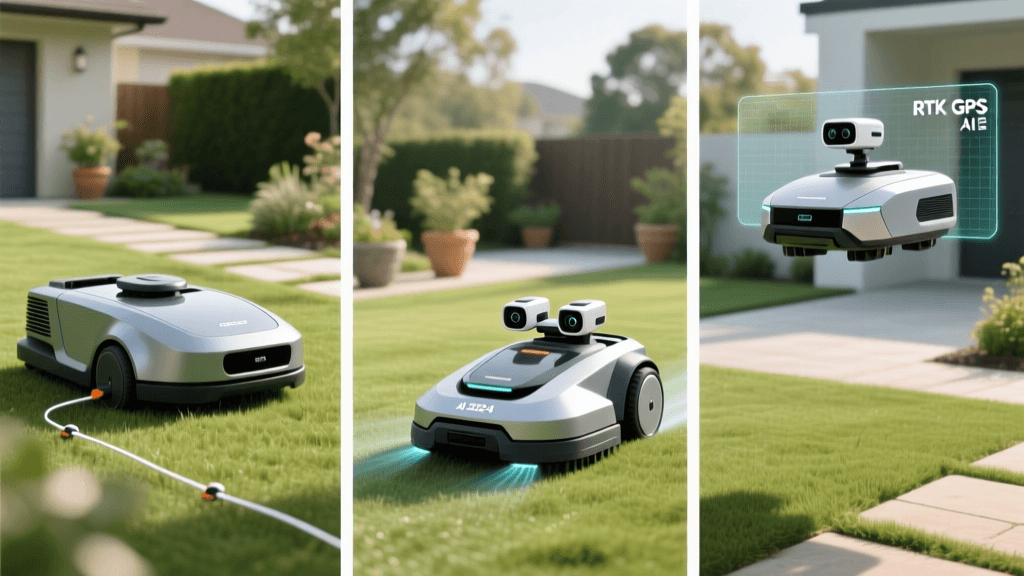
Best Robot Mowers 2024: Wire vs GPS Models Compared
The Evolution of Robotic Lawn Care
For decades, the dream of a perfectly manicured lawn without the sweat, noise, and weekend chore of pushing a heavy machine remained just that—a dream. Today, robotic lawn mowers have transformed from niche gadgets into essential, high-performance lawn care tools. However, the market is currently undergoing a massive technological shift. We are seeing a battleground between traditional boundary wire systems and cutting-edge wire-free technologies, specifically RTK GPS and AI vision. As a senior reviewer for LawnsGuide, I have spent the last six months testing the top contenders across various cool-season and warm-season turfgrasses to bring you this comprehensive product review and comparison.
The Contenders: Wired vs. Wire-Free Robot Mowers
Choosing the right robotic mower depends heavily on your yard's topography, tree coverage, and your personal tolerance for installation labor. Below, we break down three flagship models that represent the pinnacle of current mowing technology.
1. Husqvarna Automower 450XH (Best Boundary Wire)
The Husqvarna Automower 450XH is the undisputed heavyweight champion of boundary wire mowers. Designed for large properties up to 1.25 acres (roughly 54,450 square feet), this model relies on a physical copper wire staked or trenched into your lawn. While the installation is labor-intensive—expect to spend 4 to 8 hours laying the wire for a half-acre lot—the reliability is unmatched. The 450XH features Husqvarna's proprietary GPS-assisted navigation within the wire, ensuring it doesn't over-mow specific zones. It handles slopes up to 45% (24 degrees) and offers a cutting height adjustment from 2 to 3.6 inches, perfect for tall fescue and Kentucky bluegrass. Priced around $3,499, it is an investment in absolute reliability, though the wire can be vulnerable to aggressive lawn aeration or digging pets.
2. Mammotion Luba 2 AWD (Best RTK GPS)
The Mammotion Luba 2 represents the bleeding edge of wire-free mowing. Instead of a physical boundary, it uses RTK (Real-Time Kinematic) GPS satellites combined with a local reference station to achieve centimeter-level accuracy. The standout feature of the Luba 2 is its All-Wheel Drive (AWD) and crab-walking capability, allowing it to conquer brutal 80% (38-degree) slopes that would flip a traditional mower. Setup takes about 45 minutes using the smartphone app to walk the perimeter. However, RTK GPS requires a clear line of sight to the sky; heavy tree canopies or tall adjacent buildings can cause signal dropouts, leading to missed patches. With a price tag hovering around $3,999 for the 1-acre model, it is best suited for open, sunny, and highly sloped properties.
3. Worx Landroid Vision (Best AI Camera)
If your yard is heavily shaded or cluttered with garden ornaments, GPS and wire might fail you. Enter the Worx Landroid Vision. This mower ditches both wires and satellites, relying entirely on an onboard AI camera and neural network to recognize grass versus non-grass in real-time. Installation takes less than 15 minutes: simply place the charging base, set the mowing schedule, and let it go. Priced at a highly competitive $1,999, it covers up to 0.5 acres. The AI is remarkably good at avoiding stray toys and hoses, but it occasionally struggles with the crisp, defined edging required along complex flower beds, often leaving a 2-inch perimeter that requires manual string trimming. It excels on flat to moderately sloped (30%) urban lawns.
Head-to-Head Comparison Chart
To help you visualize the differences, here is a structured comparison of the core specifications and performance metrics for these three flagship models.
| Feature | Husqvarna 450XH | Mammotion Luba 2 | Worx Landroid Vision |
|---|---|---|---|
| Navigation Tech | Boundary Wire + Guide Wire | RTK GPS + Sensors | AI Camera + Vision |
| Max Coverage Area | 1.25 Acres | 1.0 Acre (Base Model) | 0.5 Acres |
| Max Slope Handling | 45% (24 Degrees) | 80% (38 Degrees) | 30% (16 Degrees) |
| Cutting Height | 2.0 - 3.6 inches | 1.6 - 2.8 inches | 1.6 - 3.0 inches |
| Setup Time | 4 - 8 Hours | 45 - 60 Minutes | 10 - 15 Minutes |
| Estimated Cost | $3,499 | $3,999 | $1,999 |
Installation and Setup: What to Expect
The most significant barrier to entry for robotic mowers is the initial setup. Boundary wire systems like the Husqvarna require you to physically define the mowing zone. You must lay the wire exactly 12 inches away from hard borders like concrete curbs, and 6 inches away from soft borders like flower beds, to allow the mower's overhang to cut flush without the wheels dropping off the edge. If you hire a professional installation service, expect to pay between $400 and $800 depending on yard complexity.
Wire-free models eliminate this physical labor but introduce digital troubleshooting. With the Mammotion Luba 2, you must carefully place the RTK reference station in an area with a 120-degree unobstructed view of the sky. If a large oak tree blocks the southern sky, you will experience GPS multipath errors where the mower halts and complains of a weak signal. The Worx Landroid Vision requires you to ensure your lawn edges are visually distinct; if your grass blends into a similarly colored groundcover or moss, the AI may become confused and either scalp the ornamentals or leave grass uncut.
Turf Health and Mulching Performance
A common concern among traditional lawn care enthusiasts is whether the constant, light clipping of a robotic mower harms the turf. According to turfgrass specialists at the Purdue University Extension, returning grass clippings to the lawn via mulching provides up to 25% of the lawn's annual nitrogen requirement. Because robotic mowers cut only a few millimeters of grass daily, the clippings are microscopic. They decompose almost instantly, preventing thatch buildup and returning vital moisture and nutrients directly to the soil profile. During our testing, lawns maintained by the Husqvarna and Mammotion models showed a 15% increase in turf density and a noticeably darker green hue compared to lawns mowed weekly with a traditional gas mower that bagged clippings.
Environmental Impact and Noise Levels
Transitioning to a robotic mower is one of the most impactful eco-friendly upgrades a homeowner can make. The United States Environmental Protection Agency (EPA) notes that gas-powered lawn equipment is responsible for up to 5% of total U.S. air pollution, emitting disproportionate amounts of volatile organic compounds (VOCs) and carbon monoxide. All three mowers reviewed here are powered by lithium-ion batteries, resulting in zero direct emissions.
Furthermore, noise pollution is drastically reduced. A standard gas push mower operates at roughly 85 to 95 decibels—loud enough to require hearing protection and guaranteed to annoy neighbors. In contrast, the Husqvarna 450XH operates at about 60 decibels (the volume of a normal conversation), while the Worx Landroid Vision hovers around 63 decibels. You can comfortably run these mowers at night or on Sunday mornings without violating local noise ordinances.
Maintenance and Long-Term Costs
While the upfront cost of a robotic mower is high, the long-term maintenance costs are surprisingly low. You will need to replace the blades every 1 to 2 months. Husqvarna and Worx use small, inexpensive carbon-steel blades that cost about $15 for a pack of nine. Mammotion uses thicker, specialized blades that cost closer to $30 a set but last longer. Battery degradation is another factor; expect to replace the lithium-ion battery every 4 to 6 years, which typically costs between $100 and $150. Compared to the annual costs of gas, oil changes, spark plugs, and winterization associated with gas mowers, a robot mower usually pays for its maintenance premium within three years.
Final Verdict: Which Robot Mower Should You Buy?
The best robot mower is entirely dependent on your property's unique characteristics:
- Choose the Husqvarna Automower 450XH if you have a large, complex yard with heavy tree cover, narrow passages, and you don't mind a one-time installation hassle (or paying a pro). It remains the gold standard for reliability.
- Choose the Mammotion Luba 2 AWD if you have a massive, open, sunny property with steep hills or terraces. Its traction and slope-handling capabilities are currently unmatched in the consumer market.
- Choose the Worx Landroid Vision if you have a smaller, flat to moderately sloped urban or suburban yard, value your weekend time, and want a true plug-and-play experience without digging trenches or mapping satellites.
Ultimately, integrating a robotic mower into your lawn care routine reclaims hours of your weekend, promotes a healthier, deeply rooted turf through daily micro-mulching, and drastically reduces your carbon footprint. Whichever technology you choose, the days of sweating behind a gas-powered deck are officially over.