
Landscaping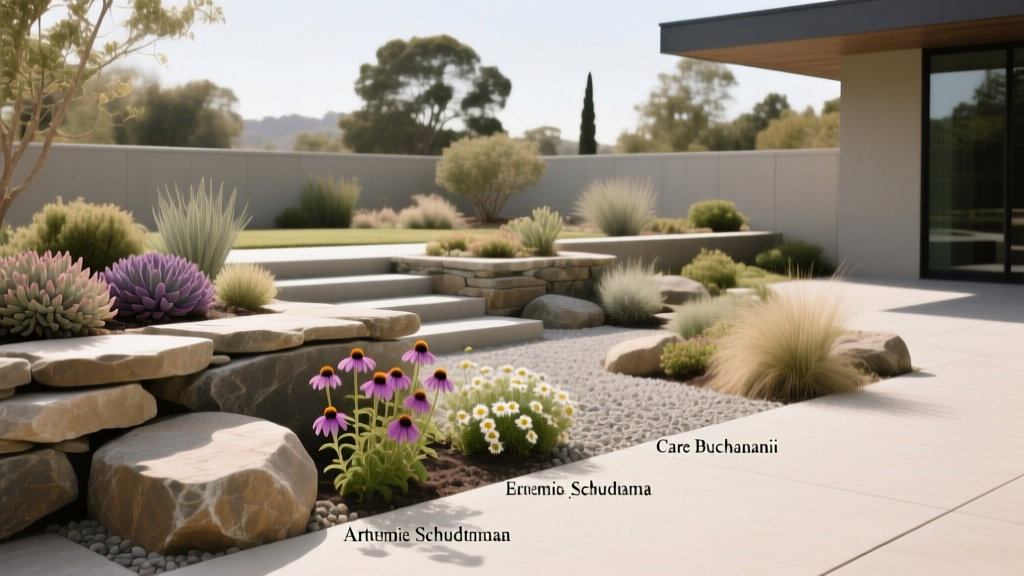
Rock Garden Ideas For Low Maintenance Yards
Designing a Rock Garden That Works With Your Landscape
A well-designed rock garden can cut weekly yard work from several hours down to under 30 minutes, while giving you an outdoor space that looks better as it ages. Unlike turf lawns—which need regular mowing, fertilizing, and watering—rock gardens use stone, gravel, and drought-tolerant plants to build a low-maintenance setup. Planning ahead helps avoid headaches later.
The American Society of Landscape Architects (ASLA, 2023) lists water-wise landscaping as one of the fastest-growing residential design trends. Rock and xeriscape gardens make up a large share of new low-maintenance yard projects in the western and southwestern United States. But they’re not just for dry areas—rock gardens work well in the Pacific Northwest, the Midwest, and even parts of the humid Southeast, as long as you pick plants suited to local conditions.
Before you start digging, look at your yard’s slope, how well water drains through the soil, and how much sun it gets. Rock gardens do best on slopes or gently graded ground, where water runs off naturally instead of pooling around plant roots. If your site is flat, you can build raised berms—but that means more materials and labor. A spot with at least six hours of direct sun each day gives you the widest choice of plants.
Choosing the Right Stones and Hardscape Materials
What stones you choose affects both how the garden looks and how easy it is to install. Local stone usually works best—it matches the surrounding landscape, costs less to haul, and weathers in a way that feels natural rather than out of place. In the Rocky Mountain region, buff-colored sandstone and granite are common. In the Northeast, fieldstone and bluestone show up often. Along the Gulf Coast, limestone is plentiful and affordable.
For a typical 200-square-foot rock garden, plan on 1.5 to 2 tons of boulders and accent stones, plus 3 to 4 cubic yards of crushed gravel or decomposed granite for ground cover. Crushed granite runs $40–$75 per cubic yard depending on where you are, and larger boulders cost $150–$600 per ton. All told, hardscape materials for a 200-square-foot garden usually run $800–$2,200 before labor.
Landscape designers often group boulders in odd numbers—three or five stones, for example—because it looks more natural than pairing them up. Bury about one-third of each stone so it looks like it grew out of the ground instead of being placed on top. This trick comes from Japanese garden design, used at places like the Portland Japanese Garden in Oregon. It keeps stones stable and stops them from shifting over time.
Gravel and Mulch Options
Gravel does a few jobs in a rock garden: it holds down weeds, helps soil hold moisture, reflects heat away from plant crowns, and gives the sharp drainage most rock garden plants need. Pea gravel (3/8 inch) works well as a general ground cover, while larger crushed stone (3/4 inch) fits better along paths or where the garden meets other areas. Skip organic mulches like wood chips—they hold too much moisture and can cause crown rot in plants that prefer dry conditions.
Many people lay landscape fabric under the gravel, but it has limits. It blocks weeds at first, but over time, dirt and leaves collect on top and turn into a seedbed for new weeds. These days, a lot of landscapers recommend skipping the fabric and laying down a 4-inch layer of compacted gravel directly over soil that’s been mixed with sand and compost instead.
Edging and Pathway Integration
Clean edging between the rock garden and lawn or other beds keeps grass from creeping in and cuts down on weeding. Steel or aluminum edging, set at least 4 inches deep, holds up better than plastic, which can pop up during freeze-thaw cycles. Flagstone or stepping stones laid into the garden let you step in for weeding or swapping out plants without crushing the gravel.
Plant Selection for Year-Round Interest
Plants bring a rock garden to life. The best designs mix heights, bloom times, and textures so something catches your eye in every season. Low-growing plants tuck between stones, mid-height perennials add color when they bloom, and ornamental grasses or dwarf shrubs give height and shape.
Sedums are dependable in rock gardens. Sedum spurium (two-row stonecrop) spreads into dense mats 4 to 6 inches tall, handles poor soil and drought, and puts out pink to red flowers in midsummer. Sedum rupestre 'Angelina' has chartreuse to golden foliage that turns orange in fall—so it adds color even when it’s not blooming. Both survive winters down to USDA Zone 3 and rarely need extra water once they’re settled in.
For spring color, Phlox subulata (creeping phlox) covers ground with pink, white, or lavender flowers in April and May, then stays as a neat evergreen mat the rest of the year. Aurinia saxatilis (basket-of-gold) blooms yellow at about the same time and looks great next to the purple flowers of Aubrieta deltoidea (rock cress). Together, these three plants can fill 15 to 20 square feet per plant over three to four growing seasons.
Ornamental Grasses and Structural Plants
Festuca glauca (blue fescue) forms tidy 8- to 12-inch mounds with blue-gray color all year. It needs dividing every two or three years to keep its shape, but otherwise asks for little. In bigger rock gardens, Helictotrichon sempervirens (blue oat grass) grows to 24 inches and moves gracefully in the wind. Both handle dry spells once established and balance well against rounded boulders.
Dwarf conifers add structure and winter presence. Picea glauca 'Conica' (dwarf Alberta spruce) grows slowly—6 to 8 feet tall over 25 years—so it fits smaller spaces. Juniperus horizontalis 'Blue Chip' spreads 8 to 10 feet wide but stays under 12 inches tall, working like a big-scale ground cover that also chokes out weeds.
Plant and Installation Cost Reference
| Plant | Latin Name | Avg. Cost (4" pot) | Mature Spread | Water Needs |
|---|---|---|---|---|
| Two-row Stonecrop | Sedum spurium | $4–$7 | 18–24 in. | Low |
| Creeping Phlox | Phlox subulata | $6–$10 | 24–36 in. | Low–Medium |
| Basket-of-Gold | Aurinia saxatilis | $5–$8 | 12–18 in. | Low |
| Blue Fescue | Festuca glauca | $6–$9 | 10–12 in. | Low |
| Dwarf Alberta Spruce | Picea glauca 'Conica' | $25–$45 | 24–36 in. | Low–Medium |
| Rock Cress | Aubrieta deltoidea | $5–$8 | 18–24 in. | Low |
Soil Preparation and Drainage
Most rock garden plants come from alpine or dry regions, where soils are lean, gritty, and drain fast. Putting them in heavy clay or rich garden soil is the main reason they fail. Before planting, mix the soil with 50% native soil, 30% coarse sand or pea gravel, and 20% compost. That blend drains well but holds just enough moisture and nutrients to get plants started.
If your soil is heavy clay, you’ll need to go deeper. Dig out the planting area 12 to 18 inches, lay down 4 inches of crushed stone at the bottom for drainage, then refill with the amended mix above. It takes more time and money, but it’s the only way many rock garden plants will survive in poorly drained spots. The Denver Botanic Gardens—which has one of North America’s largest rock garden collections—suggests this method anywhere water sits for more than 30 minutes after a heavy rain.
Another option is building a raised rock garden bed on top of your existing soil. A 12- to 18-inch-tall bed, framed with larger boulders, gives good drainage for almost any rock garden plant and can go in over a weekend. You’ll use more stone and fill material, though—raising costs 20 to 40 percent more than digging in.
Maintenance Calendar and Long-Term Care
One reason people choose rock gardens is how little upkeep they need compared to lawns or perennial borders. Once it’s settled in, a rock garden usually needs just these yearly tasks:
- Early spring: Clear away winter debris, divide perennials that have gotten too crowded, and add a fresh 1-inch layer of crushed stone to gravel areas if needed
- Late spring: Pull weeds by hand from the gravel; use a pre-emergent herbicide on gravel paths if weeds are bad
- Midsummer: Clip off spent blooms on phlox and sedum to encourage another round of growth; check irrigation if plants look stressed during long dry stretches
- Fall: Cut ornamental grasses back to 3 to 4 inches; pull out any annuals used for seasonal color; clear out drainage channels before winter
- Winter: Usually no work needed in most places; if you get heavy snow, skip salt-based ice melts near the garden—salt buildup harms roots
The University of Minnesota Extension (2022) found that mature xeriscape and rock garden plantings use 50 to 75 percent less water than turf lawns, and maintenance time drops about 60 percent after the first two years as plants fill in and shade out weeds.
If you add irrigation, go with drip instead of overhead spray. Drip lines deliver water right to the roots, cut down on evaporation, and keep leaves dry—important for plants like sedums and phlox, which can get fungal problems if their foliage stays wet. A basic drip system for a 200-square-foot garden costs $150–$300 in materials and hooks right up to a programmable timer.
Managing Weeds Without Chemicals
Weeds are the biggest ongoing chore in a rock garden, but you can keep them in check. Start with prevention: use at least 4 inches of gravel, plant densely, and pull weeds before they go to seed. One dandelion or bindweed plant left to flower can drop hundreds of seeds that sprout next year.
For stubborn weeds in gravel, a propane flame weeder works well without chemicals. A 30-second pass over young seedlings kills them without disturbing the gravel or nearby plants. Flame weeding works best on dry days—and don’t use it near dry mulch or when fire warnings are up.
- Pull weeds by hand when the soil is damp—roots come out cleaner
- Use a long-handled hoe or stirrup hoe in open gravel areas so you don’t have to bend over
- Add a 1-inch top-dressing of fresh gravel every two or three years to bury weed seeds that collect on the surface
- Plant ground covers closer together at the start—12 inches apart instead of 18—so they fill in faster. It costs more upfront but saves weeding time in years one and two
With steady attention the first two years, most rock gardens settle into a low-effort rhythm. Plants knit together, gravel firms up, and the garden takes on that weathered, lived-in look that makes rock gardens so satisfying to live with. What starts as a practical fix for a high-maintenance yard often ends up being the part of your property people notice first.

